Cinematic scenes are the beating heart of a narrative, the literary element that, more than any other, brings stories to life on the page. These scenes pulse with action, drama, and dialogue, and they require a certain set of journalistic skills when you can witness them live, unfolding before you. When you can’t do that — because you’re reporting remotely, the scene played out in the past, and/or your character is no longer alive — you need different skills: those of a historian and biographer.
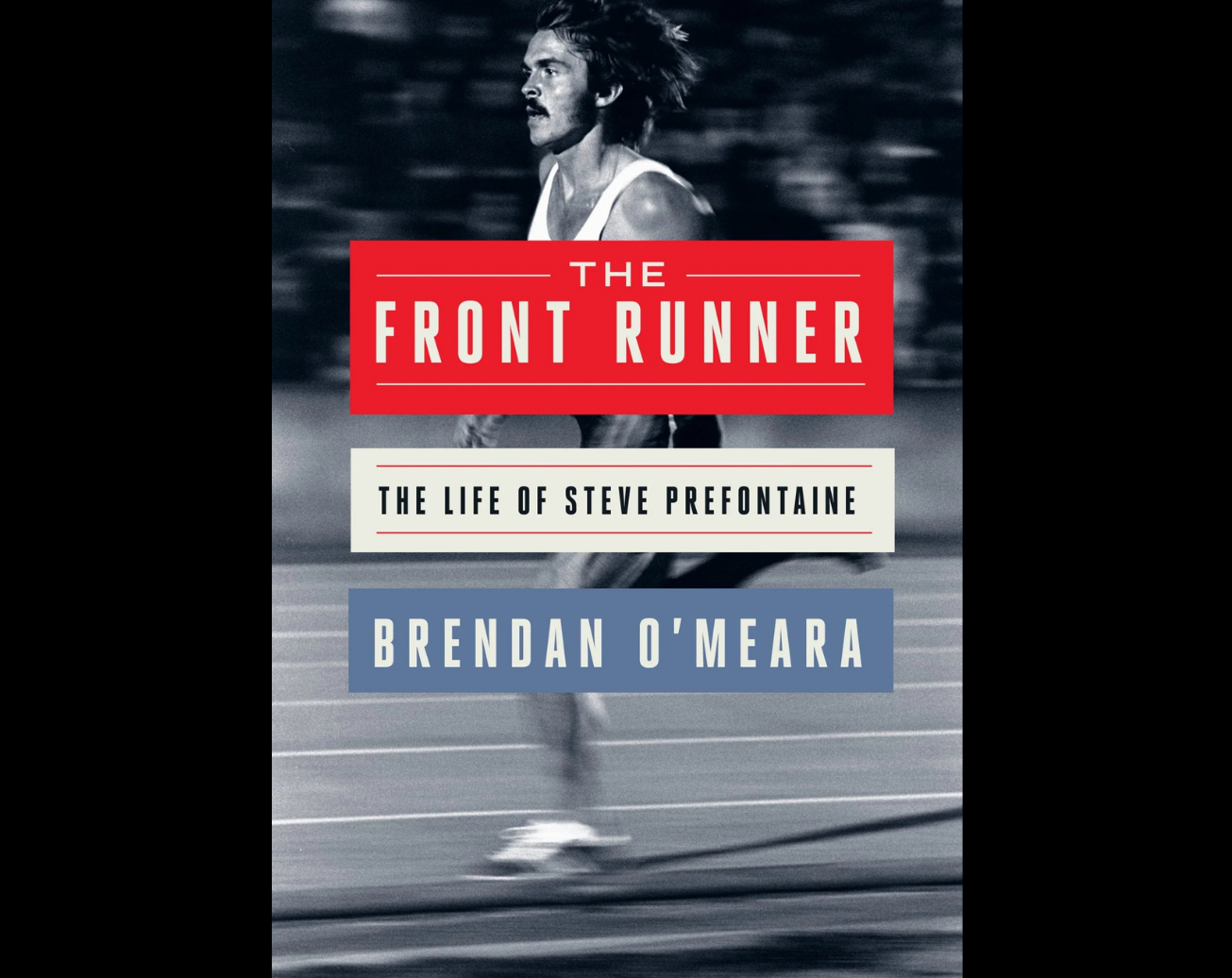
For his latest book, “The Front Runner: The Life of Steve Prefontaine”, journalist Brendan O’Meara wrote his first biography, the life story of one of the most charismatic competitive runners in America. Steve Prefontaine — known simply as “Pre” to fans — was known for his brash confidence on and off the track, a gifted athlete and personality who became the first celebrity face of Nike. Prefontaine is a celebrity athlete celebrated by celebrity athletes: Lance Armstrong recently Instagrammed a selfie at “Pre’s Rock” with a telling comment: “I, like I’m sure some of you do, get asked from time to time, ‘If you could have dinner with anybody, alive or not, who would it be?’ I’d pick a table for 4. Steve Prefontaine gets a seat every single time.”
Pre’s Rock in Eugene, Oregon, marks the spot where Prefontaine died in a car crash on May 30, 1975, at the age of 24. Driving home from a party in a convertible, with a blood alcohol content of 0.16 percent, he hit a rock and his car flipped. The site is now a memorial festooned with running shoes, medals, race plates, and other mementos left by those who make a pilgrimage to the spot on Skyline Boulevard in Eugene.
Pre died five years before O’Meara — who also lives in Eugene — was born. So the author had to get to know his subject intimately without being able to meet him or interview him. One of the most challenging aspects of a reconstructed narrative (one you’re not able to witness in person) is what MFA writers like O’Meara might call “interiority.” (I call it “getting in your character’s head.”) What are they thinking and feeling in a pivotal moment? What’s driving them? Why are they doing whatever they’re doing?
For his first book, “Six Weeks in Saratoga: How Three-Year-Old Filly Rachel Alexandra Beat the Boys and Became Horse of the Year,” O’Meara shadowed a horse and her entourage through a pivotal horse race in 2009. All the major characters in that book were alive, and he could interview them as well as shadow them, reporting immersively throughout the live event.
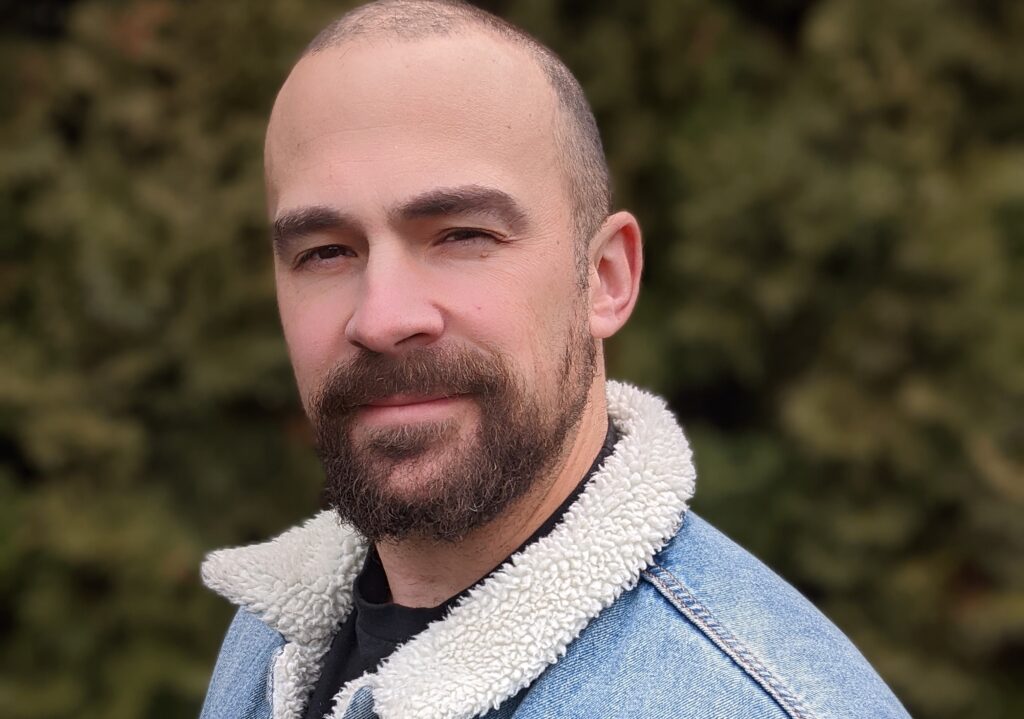
For “The Front Runner,” O’Meara had to change his reporting approach. He says his research broke down to “maybe 70 percent the skills of a historian” — digging through newspaper archives and microfilm, and mining secondary sources to find primary sources. The other 30 percent of the work employed journalistic skills — tracking folks down and interviewing them about moments from the past. It’s worth noting that O’Meara, who came to narrative writing through an MFA at Goucher College, developed his interviewing skills over 12 years as host of The Creative Nonfiction Podcast, on which he has interviewed hundreds of writers including Susan Orlean, David Grann, Laura Hillenbrand (and, in the interest of full disclosure, yours truly).
To learn how he got in the head of his character, we’ve asked O’Meara to annotate an excerpt from Chapter 13. The scene takes place at a pivotal moment in Prefontaine’s career. His college career has come to a close, he’s been humbled by a fourth-place finish at the Olympics, and he’s starting to see the opportunity to use his talent and celebrity to elevate other people, not just himself. He’s heard about a fund-raising meet at Hayward Field — the historic track at the University Oregon some called “the temple of milers” — to rebuild the dilapidated bleachers. He knows his celebrity can pack the stands, and he has an idea to use that ability in a way that could not only raise money for a good cause, but also set a competitor up for a record-breaking performance. Prefontaine was one of the fastest runners in the world of middle-distance races — between 1,500 and 10,000 meters. But his rival, Dave Wottle, found his sweet spot in the mile. “He ran into Dave Wottle — who was a true miler — and said, ‘Hey, why don’t you come up to Hayward Field with me and we’ll go after the world record in the mile and raise a lot of money for Hayward Field,’” O’Meara says. “Pre was like, ‘I’ll pace you through a mile at 2:56 and pretty much put a world record on the platter for you to take.”
This decision marks a character-defining milestone in Prefontaine’s evolution as a person as well as an athlete. It shows a change in the internal “why” that’s driving his behavior. Below, O’Meara reveals how he went about it.
Excerpt: ‘The Front Runner,’ Chapter 13
With Steve’s outdoor college track and field career over (he would have one more redshirt semester in the fall of 1973 at Oregon to run cross-country), he had to consider what post-collegiate running looked like for him. He would remain an amateur, but he had the wherewithal to know he was an attraction and that he had leverage. With the right degree of savvy—or redirecting the brashness he had historically reserved for his rivals toward the Amateur Athletic Union—he was testing the limits of amateur racing as it was currently structured. He planned on breaking new trail, which was something athletes did not do back then. Everyone else merely got in line and dealt with the necessary evil that was the amateur system. How did you learn what he was planning? And how much research did you need to do to make this statement with confidence—that other athletes didn't do that back then?Steve was very candid about his disdain for the AAU, dating all the way back to his days as a teenager. He was very clearly absorbing the insights from many of the jaded runners who came before him.
In 1973 in particular, he had given voice to going to Europe on his own time and dime to run in the races he wanted to. He had just finished his outdoor track career at the University of Oregon (he would hang on one more semester/term to graduate and run cross country). It was time to leave the nest, so to speak.
A week after NCAA championships, on June 16, 1973, after having initially balked at going to Bakersfield for the three-day AAU championships, Steve came within .4 seconds of breaking the American three-mile record in a time of 12:53.4. He was playing a game of chicken with the AAU. Steve thought its draconian authority over where and when an athlete could run was deeply un-American, this from an institution that purportedly gave the athlete full freedom to pick and choose. This is such a specific thought. How did you know what he was thinking with such nuance?As you'll see in the quote below, he had given voice to his frustration with the AAU. Its treatment of athletes was borderline criminal: they were boarded in squalor while the administrators stayed in lavish hotels and ate gourmet meals, all while the athletes scrounged on a pittance.
Steve had every intention of running in Europe under his own banner on his own time and dime, not the AAU’s, a declaration of independence. “I’ve run five years for my country on a team. Now I want to run for me.” Still, by running in the AAU championships, Steve was throwing the AAU a bone. In return, Steve hoped for a travel permit from the AAU.
He wanted to travel on his own schedule and run against those he deemed worthy. Even make some money under the table. Steve began to realize that he and his peers had more power than they realized. “If the athletes don’t take the initiative in this, who will? We know the AAU and the American Olympic Committee won’t. I hate to sound critical, but to me the AAU is just a bunch of old men taking medication so they can stay alive for another four years to hassle us. Right now I’m being hassled. I don’t need it, really.” Here, you can really hear Pre's voice and attitude. When do you decide whether to use a quote or convert it to in-scene narration?My early drafts were too quote-heavy. I was timid about putting too much of my own writing into this because Steve was so vibrant, I didn't want to interrupt him from speaking, if that makes sense.
The real question would be if Steve would race in the Restoration Meet at Hayward Field scheduled for June 20, 1973, another exhibition meet — just like the Twilight Meets — to raise money for renovations. The West Stands were dilapidated and held together with spit and prayer. Bowerman was still spearheading the fundraising, and he had a headliner in Steve that could draw people out, the proceeds going into the Hayward Field coffers. Steve and 1972 800-meter gold medalist Dave Wottle were supposed to leave for Europe on June 19. While in Bakersfield, Steve hatched an idea. Steve knew Dave Wottle was going to Europe with him. “Hey, why don’t you just come up to Eugene in a couple of days. They’re trying to raise money to restore the stadium. We’ll go after the world record in the mile. I’ll bring you through in 2:56 for three-quarters.” Is this recollected dialogue, recounted by Wottle in an interview? Do you have any tips about using dialogue recollected years later versus (or along with) dialogue recorded in-scene or by secondary sources (newspaper stories, etc.)?This is recollected dialogue! I always love asking what they remember saying to each other, recreating memories with dialogue. Since this was a one-sided recollection you just roll with it. If there are more than one party involved, you bounce it off everyone. ‘So and so said this ... is that how you remember it, too?’ In these instances, unless there's a camera in their faces at that moment that you can transcribe, it will never be 100% accurate, but you can bet it was pretty damn close.
Wottle had an apocalyptic kick. It was how he won his gold medal in Munich. Steve Prefontaine willing to be a rabbit? Why not? What question in your interview with Wottle prompted this bit of internal dialogue?I asked ‘Did you have much contact with Steve shortly after or maybe in the the months after Munich?’ This would be after the 1972 Olympics. Dave then went on to speak for about six full minutes without interruption that included topics from Munich, watching Steve train in Munich, and then he just kind of went into this Super Mile memory. This was fine because I eventually wanted to talk about this in detail as I saw it as a major moment in the narrative. He offered this without any prodding from me at all. "Steve knew Wottle was the superior miler and Steve figured that the pair of them could team up for a special headlining event. Here, Steve was willing to sacrifice himself. He couldn’t expect to win, but he knew his star power combined with Wottle’s kick might break Jim Ryun’s long-standing world record . . . and raise a lot of money for Hayward Field. How did you know what Steve was thinking here?Steve loved to run the mile, and was a damn good miler, but he knew he couldn't really compete with true milers like Wottle. Being a strong front runner, Steve figured he could set a world-record pace for Wottle and if he actually paced Wottle through 2:56 for three-quarters of a mile, Steve would have zero kick to beat Wottle. All Wottle had to do was stay close to Steve until the final 200 meters or so and he would blast clear.
The pair were stark opposites. Wottle was tall, pale as a sheet, ran with a golf cap. He raced no longer than the mile and saved his energy for the end. He was soft spoken, even bashful. Did you observe this in your interview with Wottle? Or did this characterization come from newspaper stories or other reporting?Dave told me how reserved he was, especially compared to Steve. Photos of Wottle and Steve together show this dichotomy quite well. Steve was shorter and would never cover that glorious mane of hair; he led from the front, mutton chops and dark mustache. Steve was also soft spoken, but he carried a heavy fist. Wottle was more shy and didn’t socialize much; though Steve appreciated the quieter moments, he was just as comfortable being the center of attention. Wottle never drank. Steve made a sport of it.
Dave Wottle was the NCAA mile champion, but he had never run faster than 3:57. Steve, to his credit, had run 3:55 earlier in the year in blustery conditions, call it the Hayward magic. Deep down Wottle knew he needed a better mile time if he was going to tell people the mile, and not the 800 meters, was his best event. Wottle had always wanted to run against Steve, and if that were to happen Steve would have to drop down and set the pace. “I know his plan; he’ll try to take me out and break me early,” Wottle said. How you decide when to use a quote (said to a reporter after an event) instead of turning the quote into in-scene narration?I suspect like many musicians, they go on feel with their phrasing. This very well could have been — maybe should have been — folded into the narration. If I could re-write it, I probably would say something to the effect of: ‘Wottle knew Steve's plan, turned it over in his head, that Steve would try to go out beyond Wottle's comfort level, all in an attempt to break him as early as possible.’ Or something like that. And then cite it as I would the actual quote. How close they got to that world record depended on Steve. He would sell out for Wottle, for Hayward Field.
The day could not have been better, on the eve of summer, balmy and windless. Wearing a “Nike” track and field T-shirt and Nike trainers, Steve checked in with a clerk shortly before his event was set to go. The stands were flush with 12,000 people. Wottle, who had just been commissioned as a second lieutenant in the Air Force Reserves, had been tabbed to run in the Air Force colors instead of his usual Bowling Green University kit. While in Eugene, a captain for the Air Force gave Wottle his uniform. Wottle wanted to focus on the race, and he wasn’t sure if he was supposed to be saluting or calling him sir or not. How do you get subjects to remember what they were thinking and feeling in a particular moment many years ago?In this instance, Wottle had veered away from the Super Mile, so I said, ‘Getting a little more granular on that Super Mile race, in the time leading up to it, how are you starting to mentally prepare for it, even physically prepare for it, Oh, I have the opportunity to do something pretty special if things go according to plan?’
It definitely made way more sense to fold this into narration because you can picture a young Wottle thinking these things, feeling distracted, but wanting to get ready for this big, big race. Eventually and unceremoniously, Wottle slipped away to warm up. The plan was simple: stay with Steve. Steve said he was going to pull them through in 2:56. His gift to Wottle. Wottle thought, Pre’s the best rabbit you can have, except he’s the type of rabbit who usually wins.
Wottle was feeling good. He had slept ten hours the night before and logged an easy two-mile morning run. Did Wottle recall this in your interview? Or did he tell a reporter this in 1973?Wottle shared with me his training log from June 1973 and in his log, he mentioned how much he slept and the morning jog with went on that day. As race time neared, he jogged two-and-a-half miles as the stands swelled to the brim, hip to hip. The last time Wottle raced at Hayward Field was the Olympic Trials a year before. After he tied the world record in winning the 800 meters, he went across the street to McDonald’s and treated himself to a Big Mac meal. He wasn’t much for ceremony or theatrics. And when he was called to the starting line for the “Super Mile,” the people screamed and Wottle began to tingle. Then he heard the screams for Steve.
Whoa.
The race went off and just like Steve told Wottle, he paced him through three-quarters of a mile in 2:56, Steve hugging the inside lane and Wottle coasting to the outside of Steve’s right shoulder. What kind of questions do you ask in an interview to elicit the details and specificity you need to create a cinematic scene?I really try to get people to slow down. Sometimes I'll say, since I couldn't witness this moment, pretend I'm a bird on your shoulder: What am I seeing? What am I hearing? What am I smelling? What am I feeling underfoot? Hell, what am I tasting (salt? did they bite their lip and are tasting blood?)? Sometimes they remember, other times they have no clue.
Wottle had never gone faster than 3:01 for three-quarters. Steve’s legs felt heavy and, at this point, he wanted to explode. He had run four three-mile races in 13:20 or below in ten days. The acceleration wasn’t there. He had no snap. Wottle was told by his Bowling Green coach that his best races would come off a fast pace and right there before him on a platter was about as fast as he’d ever experienced. Steve put the world record in Wottle’s sights; all Wottle had to do was take it. Steve rushed by the east stands with 220 yards to go. Fans knew the book on Wottle and, right on cue, Wottle surged 10 yards clear of Steve.
There would be no catching Wottle, but Steve chased after him not only to keep up with the clock, but to give his people in the rickety West Stands reason to cheer. Maybe the roar would push Wottle past the point of reason, past Ryun. By the time Wottle struck the tape, the time was 3:53.3, the third fastest mile ever. Wottle winced at the finish. Steve finished a few yards behind Wottle and gave his people all that remained, what would be his career best mile, 3:54.6. A little girl screamed, “That’s okay, Pre! Don’t worry about it!”
Years later, Wottle looked back at this race with a rare pang of regret. So much of his mindset was geared toward winning the race, not the clock. Time was secondary. He never wanted to sell out too soon. “Instead of going for it and laying it all out on the track and say, ‘Hey, you know, if I can run a 55-second last lap, I can get a world record,’ I was holding back because I was afraid of tightening up down the home stretch. Steve being the strong runner he was, I thought he could beat me. . . . I regret that, truthfully. I regret that he brought me through such a great race and a great time, and I didn’t lay it all out there on the track. That’s a weakness I had.” I love this paragraph, Wottle's insight and self awareness. I can hear the voice of an older man reflecting on the hubris of his younger self. In the interview, how did you encourage Wottle to open up about a tough and painful subject with such candor? Or did he go there naturally?We're nearly 40 minutes into our conversation, and he offered this up naturally ... but I had never read or heard him articulate this before in any other interview. That's what 50-plus years of distance provided. This perspective was so beautiful and you can really feel his ache and the regret. Most elite athletes don't speak of regrets. Here, Dave went there. I was grateful he did.
Wottle also didn’t want to like who he was running against, the better to flog them. He wanted to run angry. And after the race, with the fans still clapping and cheering, Wottle began his victory lap. Steve jogged up beside Wottle and grabbed his arm and raised them together above their heads. Wottle thought, What are you doing running with me? This is my victory lap. “How stingy,” Wottle remembered. “How stingy of me. Steve was endorsing me to the fans at Hayward Field. He was also saying, ‘You did that because of me,’ and he was absolutely right.” These three sentences combine external action, internal dialogue, the tension between them, and reflection/insight. It's very emotionally stirring. Do you think intentionally about such combinations? If not, what do you think about when you're trying to stir the reader emotionally?This had the combination of the in-scene moment of Steve sidling up to Wottle, not commandeering his victory lap, but showing his appreciation. It made sense to internalized Wottle's recollection of this moment and how upset he was that Steve would try to hijack his moment. But then we step out into the reflection, and it made sense to pop out into the older, wiser pensive version of himself, scolding himself for not realizing in the moment just what Steve was doing.
Ernie Cunliffe, who was the coach for the Air Force working with Wottle, found Steve and told him, “It was a best-of-life for seven [other] guys [in the race] and you made it possible. You set it up for them.” Steve often made it possible for others to level up, his gift to them. The few who beat him also ran out of their shoes. Wottle bettered his best time by nearly four full seconds to win this night, the fastest mile ever run at Hayward Field, this in the temple of milers.
Wottle recalled, “If he had not brought me through in 2:56, there’s no way I could have run that fast. It was a valuable lesson for me to learn back then. I did reflect on it afterwards thinking, ‘No one’s on an island. You have a family, you have coaches, you have teammates, you have competitors. All that together is what makes runners achieve their goals.’ Steve helped me learn that lesson. I was always grateful for that.” Sometimes, at readings, this part kind of chokes me up, because running, like writing, is viewed as an individual/solitary endeavor, but it's really a team sport. And this moment always makes me think of the people who make it possible for me to do what I do. I'm getting kind of misty just thinking about it now.
The Restoration Meet was a beautiful illustration of Steve’s evolution as a person. He started to see his rivals as peers, even if it meant falling on his sword to lift others up, all to give back to his community, these people, those stands. This is a nice moment of narration. You've illustrated this point, and now you declare it with a authorial confidence. Do you do this instinctively or with a specific intention?In the conversations I had with my editor, he impressed upon time and time again that I had to make assertions and judgements. Always that I had my finger on the scale. A biographer brings a point of view, a framing to the story. Matt would tell me, ‘You probably know him better than anyone at this point based on the reading you've done and the people you've spoken to. You can make assertions.’ In fact, he insisted that I do that.
After the race, Steve was swarmed by children seeking autographs. He signed them attentively. One of Steve’s older fans brandished a bottle of champagne in a paper bag. The fan offered Steve the bag and Steve, appreciatively, took a swig. I love this little moment that put a nice coda to the event, and speaks to Steve's appetite for a party. This ends the chapter, but it was the lede of the article I cited. I bring that up because all these articles are a writer's paints and they're all on the palette and it's like, ‘How do you layer in this paints to create texture and depth? And when?’
***
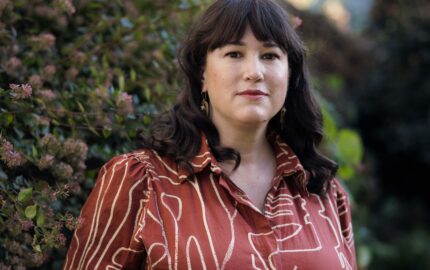
Kim Cross is a New York Times best-selling author and feature writing instructor for Harvard Extension School's graduate journalism program and the Larry McMurtry Literary Center.
Subscribe to Storyboard
Get insights into the craft of journalism and storytelling in your inbox, delivered on Fridays.