As a reader, I have always devoured oral histories, in book form or as magazine features. They are compulsively readable, and the form itself feels honest in its narrative messiness — many different voices, agreeing or disagreeing on what really happened.
But the joy of reading a good oral history can obscure the amount of work required for journalists to report and write one, turning hundreds of interviews into a cohesive narrative spanning years or even decades.
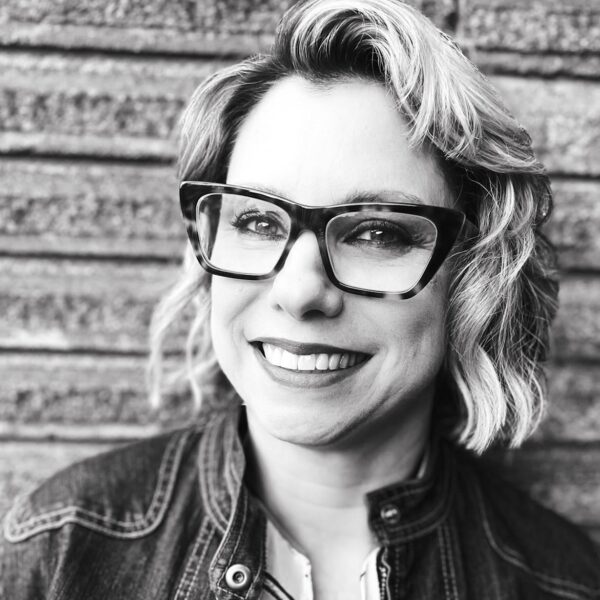
On the latest episode of the Nieman Storyboard podcast, journalist and author Tricia Romano joins me to talk about how she reported and wrote her oral history of The Village Voice, “The Freaks Came Out to Write: The Definitive History of the Village Voice, the Radical Paper That Changed American Culture.”
[ Follow us in Apple Podcasts, Spotify, or your favorite podcast app. ]
Romano was a writer for the legendary New York City alt-weekly, and it was a Voice reunion in 2017, following the death of former Voice writers Nat Hentoff and Wayne Barrett, that led her to take on the project.
“I'm sitting there going, ‘We have to get these people! What are we doing?’ Somebody's gotta do this,” Romano said. “I called [former Voice writer] Michaelangelo Matos. He's like, ‘You have to do it.’ And I said, ‘It has to be an oral history, doesn't it?’ Because you had to capture their voices. It wasn't my take on what the Village Voice is and was.”
Romano talks about her process for staying organized during the project, how she supplemented her book advance with grants to help fund it, and how to determine whether an oral history is the right path for your book or story idea.
Romano, who's also a Storyboard contributor, began her eight-year career at the Village Voice as an intern. As a contributing writer, she wrote features and award-winning cover stories about culture and music. Her reported column, Fly Life, gave a glimpse into the underbelly of New York nightlife. She has been a staff writer at the Seattle Times and served as the editor in chief of the Stranger, Seattle’s alternative newsweekly. A fellow at MacDowell, Ucross, and Millay artist residencies, and her work has been published in The New York Times, Rolling Stone, the Daily Beast, Men’s Journal, Elle, Alta Journal, and the Los Angeles Times, among other publications.
The excerpts below are edited for length and clarity.
On the challenge of constructing an oral history
There's a small club of us in the oral history book world and like we should all join a therapy group together, because no one understands. The genius of an oral history is that, if it's done well, it looks effortless.
Even if it's not your words, you're creating something. It's like a big giant slab of stone that you have to carve out, with only what you've got [from interviews].
On structuring the story and subplots
[Former Voice columnist] Nelson George told me, ‘You need to map out the plot the way TV writers and filmmakers do.’ And I was like, ‘What are you talking about?’ [He said,] ‘You know in every TV show, there's the overall story and then there's a subplot, and then there's the episodic plot.’ And that's how I had to look at it.
What's the big story? The big story is the story of the Village Voice, which is also the story of modern media. It's the rise and fall of modern media and internet killing the newspaper star. The subplot is what's going on inside the paper during this time. Owners coming and going, editors coming and going, the internal beefs with each other, the sort of office politics of that.
Then the episodic stuff is the stories they're covering and what's happening in the city. And the only way to deal with that is by time — so by decades, and then by topic, really. I couldn't see how else to do it. I couldn't braid it in this super fluid way. My brain just doesn't work that way. I felt like you had to hit certain points, right? How do you cover film without stopping and saying, ‘I'm covering film’?
There was a point where this thing was so big I debated, ‘Do I just do the 1980s?’ But no, it needs to cover the whole thing, because otherwise that [story] arc isn't there. If you just do the eighties, you leave the Village Voice and it's on top of the world. And we know it's not. It doesn't tell the story of media or newspapers or even the rise and fall of New York City as a cultural and political center. It doesn't tell the story of the decimation of the city due to gentrification.
On her decision to not write any introductions or interstitial moments from her own point of view
There's different points of view on this. I did not want interstitial writing or any intros. I kind of disagreed with my original editor about this. She wanted me to have these written intros to each chapter, and I just didn't think that was necessary. I thought it would be really disruptive to the flow.
If you think about it like a documentary, do you prefer the kind where some narrator starts talking and interrupts the action to explain things to you? It's a different style, and there are good oral histories that use that style. … “Let the Record Show: A Political History of ACT UP New York, 1987–1993” [by Sarah Schulman], her oral history uses lots of interstitial and is much more, ‘We are recording this for history,’ holding these voices. So it's a different form.
On the legacy of the Village Voice and the dangers of nostalgia
A lot of the people that were reviewing [my book] this either wanted to be cool enough to write for the Village Voice, or they were, and so they just have this overwhelming fondness for this institution and sadness that it's gone. My book is this trip through nostalgia in some ways. And not all nostalgia is good, right? There's lots of stuff in this book that you would be horrified if it happened today in an office, and people would be fired instantly.
So it wasn't all rainbows and unicorns. And I tried to show that. Because for every person that is fond about their time at the Voice, there are a lot of people for whom it was a dark place. They did not enjoy it. They want to forget it. They want to get away from it because it was so stressful. The ups and downs and ins and out, and the intensity of the people there and the intensity of the fights that were happening on staff was too much.
Advice for writers and journalists considering an oral history project
You better be in love with the subject. This needs to be like a blood oath that you're taking. You're going to suddenly wake up in the middle of the night in a cold sweat and go, ‘Oh my God. You gotta get that quote from Robert Christgau about whatchamacallit!’ You have to really be sure this is the way you need to do it. And I think if you're going to do an oral history, the quotes have to be colorful and filled with life, and not just information.
You have to be able to coax people to talk to you and tell you their dreams, and they're like your best friends. I didn't know most of the people that I was interviewing. I think a lot of people assume that because I worked there, but a lot of the people that I interviewed were all many decades before me.
This is the story that needs to be told. We need to tell it. Make your list of people that you absolutely have to have, and make an outline after you've talked to your initial people, and just stay on top of everything.
I think it's a really fun format. And I think if I had done this book any other way, it would've had the potential to be dry and removed.
Reading List: Authors, Stories, and Books Mentioned
- Tricia Romano author website
- “The Freaks Came Out to Write: The Definitive History of the Village Voice, the Radical Paper that Changed American Culture” (Tricia Romano, PublicAffairs, 2024)
- “An Oral History of ‘We Built This City,’ the Worst Song of All Time” (Rob Tannenbaum, GQ, 2016)
- Columbia University Center for Oral History Research
- “Please Kill Me: The Uncensored Oral History of Punk” (Legs McNeil and Gillian McCain, Grove Press, 2016)
- Gillian McCain
- Michelangelo Matos
- “A Village Voice Reunion, and Nobody Got Punched” (The New York Times, 2017)
- “A Brief Oral History of Wayne Barrett, the First Journalist to Doggedly Cover Donald Trump” (Tricia Romano, Vanity Fair, 2024)
- Nat Hentoff
- Michael Tomasky
- “Against Our Will: Men, Women, and Rape” (Susan Brownmiller, Ballantine Books, 1993)
- Nelson George
- Emma Carmichael
- Betsy Lerner
- Lenora Todaro
- “Meet Me in the Bathroom: Rebirth and Rock and Roll in New York City 2001-2011” (Lizzy Goodman, Dey Street Books, 2018)
- MacDowell Fellowship (artist residency)
- Whiting Nonfiction Grant for Works-in-Progress
- Frank Owen
- Leah Greenblatt
- Bill Werde
- Robert Christgau
- Richard Goldstein
- Maureen Corrigan
- Colleen Lawrie
- “Let the Record Show: A Political History of ACT UP New York, 1987–1993” (Sarah Schulman, Picador, 2022)
- Stanley Crouch
- Eric Weisbard
- Joy Press
- David Schneiderman
Show credits

Hosted and produced by Mark Armstrong
Episode editor: Kelly Araja
Audience editor: Adriana Lacy
Promotional support: Ellen Tuttle
Operational support: Paul Plutnicki, Peter Canova
Nieman Foundation interim curator: Henry Chu
Music: “Golden Grass,” by Blue Dot Sessions (www.sessions.blue)
Cover design by Adriana Lacy
Nieman Storyboard is presented by the Nieman Foundation for Journalism at Harvard.
***
Subscribe to Storyboard
Get insights into the craft of journalism and storytelling in your inbox, delivered on Fridays.