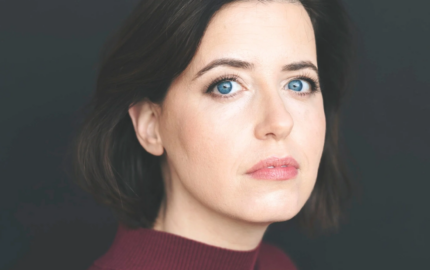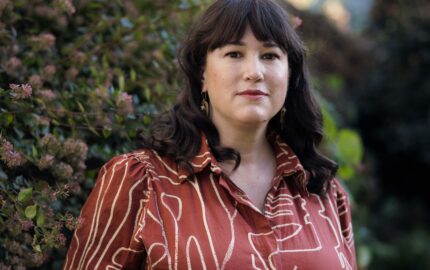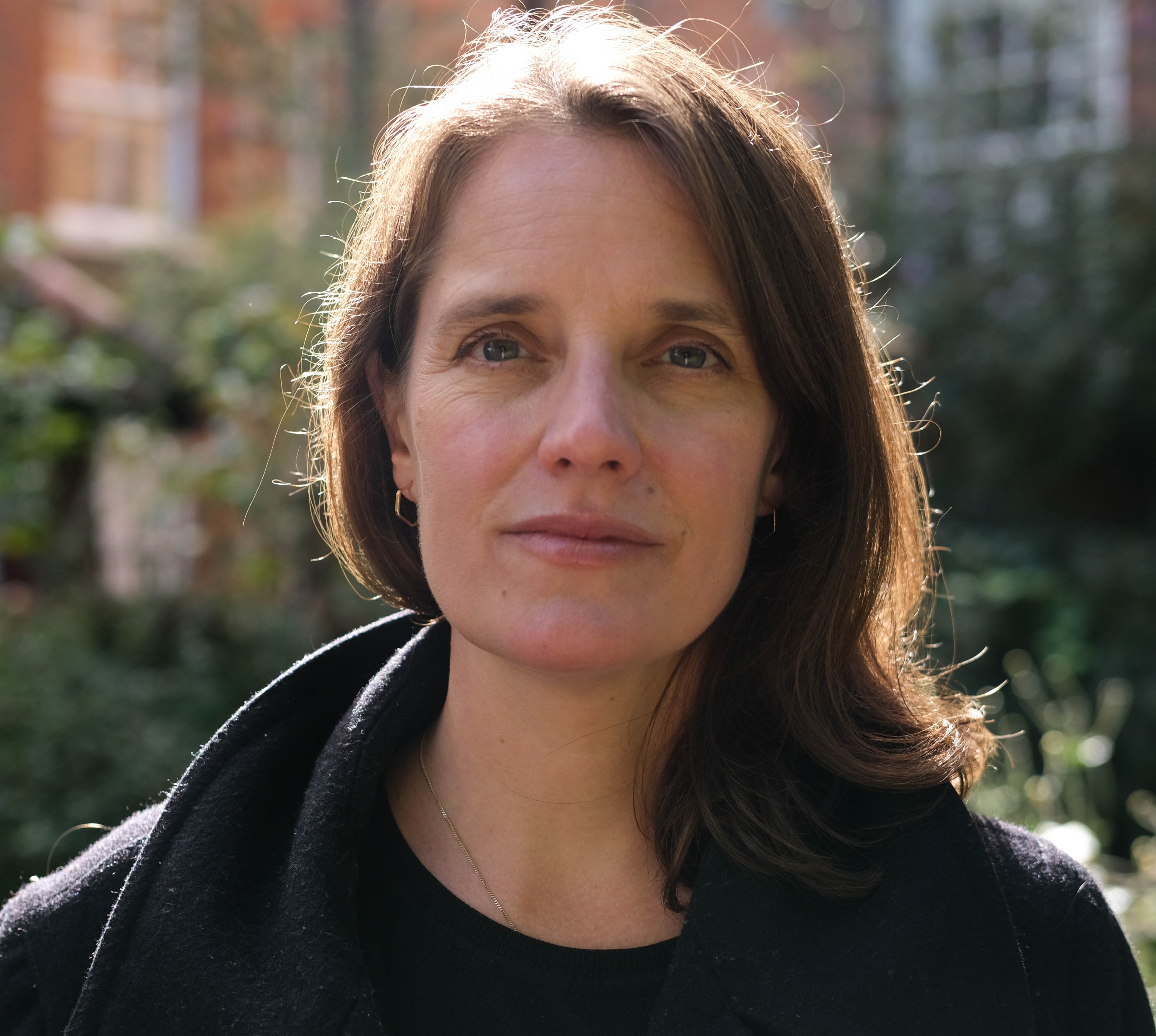
It started with a photograph. While doing research for an article about people trying to escape land during the pandemic, Sophie Elmhirst came across a website featuring a compendium of castaway tales from decades past. The stories were accompanied by photographs, mostly of lone men who had ventured out to sea. But there was one that stopped Elmhirst in her tracks: a black-and-white photo of a cheerful-looking woman and man. They were the only couple pictured.
“It touched various curious nerves, I suppose, and I was intrigued,” said Elmhirst, a longtime journalist.
She soon learned the incredible story of the man and woman, named Maurice and Maralyn Bailey. In 1972, the young married couple left behind their lives in England and set sail for New Zealand in their boat, the Auralyn. Nine months into their voyage, deep in the Pacific Ocean, a breaching whale struck and sank their boat. The couple was left adrift on a life raft and dinghy for seven arduous weeks and nearly died before being rescued in June 1973.
Journalists had covered the Baileys’ rescue at the time, but Elmhirst had never heard of them.
“It seemed like such an extreme, extraordinary story,” said Elmhirst, who’s based in London. “Obviously, it had been a big story in its time, but had just been completely forgotten. Or at least, whenever I mentioned it to anyone of my generation, no one remembered.”
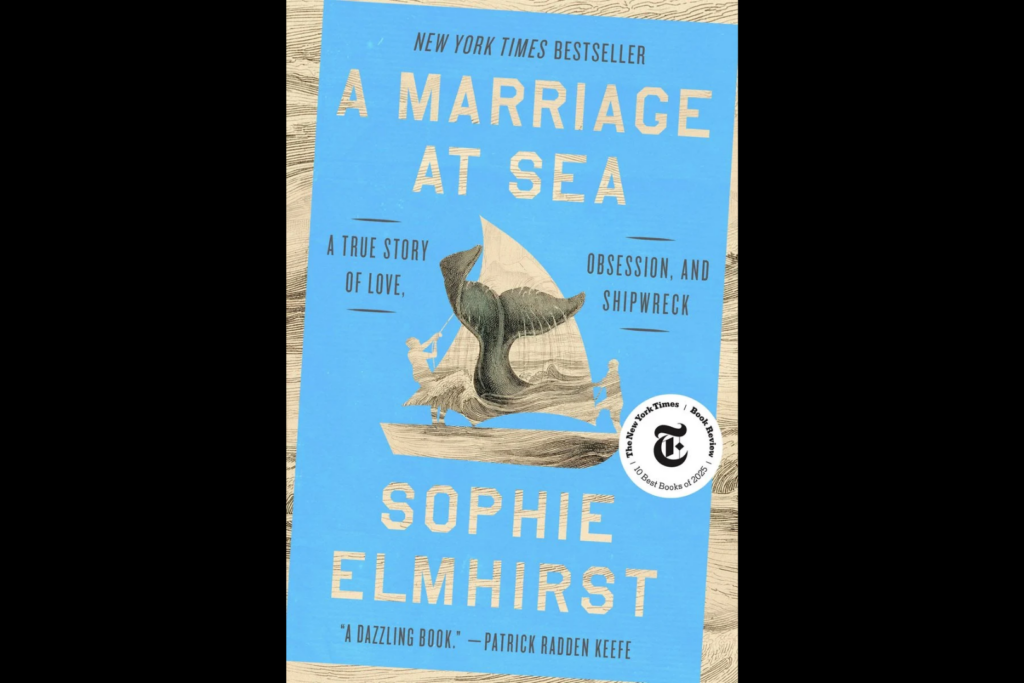
Elmhirst found herself wanting to change that. She started reporting on the Baileys’ story and uncovered so many details that she realized she had enough material for a book. What resulted was “A Marriage at Sea: A True Story of Love, Obsession, and Shipwreck,” a narrative nonfiction book that became a runaway New York Times bestseller. The New Yorker, NPR, TIME Magazine, Vogue and The New York Times all named it a Best Book of 2025.
“A Marriage at Sea” is gripping not just because of the story itself, but because of how Elmhirst tells it. The book reads like fiction, with a propulsive plot that situates us side by side with Maurice and Maralyn as they fight for survival.
Elmhirst has long appreciated true stories that read like fiction and was intrigued by the idea of approaching her debut book as “a nonfiction novel.”
“I wanted it to read as smoothly and as perceptively as fiction as possible, and for it to be really rooted in character and story,” said Elmhirst, who has spent the past 10 years of her career writing longform pieces. She knew that Maurice and Maralyn’s story warranted a book, and not just a longform piece, in part because of all the access and source materials at her disposal. Though Maurice and Maralyn had already passed away before Elmhirst began writing, some of their friends and family were still alive and willing to be interviewed.
Elmhirst also had diaries, letters, photographs, old media coverage, documentaries, and the Baileys’ own books to draw upon. These materials helped her to not only accurately piece together the story of the shipwreck but to also explore a deeper layer of interiority — hard truths around who we become under the most extreme circumstances and how we find the strength to carry on.
As Elmhirst aptly writes, “It is not so much the feats of endurance that keep people alive, so much as the absence of surrender.”
There were many times when Maurice was ready to surrender, and he considered taking his own life. But Maralyn buoyed him. She persevered, holding steadfast that they would eventually be rescued. Elmhirst sensed this determination from Maralyn’s diaries, which were filled with practical lists and aspirational ideas about all that she would one day do once back on land. A journalist’s goldmine, the diary entries had been photographed and were freely available online.
“They don't necessarily give you what you hope diaries will give you, which is that great insight into the sort of heart and soul and mind of someone … but their limitations were also their strength,” Elmhirst told me. “I loved all of the extraneous stuff that was in them that I felt like was very reflective of Maralyn as a person — the drawings that she does, the menus that she writes out, the plans that she's always making, the references she makes, things she misses. I guess it's seeing a mind at work, actually.”
Elmhirst wove the journal entries and other source materials into her descriptions of Maurice and Maralyn so seamlessly that you can’t help but wonder if she was on the same voyage, witnessing every event firsthand. This firsthand feeling also stems from the writing itself, which is never wishy-washy. Instead of couching her descriptions with qualifiers (e.g. “Maurice must have thought,” or “Maralyn likely wondered”), Elmhirst wrote with authority about the Baileys’ thoughts, observations and actions.
“This was a stylistic choice. It was being given the confidence by my editor to do it in a certain way — to write that interiority,” Elmhirst said. “You’re not saying anything that didn’t happen, but you’re doing it in a mode where you’re seeing it through the characters’ eyes. I’m sure there would be purists who would say that I pushed that maybe a bit too far, but I felt like I had enough to go on.”
Elmhirst’s reporting helped her to accurately recreate immersive scenes. She visited the places where Maurice and Maralyn grew up, the bungalow where they lived after getting married, and the garden they tended together. She also spent a considerable amount of time by the water. She would sit by the ponds near her home in London, and during a trip to Wales, she found herself “staring at the sea and trying to find different ways of describing it.”
She even applied for a grant to help fund a sailing trip off the south coast of England so she could experience life on the water.
“I did not get the grant, which is fair enough,” she said with a laugh.
Elmhirst is humble about the book’s success, saying it’s “so crazy” to see the response it’s gotten. Her work is one of the latest examples of books that take an untold or forgotten story from the past and report it out in the present. Other examples include the bestselling books “Hidden Figures” by Margot Lee Shetterly, “The Art Thief” by Michael Finkel, “The Boys in the Boat” by Daniel James Brown, and “Seabiscuit” by Laura Hillenbrand.
Elmhirst advises writers who want to pursue these types of books to look for shards.
“You don’t find it as a perfect crystal vase. You find shards, and you have to fit them together,” Elmhirst said. “You find a lot of waste material that doesn’t fit into the vase that you have to get rid of, and you do a lot of your own work to fill out the structure — to turn that shard into something.”
When writing “A Marriage at Sea,” Elmhirst laid out all her shards on the page. She’s the type of writer who feels wedded to source material, so much so that she compiles her transcripts and notes into a long document and then starts writing around them. During the revision process, she finesses the story and puts it in her own words.
“It all comes together in the revision,” said Elmhirst, who kept photographs of Maurice and Maralyn propped up on the window ledge in front of her as she wrote. “I’m a real obsessive reviser; I go over and over it many, many times, and that’s when my best writing happens.”
To learn more about Elmhirst’s process, I asked her to annotate an excerpt from the first chapter of “A Marriage at Sea,” which begins in medias res, with a scene of the whale crashing into Maurice and Maralyn’s boat. Below, Elmhirst gives us an inside look at the writing behind it.
Excerpt: A Marriage at Sea, Chapter 1
One
4 March 1973
Maralyn looked out at emptiness. There was little to see except the water, shifting from black to blue as the sun rose. A clear sky, the ocean, and themselves: a small boat, sailing west. MT: This line seems to foreshadow what's to come — the shift from time as automatic to agonizing. Would you agree?SE: I was very interested in how time changed in their story, from the ultra-regulated routine of their life on the boat to a kind of formless expanse once they were adrift. I think a large part of how they survived was Maralyn's insistence on maintaining rhythm and habit, structuring the shape of the days and the order of meals when it would have been easy to surrender to the nothingness of their existence. (She determinedly imagines their future too, never abandoning the idea that they had one — which was another way of contending with the black hole of time on the raft.)
At seven o’clock, Maralyn left her watch on deck and went down to the cabin. Maurice was still asleep in his bunk, stirring a little. The morning would follow the certain rhythms of every other morning: coffee and breakfast, then all the checks and jobs a boat requires. A formula so practised after months at sea that it had become as automatic as time.
Except this morning, in the precise moment that Maralyn put her hand on Maurice to wake him, they felt a crack, a jolt, the sound of a gun going off, as if the violence had come from her touch. The noise split the air. Books leapt off the shelves. Cutlery flew. These first few paragraphs are so immersive. From a journalistic standpoint, how did you go about recreating this scene, and which source materials did you rely on?I was lucky: I had access to rich material and there were multiple versions of this scene to draw on. First, I turned to their own written accounts in Maralyn's contemporaneous diary, their published book ‘117 Days Adrift’ and Maurice's self-published letters written much later in life, after Maralyn died. Then there were the versions they gave to the media in press and radio interviews and various documentaries over the years. Finally, their old friend Colin Foskett (who sailed with them on a subsequent voyage and appears in the book) showed me a series of incredible photographs that Maralyn took shortly after the collision — of their boat sinking and of Maurice in the raft. These not only gave me vivid detail but also a kind of atmosphere — the utter loneliness of their situation and the emptiness around them.
As for the immersion: I wanted the opening to be as dramatic as possible to throw the reader right into the centre of the crisis. But it took me a while, if I'm honest, to give myself the permission to write it like this. The voice seemed performative, almost anti-journalistic, in that I obviously wasn't there witnessing the scene myself. I knew it would require a leap of faith for me as a writer even though the nonfiction novel, or narrative nonfiction, or whatever you want it to call it, is hardly a new form. I'm a longtime fan of it as a reader, but new to it as a writer, and it felt distinctly odd at first and dangerously (and thrillingly) close to that wavering boundary between fiction and nonfiction. Nothing is invented, but it's a stylistic decision to unfold the action in this way, without constantly caveating it with reference to sources. I think it makes the experience more pleasurable and immediate for the reader — at least I hope it does — but you have to let go of some fairly fundamental journalistic habits and guardrails along the way.
They thought of their boat as their child. To hear her wood tear and splinter was like hearing the pained scream of an infant.
Up on deck, they discovered the cause. A whale was next to them in the ocean, massive and alive. Water was streaming down the dark cliffs of its body as it twisted and writhed. It looked as if it were trying to climb out of the waves, hauling its dark bulk up, then smashing back down, a meteor landing in the ocean, showering spray. Its tail, ten feet across the flukes, was beating at the surface in a kind of fury. Blood poured from its body into the water.
Maralyn couldn’t understand where it had come from. She’d just been up here, waiting for the dawn, and seen nothing but a fishing boat when she’d taken over from Maurice at three. You don’t miss a whale.
But perhaps you do. You use the second person really effectively here and in later chapters. Why did you choose to use it here?I'm not sure the second person is a good habit, but I think I was instinctively trying to move from a distant narrative voice into a more intimate register, and also to sidle up a little more closely to both Maurice and Maralyn's interior worlds. I wanted their different reactions to the whale to reveal not just the particular ways they thought, but something of their character and tone: her great empathy for the whale contrasted with his instinct to categorize and deal in facts. It must have risen from the depths just after she’d gone down the ladder and broken the surface right where they were. She couldn’t bear the thought that they’d somehow hurt the creature. It seemed uncanny that in the entirety of the Pacific this would be the spot it chose.
What did it matter? There it was. A sperm whale, Maurice could tell, from the blunt, square block of its head. He knew his whales. It was forty feet long, he guessed; a good ten feet longer than their boat.
This close, it was difficult to take in. Whales were best admired from a distance, like certain kinds of paintings. He could identify its parts—the blowhole, the lower jaw, the pectoral fin—but they didn’t seem to add up to a coherent whole. The creature was out of proportion, unnatural in its size. One rogue swipe of its tail and they would be cleaved in two. It was monstrous, he thought. Only compared with them.
The whale was still thrashing, as if it were trying to shake something off, or escape its own body. It was dying, Maurice realised. These were its death throes.
And then it was gone, sucked into the unknown darkness of the ocean. It would likely die down there, blood leaking into the water, alerting other creatures to its presence. Great whites and blue sharks would gather, rip it apart, and feast on its blubber. In this sentence, I sensed that you likely consulted research and literature about sea creatures, including the whale you write about here and the turtles that become pivotal later on. Did you do a lot of reading about sea life, and if so, how did you incorporate your findings in ways that would enhance the narrative rather than distract from it?I read a mixed bag of ‘Moby Dick’ and two wonderful books by Rachel Carson on the ocean, as well as sailing manuals and accounts of Darwin's travels to the Galapagos. I also watched plenty of documentaries about the Pacific and its wildlife so I could see how the creatures moved in the water. It's tempting to pour all your wildly irrelevant research into a book, but that's why I like the discipline of story: I tried to only use the parts that supported the narrative, or colored in a scene. I don't know If I succeeded, but the aim was for the reader never to feel like they were being instructed. Or to put it another way, I wanted to avoid having those information-heavy paragraphs which as a reader I tend to skip over. (But maybe that's just me.)
They stared at where it had been, the surface marked by dissolving trails of blood. Such stillness, after a performance like that.
𛲗
You have visible line breaks (in the shape of a wave) here and throughout each chapter, and they usually appear after a compelling line. Why was it important to you to provide so many breaks?I think it's a desire for a little pause in time or space: to allow for a jump either in perspective or in the action itself. I find a lot of effort can go into connecting things in writing which don't actually need to be connected, and you end up with a sort of artificial arrangement, or a sense of meaning being forced to keep the narrative going when it would have been much simpler and more pleasurable for the reader to come to a rest, have a break, and then start afresh.
And yes: I like the effect it has on the line before the break. The space allows that final thought to reverberate a little longer. But I suspect it's a trick that can definitely be overused. Also, I wonder if it's a giveaway sign of a slightly nervous first-time author, who doesn't quite trust themselves to say what they want to say without landing on a line and building various bits of architecture and space around it on the page to hammer it home.
Wait. The crack. Never mind the whale. You do a great job of varying your sentence lengths, which no doubt helps with pacing. Why the short sentences here?I like variety, I guess, and especially here where a sense of pace and drama felt important. Short sentences helped create that feeling of urgency, but also of that tight feeling of a racing mind in crisis.
Down in the cabin, water was already coming up through the floorboards. How long had they wasted up on deck, staring at the whale! Maralyn worked the pump while Maurice splashed around searching for the damage. There it was: a hole below the waterline near the galley, about eighteen inches long, twelve inches wide, the size of a briefcase.
Maurice was shouting. Get the spare jib sheet. Clip it to the corner of the head sail. Lower it over the bow and drag it to cover the hole, then make it fast at both ends to secure it. The pressure from the ocean should force the sheet into the hole, plugging it. He adjusted the sails to keep the boat moving at about two to three knots, and they hurried back down below deck.
Maralyn kept pumping, hoping the water level would now go down. But the sheet wasn’t working; the water kept rising. They needed a way of plugging the leak from the inside. Maralyn found clothes, cushions, and blankets and stuffed them into the hole. That didn’t work either. Perhaps there was another hole they hadn’t found. Some unseen damage where the water was pouring in. You use a fragment here and throughout other parts of the book. We're often taught (in school) to avoid fragments. But as we grow older and more experienced, we learn how to skillfully break with convention, as you've done here. Why do you use fragments, and how do you think they can be effective?Ha, well, now is probably the time to admit that I was never taught writing in any formal sense — I didn't do a postgrad or MFA or a journalism course. So I don't have those kind of fixed rules in my head, which can be a good and liberating thing but also, at times, a bad thing... It means I write by ear in a way — and in this example I liked the slightly breathless, urgent pace a fragment gave to the narrative.
More generally, and as a reader, I like writing that can switch between registers, that isn't overly smooth or consistent, but almost reads like a more eloquent version of speech, or at least mimics some of the irregularities of how we speak and think. Fragments can help with that, but they're a trick that can be overused. I rewrote this opening section many times — it's often the way with openings — and the result can be prose that feels a little overworked, and quite staccato. Now when I read it, I wonder if it could do with some loosening up! It was too late to find it now. The water was up to their knees, and the cupboards were starting to spring open, unleashing their contents. Eggs and tins bobbed around them. They looked at each other.
Maurice fetched the life raft and the dinghy, then collected as many freshwater containers as he could find. Maralyn waded round the galley, filling two sail bags with their things. Two plastic bowls, a bucket, their emergency bag, passports, a camera, a torch, their oilskins, her diary, two books, two dictionaries, and Maurice’s navigational tools: his Nautical Almanac and Sight Reduction Tables, his chart, sextant, compass, and logbook.
They worked fast and in silence, strangely calm as the water rose. It wasn’t easy, gathering possessions from a vessel filling with ocean. Ten minutes, it took, to gather what they could. Then they climbed off the boat into the dinghy.
Around them the Pacific was moving gently. Maralyn watched cushions she’d spent hours embroidering float away on the waves. Their boat settled low in the ocean, then lower. I appreciate how you zoom out here to show us the Pacific. You do this so gracefully throughout — zooming in so we can see Maralyn and Maurice up-close, and zooming out to show the vastness of the ocean. This gives your writing a cinematic effect. Why did you decide to zoom in and out throughout this chapter?I think I felt about space similarly to how I felt about time: part of the challenge of this part of their story was to create a sense of the expanse around them, of what it would be like to wake up day after day to the never-ending, blank ocean. Their world was tiny, trapped on a raft, but it was also vast. And that strange contrast demanded a kind of varying perspective, between the micro-detail of their day-to-day existence and the endlessness of the night sky and the ocean. In a way, the only way you could understand how tiny and vulnerable and lost they were was to zoom right out until you could hardly see them at all. Having that sense of scale added another layer to the intimacy and claustrophobia of their life on the raft, and this was what interested me most of all — the idea of living in such inescapable proximity to your partner while surrounded by the terror of infinite empty space.
Maralyn found her camera and took a picture of Maurice, who was sitting in front of her, shirtless. He turned back to look at her, every muscle of his back delineated under the harsh glare of the sun, wearing an expression not of fear, not yet, but of a kind of taut blankness, as if he had not quite grasped what was taking place, the sight of their boat tipping to one side as she sank in the middle of the ocean. Here we have a relatively long sentence. You could have just as easily written this as two or three sentences. Was the longer sentence intentional, and if so, what effect did you want it to have?Yes, I like the way a long sentence can build and gather pace, as if it can create its own drama within its clauses. There was also something about burying that ‘not yet’ in a flurry of detail and observation — to not dwell on what was to come, but to gently hint at the bleak reality they were about to reckon with. I think I tended towards short sentences in the early parts of the book and while they were on the raft — they're good for action and urgency. But an occasional long sentence allows for a different mode and tone, more of my voice I guess, and something more reflective and expansive — it can open the narrative beyond the relentless unfolding of events.
She went down so gracefully. The solid bulk of her hull, the deck, cockpit, sails, and ropes all quietly swallowed by the water. Maralyn took a picture as the last triangle of sail and the tip of the mast disappeared beneath the surface. Frozen in the photograph, the mast looked as if it might be coming the other way, emerging from the water like a thin arm hoping for rescue. This line felt transportive. After reading it, I could envision the ship's disappearance and feel the desperate hope for rescue. How did you arrive at this closing line?I think this line appeared somewhere else in the book for a while, but as I struggled to write this part I kept returning to Maralyn's photographs. It was extraordinary to me that she'd had the presence of mind to take these pictures in a moment of such total personal crisis. Sometimes I think a first, gut reaction to the raw material is a better guide to what might work than the over-thought 20th draft, and my response to this photo was always one of total amazement that it existed and horror at what it depicted. There was always something almost human about their boat, Auralyn — the way they named her, talked about her and took care of her. Looking at the pictures of her sinking, I think it felt natural to turn her into a sort of being, to understand their loss as a human loss, and to see that final part of her disappearing as having a human quality — the arm reaching out.
***
Mallary Tenore Tarpley is a journalism professor at the University of Texas at Austin and the award-winning author of the new memoir SLIP: Life in the Middle of Eating Disorder Recovery. She publishes a weekly newsletter, Write at the Edge, featuring writing tips and best practices.
Subscribe to Storyboard
Get insights into the craft of journalism and storytelling in your inbox, delivered on Fridays.