There’s a famous quote about creative inspiration, attributed on the internet to songwriter Sammy Cahn, who was asked in an interview, “What comes first, the melody or the lyrics?” He answered: “What comes first is the phone call.”
For many artists, and most definitely journalists, it is often the assignment and the deadline — not inspiration — that launches the work. Such was the case when the publisher Little, Brown called and asked if I’d be interested in writing another writing tools book, but this one for high school students who have to write their college admissions essays.
I had not planned on writing another writing book, but there it was — the phone call.
I said yes for several reasons: I have a long history of working with high school writers; I often contribute personal essays to the Tampa Bay Times; and, ten years earlier, I had offered Little, Brown a proposal to write just such a book, a pitch that went nowhere.
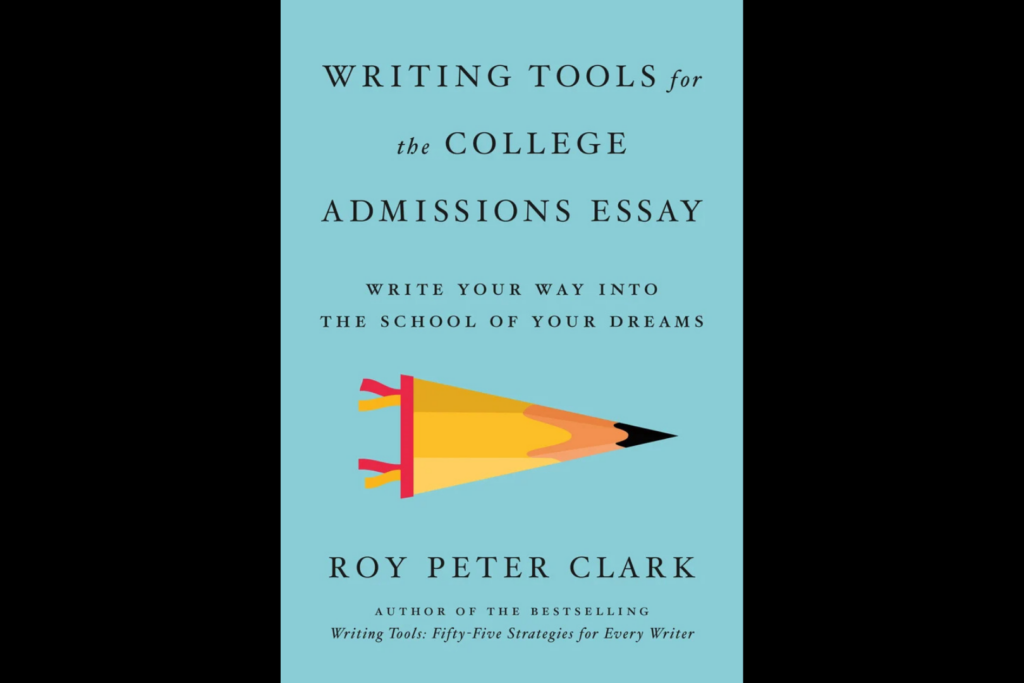
Last May, a new book was born to the world, a stylish looking aqua-colored text titled “Writing Tools for the College Admissions Essay: Write Your Way into the School of Your Dreams.” The book includes 100 tips and 25 full essays written by an interesting variety of high school students.
What surprised me most was how much I learned from studying the work of these young people, lessons I have been able to apply to my own writing and teaching. I have argued that, for those who are not professionals, the college admissions essay may turn out to be the most high-stakes piece of writing they will ever have to create.
All of the elements of sophisticated writing are there in the work of these aspiring college students: creative use of a prompt or assignment, a compelling opening, memorable and telling details, elements of storytelling (from scene-setting to dialogue), a credible and appealing voice, evidence of knowledge and curiosity — all in fewer than 600 words.
Of all the essays made available to me by students, one stood out as the most powerful, so I want to share it here, with the writer’s permission.
I used this essay as the final one in my book, a crowning example of how well-crafted, how creative, how moving a story by a high school student can be. I saved it for last, fearing that if I put it first, other students might find it intimidating and get discouraged. At the end, it was meant to celebrate the craft and inspire the spirit. Here is the essay. My analysis follows.
Leap of Faith
By Asher Montgomery (Accepted to Harvard University, 2023)
(645 words)
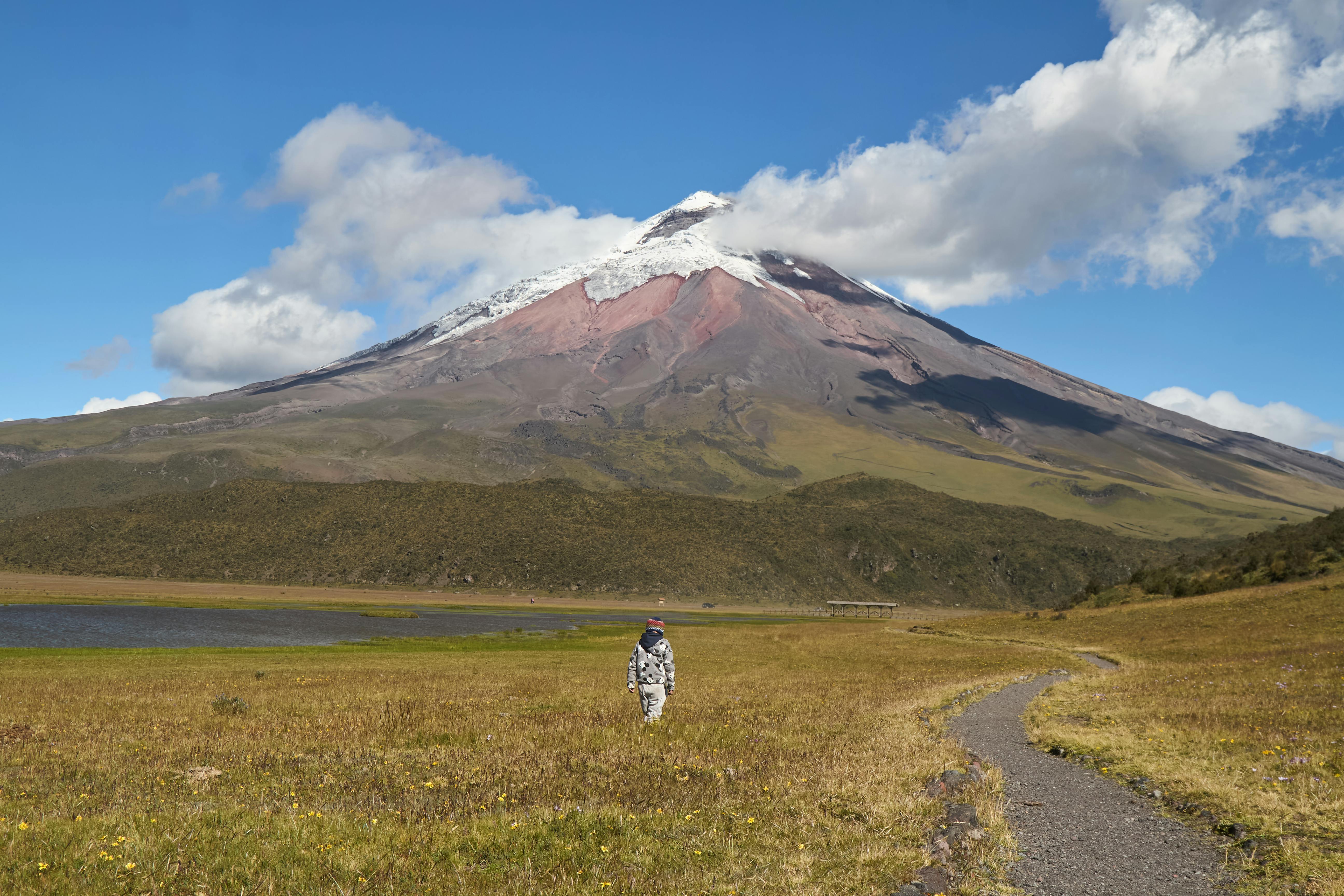
The sky was pitch black on Cotopaxi at 2 a.m. My headlamp barely lit the ice ahead of me. The snow turned my braided hair to ice, and every few steps I stopped to suck breath, like I was hyperventilating.
“I can’t do this anymore,” I thought.
As if he was reading my mind, the guide shouted down to me.
“Asher, you’re suffering because you are thinking about your pain,” he hollered. “Go to your happy place.”
Then I felt a tug on the rope tied to my waist, telling me to keep walking against the wind, against the sleet, against the snow.
I was too exhausted to cry, or to find a happy place. I could only think, “What am I doing here?”
I only had myself to blame. Climbing the 19,347-foot glacial volcano was my idea.
It was my idea because, the year before, on a hike in Alaska, I happened to look to my right and see Denali’s breathtaking peak and think, “That is where I want to be.” And because a few months later the Internet told me that Cotopaxi was great for beginner mountaineers. And, finally, because my dad found cheap flights to Ecuador for the summer of 2021.
I also thought it was something my brother would have liked to do.
Before Cotopaxi, before Alaska, and before my little brother died by suicide, we loved to go on hikes.
Long hikes.
For months at a time, we would camp and wake as the birds started chirping and walk along the rugged Appalachian Trail. Together we’d count the salamanders by the stream as my dad filtered water. We invented our own language — snails were “snake-cars,” birds were “up-dogs,” fellow hikers were “moving rocks.”
It wasn’t all fun. When I hadn’t showered in nine days and climbed into my sleeping bag like some kind of stink burrito. Or when we had to walk miles in the dark to make it to camp. But my siblings and I always left the trail feeling freer than we ever had, proud of ourselves and closer to each other.
We dragged my sister along on the Ecuador trip, but after three tough hikes to get acclimated to the altitude, she decided to opt out of the last climb: Cotopaxi. I tried to convince her otherwise, but she made the right call, for herself.
And my dad, he wasn’t doing much better than I was. His silence was a sign to me that he was in just as much pain.
He told me later that he only kept going because I refused to turn back.
I wanted more than anything at that moment to make it to the top because it never crossed my mind that we wouldn’t make it, and because I hoped I might be able to feel my little brother at the top.
But as the wind picked up and the air got thinner in the bone-biting cold, our legs grew exhausted and still hadn’t reached the steepest part.
The guide told us there that it was too dangerous to continue.
I finally started crying, tears of relief and disappointment.
We turned around. It was still dark. On the descent, the sun began to rise, lighting the clouds that surrounded the warrior mountain.
We stopped for a moment at the signal of the guide. He began pulling the rope out to give it slack. He told me to wait until the rope pulled to begin walking again. He walked out in front until I couldn’t see him. When it was my turn, I reached a gap in the ice. A crevasse. I knew what to do. I stepped back, ran forward, and put all of the energy I had into a leap.
Soaring over the bottomless crevasse, I understood, somewhere in this struggle, that pain and uncertainty are not an end.
What I see in the story
Of all the essays in my book, this one touches me the deepest. I have known the writer, Asher Montgomery, since she was a child. A multitalented young woman from a creative and adventurous family, Asher has been a musician, an activist, and a strong writer since she was in middle school. When I learned she had applied to Harvard, it did not surprise me, although I knew that many high-achieving students apply to Harvard and find themselves rejected.
When I read this essay, I understood why she was accepted and, in her first year, found a place at the Harvard Crimson, the school’s famous student publication.
As Asher was still in high school, trying to figure out her future, she and her family suffered an unimaginable tragedy, the death of her younger brother. If you have read her essay, you can begin to appreciate how skillfully she handled this traumatic experience as an element in her story.
Instead of describing the tragedy in all its painful detail, Asher makes the powerful decision to understate a devastating event that could easily have dominated her narrative. Understatement is a powerful tool in storytelling. When a story is lighthearted, as several of the essays in my book are, overstatement, even exaggeration, may work the best. But in a case such as Asher’s, less turns out to be so much more.
She encases news of the tragedy in a journey of aspiration and desperation, filled with descriptive language that builds a powerful narrative. Stories need characters, scenes, settings, and chronologies, and this one has all of those. It also is built around a symbol, of sorts, perhaps what we might call an archetype; she uses the act of climbing a mountain as a metaphor for overcoming obstacles and achieving knowledge.
In the myths of ancient literature and religion, Sisyphus repeatedly pushes a rock up a hill, only to see it roll back every time. Moses receives the commandments from the top of Mount Sinai. Jesus delivers a famous sermon from a mount. Mount Olympus was where the Greek gods hung out. Even in our common language we talk about the hills we have to climb, and the glory that comes from reaching the top.
Asher proves the wisdom of my high school teacher who told us that in good writing “a symbol need not be a cymbal.” In other words, no need to force-feed meaning to readers. Instead, the meaning reveals itself in one final moment, when Asher is fully prepared to take a literal leap of faith: a jump across a crevasse that leads to an uncertain but hopeful future.
The story reveals so much about Asher’s character: her intelligence, resilience, physical courage, and sensitivity. This is the kind of person I would want to join my community of teaching and learning.
It was important for me to add in the book that students should not feel intimidated by the unique elements on display in this essay. A young writer may not have experienced such a terrible personal loss. They may not have been born into a family that has the resources to undertake exciting adventures.
But every writer will have their own experiences, and their own stories about loss, hope, family, aspiration, failure, and triumph. You don’t need to write the most dramatic essay in the class to get you where you want to go — only one that is revealing and true.
That is just as true for experienced writers as for students. Wherever you are on your own journey, just remember: you can do it.
A final note for journalists and professional writers

The readers of Nieman Storyboard and the Poynter Institute website are in a position to make a serious contribution to education and literacy. Students benefit from a writing coach, and some families spend lots of money to procure one. Wouldn’t it be cool for a high school student to find an experienced writer in their communities to coach them? I would much prefer a high school writer to consult a human coach than a robot editor.
You may be thinking: I would not know how to coach someone to write such an essay. I am happy to point you back to my book. It is not only a guide for young writers; it is a guide for those who help young writers, including counselors, teachers, parents, neighbors, and older students. I turn an important part of the book over to Michelle Hiskey, an award-winning writer who has built a business working with students on their essays. She offers more than 20 important strategies that you can use to help students – and, in fact, any writer.
Most of us know families with students of high school age. It will not be difficult for you to express an interest in helping a young writer. You can also contact high schools or school administrators, expressing your volunteer interest.
Believe me when I tell you how gratifying it will feel when a young writer shares with you the news of being accepted to a school of their choice.
***
Roy Peter Clark has taught writing at the Poynter Institute since 1977, coaching students of all ages, from elementary school to Pulitzer Prize-winning professionals. He is the author or editor of 21 books on writing, reading, language, grammar, rhetoric, and journalism. He is a contributing writer to the Tampa Bay Times. Poynter has named a national short writing contest in his honor.