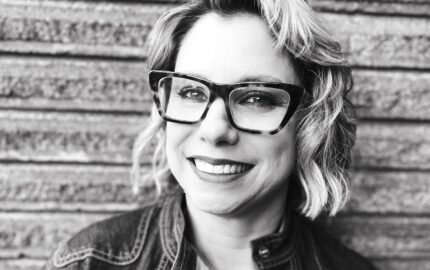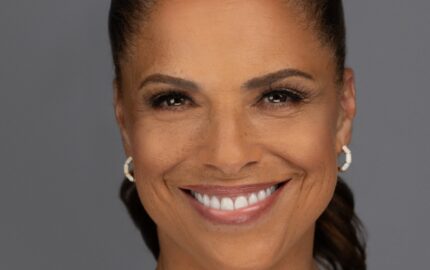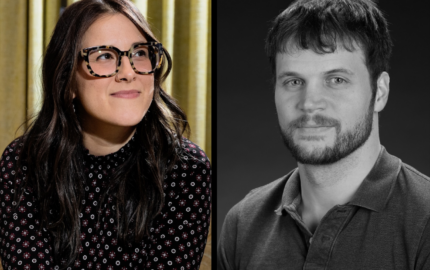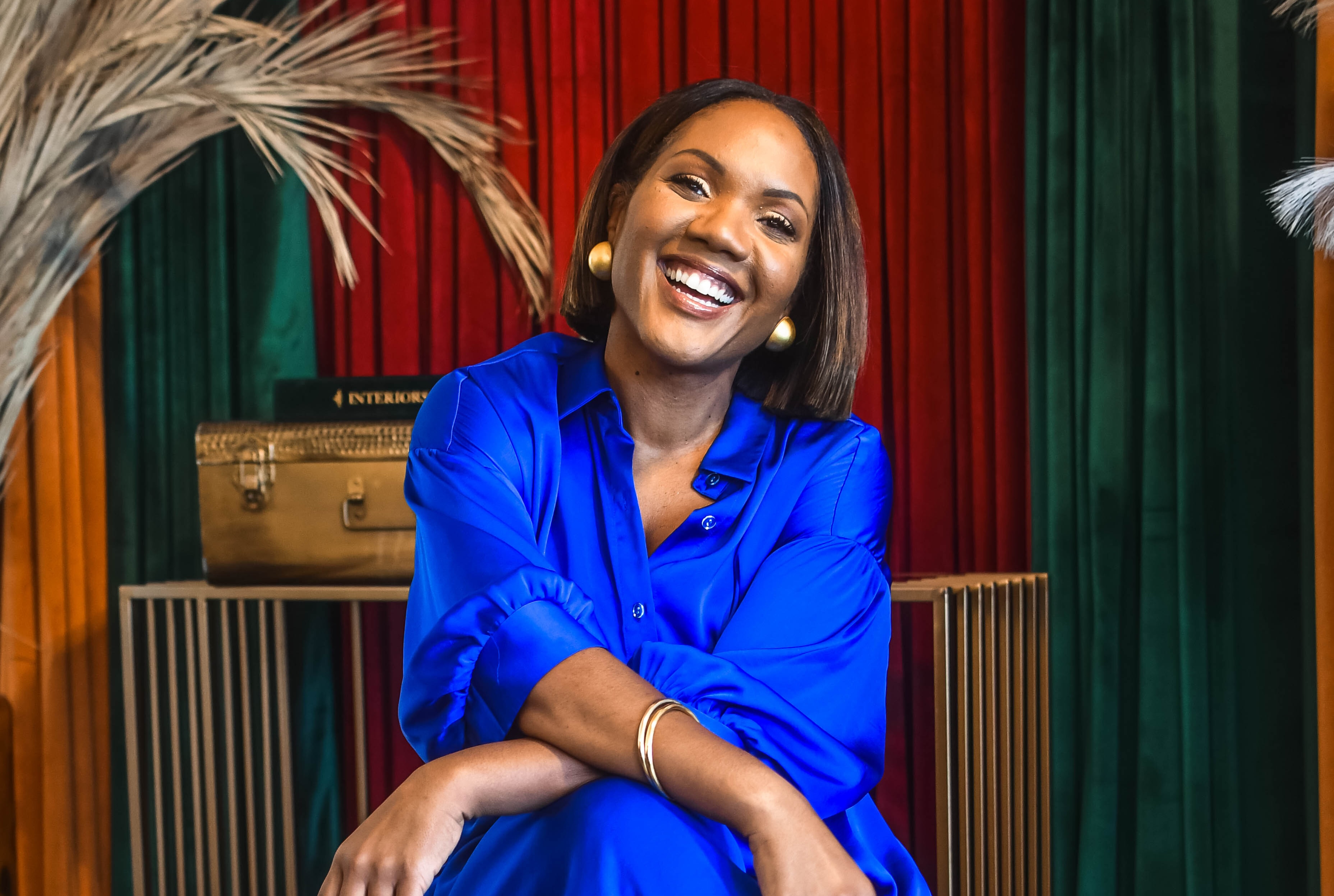
On this week’s episode of the Nieman Storyboard podcast, award-winning journalist Tonya Mosley joins Storyboard contributor Christina M. Tapper for a discussion about interviewing, live coverage, and how to tell complex family stories.
Mosley is the co-host of NPR’s “Fresh Air,” where she has in-depth conversations with newsmakers like politician and author Stacey Abrams, actor George Clooney, and artist Mickalene Thomas. It’s not just Mosley’s ability to have conversations with a wide range of people that make her one of the most notable interviewers in journalism and media. It’s also her research.
[ Follow us in Apple Podcasts, Spotify, or your favorite podcast app. ]
“I have a wonderful team at ‘Fresh Air’ who puts together a research document and it's all the things that they can find out about the person, and they break it up: here's television work, here's audio work, here's what's been written about them. I read all of that,” she says. “But then the fun thing to do after that is to find the things that weren't in the document. So then I go digging myself.”
In her own research, Mosley scours non-mainstream platforms, including Black media. It’s Mosley’s way of covering all of her bases and honoring the guest’s time.
“It’s a form of respect. I feel like a person comes and sits down with you for an hour or an hour and a half, they're stopping what they're doing to be able to talk with you,” she says. “So, I want to give them [respect] by knowing their work.”
Before joining “Fresh Air” in 2023, Mosley co-hosted NPR’s “Here & Now,” where she guided listeners through special NPR coverage of Donald Trump’s first presidency, the racial reckoning of 2021, and live coverage of the January 6th insurrection as it was happening. She is also the founder of TMI Productions, which created the award-winning podcast “Truth Be Told” and the deeply personal audio docuseries “She Has A Name.”
Set in Mosley’s hometown of Detroit during the 1980s drug epidemic, “She Has A Name” covers the disappearance and death of Mosley’s older sister Anita, whom Mosley learned about more than a decade after Anita vanished. The series combines memoir and investigative journalism, to reveal the complexity of a life lost and how a family comes together to heal.
“When it comes to people of color, [we’re] so one dimensional [when depicted] in movies and shows, but also in journalism. I wanted to show that Anita was a human being,” Mosley says. “She was like all of us. She had her struggles and you needed to know what brought her to those struggles. I wanted to build, throughout my entire career, a sense of empathy for all people through a shared understanding that we're complex. We're not all good and we're not all bad. It felt really gratifying to be able to do that in a story about my family and with this platform of a podcast where you actually have the time to do it.”
The excerpts below are edited for length and clarity.
On listeners adjusting to her as a co-host of ‘Fresh Air,’ with longtime host Terry Gross
I say I have a thick skin, but it's still something that I work through. But I also have to understand that people have their own tastes. And something really interesting has happened to me. I was in Sheboygan, Wisconsin, for a live show with Tim Robbins. Before the show started, we had listeners come and take pictures with myself and with Tim Robbins. And I love doing those types of events because this was one of the first times I met with listeners who were just wanting to talk to me about my work. It's expected that, previously, I would get folks who were saying to me, “Whoa, you have big shoes to fill with Terry Gross.” …But a lot of those listeners [at the live show] told me they're learning new things through the types of questions I ask in my point of view.
And it's implicit what they're saying… “You are a voice that's different. You're a Black woman who's of a certain age, and I'm learning to see the world through your eyes.” And that's such a powerful thing because we have the privilege of hearing other people do that for so long. The Terry Grosses of the world, the Howard Sterns, all of those people who have had this privileged space of guiding conversations. And so I'm just, I'm just gratified by it.
On her pre-show rituals
One of the rituals I'm doing, in this moment, is giving me enough time for pure silence. I'm not looking at anything and I'm not listening to anything. And that has been very helpful to help me quiet my mind and prepare for the conversation… I like to have on a nice outfit. I like to have my favorite coffee out of my favorite mug. And, those things just make me feel put together and prepared. Because I think the more confident I feel, the more I can let myself go and just listen and be there with the person.
On researching guests’ speaking style before an interview
I really do study the way people talk. That is something that in my research I'm really listening for. Does a person talk fast and are they a good edit? Because if you're listening to someone and they're talking fast, then you know that you won't be able to cut them off when you're editing after the interview. Or do they make dramatic pauses? Do they go on and on? Are they really short and succinct? That helps me so that I understand during my conversation how it actually might be.
On how to use silence during an interview
When I first became a reporter, I was in my early twenties. I had a veteran tell me when I go out to report, to get very comfortable in silence because that allows your subject to reflect. And sometimes this is like a reporter's trick — they will give and divulge more information because they realize, “Oh, maybe I didn't deliver on what you just asked me.” So they will go deeper. I'm okay with just sitting there, and we're both just sitting there quiet for a minute. It feels really odd. It feels counterintuitive, but I've never had a moment where that didn't benefit. But it doesn't work on live radio.
On delivering live coverage
I had the benefit of being a local TV reporter for many years, and part of that job was to be live. My very first experience as a reporter, we had a breaking news story and I had to go live and something was embedded in me at that moment. I don't know why it is, but I can handle the pressure of going live. I like it and I do my best work.
I used to have photographers say, “It's so odd when we're taping, if [you’re] doing a standup, you have to do like five, 10 takes. You keep messing up. But then when we are live, it's on.” I think there's just something subconsciously in my mind that is like, “This is one shot.”
In the case of January 6th, although at the moment we didn't know what this was going to signify, we knew it was a big deal. And John Lewis's funeral, [that was] a big deal…I think with age and experience, I realize I have to get out of my own way. This is not about me. This is about the listeners getting what they need to know about John Lewis's funeral. They are here to hear about this man who was a civil rights leader and remember him. I am just the vessel by which to get that information across.
It is not about my performance. My performance is only in that it is clear and the message is clear. So that's really helpful to me and that's why I guess all those rituals are helpful because it allows me to get out of my own way in, in those instances.
On including herself in her work
[In the early days of the podcast “Truth Be Told”], there were two producers there that I worked with. While we were conceptualizing it… they just kept saying to me, “Where are you here [in this show]?” And my journalistic inclination was, “I'm just the vessel. I'm not here at all.” But they really pushed me. So that first season was my first time really sharing details about myself to that degree. And it felt very uncomfortable. But the response made me realize that it was very important for one very specific reason: Black women in particular, we haven't really been included. I could say Black people in general, but particularly for me as a Black woman, it is very dangerous to be in a country where you can't see yourself interpreted like you need to be interpreted. And one of the ways you are interpreted is by seeing yourself reflected. And in that particular series, you needed to see elements of me to understand the bigger picture.
Because the truth is, I'm not just some objective person over here talking about these issues about race in America. I very much am a Black woman in America. How can I do this and not have my skin in the game in some way? And the response I got from the audience, particularly Black women, was so overwhelming… And so, when I find it necessary to further the story, that's when I inject myself.
Reading and Listening List: Interviews, Podcasts, and Books Mentioned
Show credits

Hosted and produced by Mark Armstrong
Episode producer and interview by Christina M. Tapper
Episode editor: Kelly Araja
Audience editor: Adriana Lacy
Promotional support: Ellen Tuttle
Operational support: Paul Plutnicki, Peter Canova
Nieman Foundation interim curator: Henry Chu
Music: “Golden Grass,” by Blue Dot Sessions (www.sessions.blue)
Cover design by Adriana Lacy
Nieman Storyboard is presented by the Nieman Foundation for Journalism at Harvard.
***
Subscribe to Storyboard
Get insights into the craft of journalism and storytelling in your inbox, delivered on Fridays.