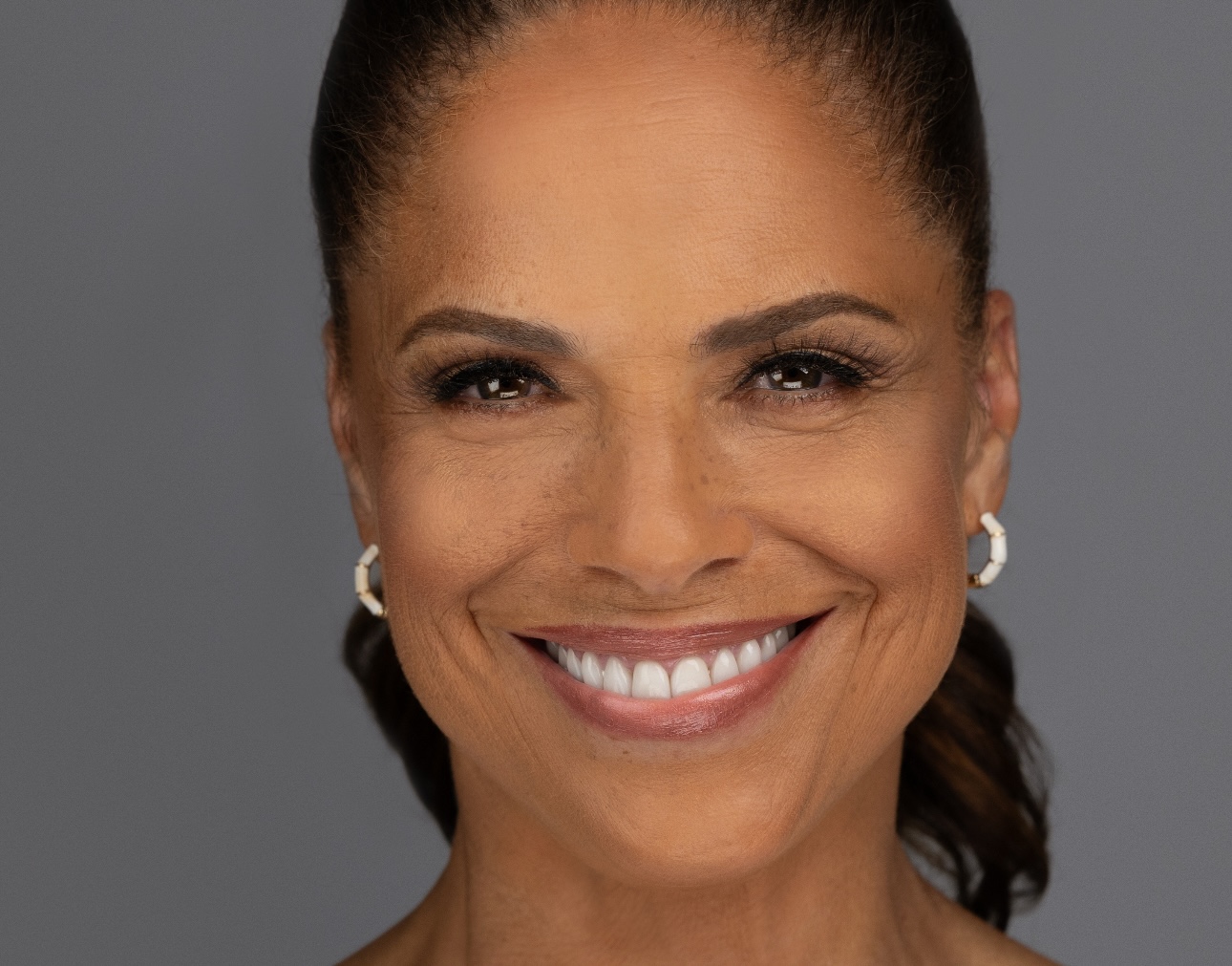
Award-winning journalist and executive producer Soledad O’Brien joins Storyboard contributor Christina M. Tapper for this week’s Nieman Storyboard podcast to discuss her career journey from TV news to documentaries, and how she came to embrace the form for storytelling on social issues.
As one of the most respected voices in journalism, working at NBC, MSNBC, and CNN, O’Brien founded Soledad O’Brien Productions, a media production company that develops and produces projects on race, class, gender, and identity, in 2013. Most recently, she anchored and produced the political magazine show "Matter of Fact with Soledad O'Brien" during a 10-season run for Hearst TV. O’Brien’s reporting has been honored with 10 Emmys and three Peabody Awards.
[ Follow us in Apple Podcasts, Spotify, or your favorite podcast app. ]
In 2025, O’Brien served as executive producer for the Oscar-nominated HBO Max documentary short, “The Devil Is Busy,” directed by Geeta Gandbhir and Christalyn Hampton, about a day at an Atlanta abortion clinic and the fight for reproductive rights. O’Brien and her team decided to tell the story through Tracii, the head of security at the clinic. Patients and clinicians are featured in the documentary, but it’s Tracii’s story that is the thread from start to finish in this post-Dobbs era piece.
“As a character, she's very vibrant and she's very contradictory. You start with Tracii doing her daily prayer with her pastor,” O’Brien says. “When you think about abortion clinics, if I were to say to a hundred people on the street, this is a story about a very religious person and an abortion clinic, I think a lot of people would think I was talking about a protester. So we thought it was a very interesting thing that you didn't see a lot of — a deeply religious person who is not just welcoming to the women, she's the security guard. She's responsible for the women who are coming in. She's a wonderful narrator. She really drives the story forward.”
In many ways, O’Brien’s work across TV, docs, and podcasts is not just just a record, but also an act of witnessing, which she learned to do early in life. While home from college, O’Brien returned to her former high school in Long Island, N.Y., to pick up her mother who worked there as a school teacher. During her visit, O’Brien and her mother saw the principal and vice principal at the mostly white school, talking with a young Black student.
“I remember my mom stopping and standing there, planting herself. The principal and the vice principal said, ‘Mrs. O'Brien, we got it. You can move on.’ And she just stood there and would not move on. Kind of like, ‘No, I'm good.’ I remember the kid looking at my mom, and I remember thinking, Oh there is this power transfer. My mom suddenly was the most powerful person in the room,” O’Brien recalls. “Then finally the principal said, ‘You know, don't run in the halls.’ And the kid went off. It was so interesting. Because I think [my mom] was basically telegraphing like, ‘I'm not gonna do anything, but I am here to be a witness of whatever's going to happen with this kid.’”
It’s an experience that O’Brien shared while speaking at live events in the past. Given the current political and cultural turmoil in the U.S., O’Brien retells the story to urge everyone to be a witness during these times.
“I think there's something about being unmovable. Everybody should think about it. I'm not just going to move along when I see something unfolding,” she says. “Not just for me and my work, but I think everybody kind of has that opportunity. Today, especially, in an environment where there's just a lot of stuff unfolding every day.”
O’Brien also discusses how her CNN coverage of Hurricane Katrina shaped her career, and how to tell fair and full stories without “both sides-ism.”
The excerpts below are edited for length and clarity.
On how she develops trust with her subjects and manages their concerns
You just tell people what you want to do and you're honest about it. … Every so often you'll get someone whose dream is to be a director and they're like, “Here’s the way I see this going.” And sometimes, they've got really good points. So I listen to people if they have something they want to add. I don't think you have to worry about them pushing back and being worried, when on the front end you've done all the work to say, “Here's what we're doing .. and here's what we're doing next.” And it makes sense, right? Because they're seeing it. There's nothing worse than feeling like someone's misleading you.
For a lot of people, being on television, it's their first time. And it's scary [for them]…I don't give people the questions I'm going to ask [ahead of time], mostly because I might not stick to them. [I tell them], “Here's basically what we're going to cover. If you need to stop because you want to look up a statistic, you are welcome to stop and get that.”
On determining the length and format of her projects
I've had stories that I thought were a series and someone would say, “Actually, that's a great movie.” I've had shorts that someone said, “You know, this thing is going really well, let's make it a full length.” Sometimes money dictates it… [“The Devil Is Busy’] was 31 minutes. It probably started at a little over 40 or 50, but then you start cutting it down and then you say, “Okay, this works. This makes sense.” But there's no magic formula for it, at all.
On what dictates her role for each project
It really depends on if you've sold it and somebody says, “We need this to be a correspondent-driven piece.” Conversely, lots of places do not use correspondents at all. Sometimes people just want wraps. So a lot of times it depends on what the person wants, and often we have a big say in that. If someone's buying your project, they buy into your theory of how the story should be told.
Sometimes we come in, I'm asked to be an executive producer, we've got a bunch of projects that people have asked me to pop in and it's really their project. And sometimes I give funding, sometimes I give advice, sometimes [I] throw the party at the end. Sometimes I'm in the field shooting and doing interviews. So it really depends, for each project, what's needed.
On how her Hurricane Katrina coverage for CNN shaped the journalist she is today
For me, it really opened my eyes to the kind of reporting I wanted to do. And in some ways it made my career. I got a lot of airtime, so I could make mistakes and get better and practice. We did a lot of live anchoring, meaning you just stand there hour after hour doing interviews. I remember bumping into [New Orleans Mayor Ray Nagin]. I popped a mic on him and we did a really great walking interview through the walkway around the Superdome. You know, just off the top. No prep, no nothing. But you didn't need it, because your prep was that you had been there for a long time. I'm very proud of the work. It made me feel very proud to be a journalist.
On ‘both sides-ism’ in journalism and telling the full story
I find the both sides thing so frustrating…. [It’s like] the journalist feels a little guilty, “I just want to make sure I'm covered.” And so they're just not really sure of the story they're trying to tell. Fran Tarkenton, the [NFL] quarterback, said to me once, “Soledad, if you have three quarterbacks, you have no quarterbacks.” And, and I remember thinking like, “I know nothing about sports metaphors! That means absolutely nothing to me, Fran. Thank you.” But what he was trying to say was, if you don't commit to the story you're going to tell, then you have nothing. You have a big blob of trying to pop lots of different things in and you end up with nothing at all.
[For “The Devil is Busy,” we did not] sit down and say, “Now we wanna hear from the [anti-abortion] protestors.” This is Tracii's day in her life of what she does, who she interacts with, how it works. And you do have to figure out where do the protestors come in? What is the experience you're showing in the piece? The experience that patients are having? That the clinicians are having? That Tracii and the security team are having? If you had not put the protesters in at all, it would be so unrealistic.
Listening and Watching List:
Show credits

Hosted and produced by Mark Armstrong
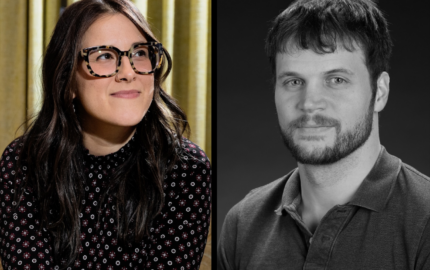
Episode producer and interview by Christina M. Tapper
Episode editor: Kelly Araja
Audience editor: Adriana Lacy
Promotional support: Ellen Tuttle
Operational support: Paul Plutnicki, Peter Canova
Nieman Foundation interim curator: Henry Chu
Music: “Golden Grass,” by Blue Dot Sessions (www.sessions.blue)
Cover design by Adriana Lacy
Nieman Storyboard is presented by the Nieman Foundation for Journalism at Harvard.
***
Subscribe to Storyboard
Get insights into the craft of journalism and storytelling in your inbox, delivered on Fridays.