Sign up for the Nieman Storyboard newsletter, delivered every Friday in your inbox.
***
Dear Storyboard community:
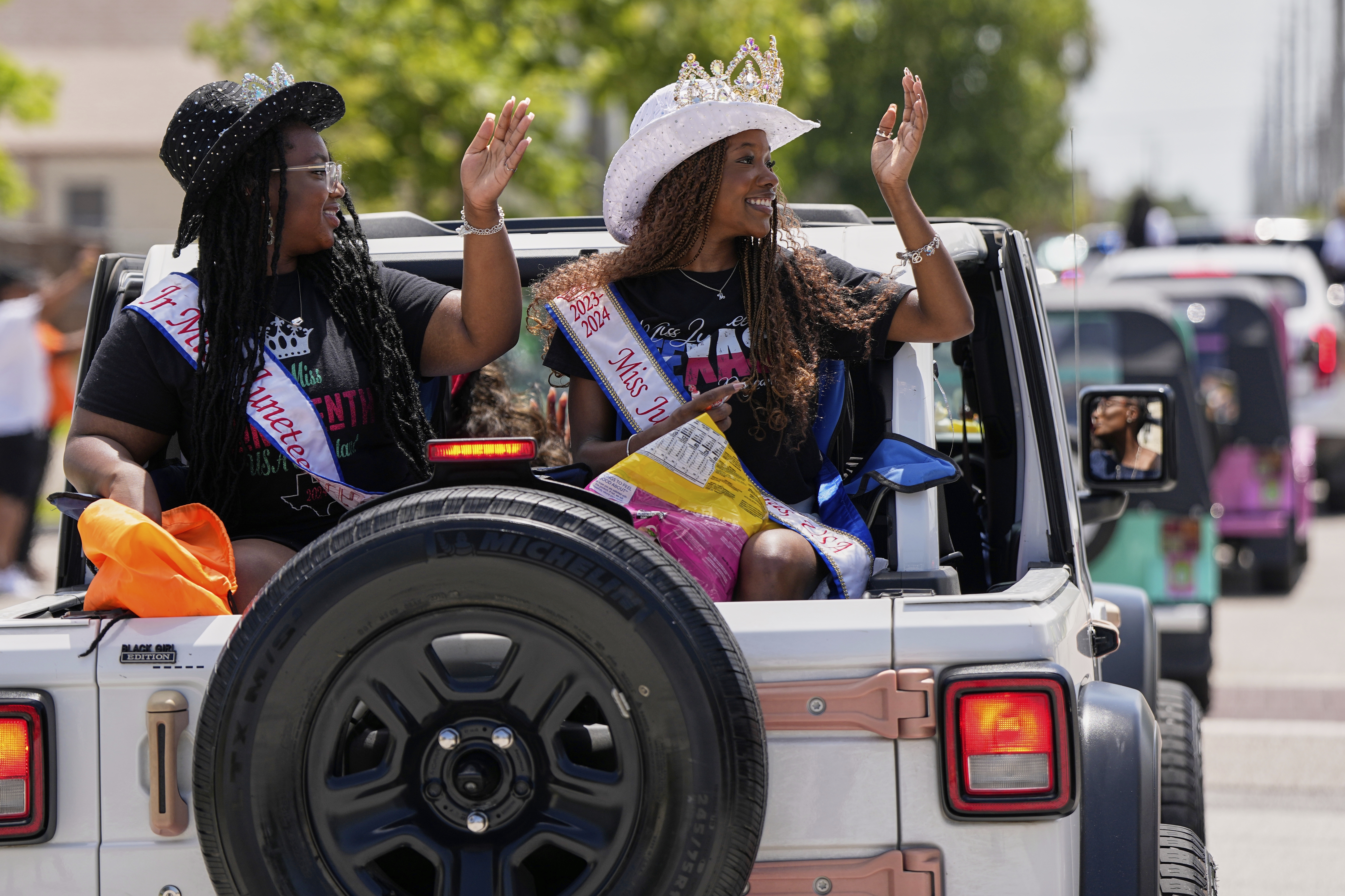
Today marks the fifth year of Juneteenth as a federal holiday in the United States, a day commemorating the end of slavery after the Civil War. It has been 161 years since the events that inspired the holiday: On June 19, 1865, a Union general, Gordon Granger, arrived in Galveston, Texas, with 2,000 troops, to issue an order freeing all enslaved African Americans in accordance with the Emancipation Proclamation that had been signed two years earlier by President Lincoln.
As Jamelle Bouie wrote in his 2014 analysis at Slate, “The Black American Holiday Everyone Should Celebrate but Doesn’t,” freedom itself did not come simply or quickly:
“It would be a stretch to say this freed the slaves of Texas. There, as elsewhere in the South, attempts to act on this freedom were met with violence from former slave owners and other angry whites. ‘There is much evidence to suggest that southern whites—especially Confederate parolees—perpetrated more acts of violence against newly freed bondspeople in Texas than in other states,’ writes historian Elizabeth Hayes Turner in an essay titled ‘Juneteenth: Emancipation and Memory.’”
In 2020, Bouie expanded on the importance of the holiday, less than a month after the police killing of George Floyd:
This holiday, which only became a nationwide celebration (among Black Americans) in the 20th century, has grown in stature over the last decade as a result of key anniversaries (2011 to 2015 was the sesquicentennial of the Civil War), trends in public opinion (the growing racial liberalism of left-leaning whites), and the rise of the Black Lives Matter movement. …
Juneteenth may mark just one moment in the struggle for emancipation, but the holiday gives us an occasion to reflect on the profound contributions of enslaved Black Americans to the cause of human freedom. It gives us another way to recognize the central place of slavery and its demise in our national story.
In 2021, President Biden signed the Juneteenth National Independence Day Act into law. In 2024, Bouie and Errin Haines, co-founder and editor at large for The 19th, grappled with what Juneteenth means as it’s grown from a Texas and regional holiday to a national holiday (and one that will inevitably be commercialized in the process). “I want to talk about what role specifically African American communities in Texas have played in really preserving and promoting the significance of Juneteenth over the decades, and why it’s important to remember that work today,” Haines said. “I’m obviously thinking a lot about Opal Lee.”
Lee, now 99, is one of the forces behind Juneteenth becoming a federal holiday. The “grandmother of Juneteenth” was featured in a Hanif Abdurraqib profile for Texas Monthly last year:
On the night of June 19, 1939, when Lee was twelve years old, a white mob gathered, demanding that the family leave. Lee and her brothers took refuge at a friend’s house a few blocks away while her parents fled under cover of darkness. The mob trashed the home and set it on fire.
Lee’s mom and dad never discussed what happened with their children, so some of the details of that night have been lost. But the date of the attack, Juneteenth, would become central to Lee’s life and legacy. She went on to become a teacher and raise four children, but upon retiring, she set her mind to making Juneteenth a federal holiday. In 2016, at age 89, she began walking in towns and cities from Fort Worth all the way to Washington, D.C., a trek that transformed her into a larger-than-life figure in the political and cultural landscape of America.
Texas Highways magazine also has two excellent features on the history of Juneteenth in the state. In addition to a pictorial history of Juneteenth, writer and historian Michael Hurd reflects on family memories:
For several of my adolescent years in the 1960s, my family motored 45 miles northwest on US 290 from southeast Houston’s Sunnyside neighborhood to Prairie View’s small community of African American farmers. There, we joined several other Black families for what was billed as a picnic. It became a much anticipated ritual that, to me, had no significance other than an opportunity to spend a day in the country gorging on fried chicken, barbecue, burgers, hot dogs, red soda water, and soul food dishes, and wallowing in an itchy bed of hay tugged by a clattering tractor. …
Despite my innocence, I’d like to think the adults who brought us together for their annual Juneteenth celebration did at some point kick around a few conversations reflecting on the occasion’s true purpose. While slamming dominoes and talking noise, playing the card game bid whist, and gossiping, they must have discussed June 19, 1865, when Black Texans became some of the last of 4 million enslaved African Americans formally notified of their freedom. Perhaps the adults acknowledged the history or, like us kids, just enjoyed a leisurely day with their friends.
I do not doubt that other Black families around the state were engaged in similar celebrations for the day saluting African American heritage.
I hope today offers us a chance to reflect on the history and stories that these writers and publications have generously shared.
Links of note
- The immersive journalism site Long Lead has published a new story from Storyboard contributor Kim Cross, called “Title Waves,” about a high school girls’ water polo team in Hawaii that was part of a landmark Title IX class action lawsuit fighting for gender equity in sports and education. The piece opens with a group of 18 girls treading water off the coast of Oahu, practicing in the ocean because their team couldn’t get access to a pool: “The whitecaps and currents made one-handed passing drills ridiculous. Treading water, legs circling in opposite directions — the classic eggbeater kick — they had to take care not to scrape the coral reef. That could sandpaper off a layer of skin, leaving wounds that took forever to heal on athletes constantly in the water. ‘This isn’t fair,’ thought Ashley Badis, a soft-spoken junior with a rocket arm.” As Cross told Long Lead’s Parker Molloy: “One of the themes of this whole story is that the girls who have the courage to stand up and fight, often, if they do win relief, it doesn’t happen until they’ve graduated. So they really are doing the ultimate act of a teammate — they’re taking one for the team. And it comes at great cost.”
- Writer Anna Holmes reflects on finishing the 170,000-word “vomit draft” of her next book, which she’s calling “The Sex Book” (“a placeholder title created for my own amusement”). Holmes has previously published books, but says this is her first written-through narrative, which inevitably led to some nerves. “This is a personal story I’m telling, one about which I feel incredibly vulnerable. It’s also my only chance to tell it, and I’m not sure how to ‘do’ that, even though I also know that there is no one right or wrong way to write.”
- The internet is awash in rigid storytelling rules for writers, so short story writer Kathy Fish is using her newsletter to share some slightly revised — and more bendable — “writer commandments” from her community. One example: “If you put a gun on the mantel in the 1st act, then in the 2nd act, you must offer a glass of warm milk to help soothe everyone’s nerves.” Or: “When you sit down to write, always set a small goal, like winning a Pulitzer or unearthing the meaning of life.” Finally, and most importantly: “Have fun.”
Keep finding the fun, and keep sharing your stories,
Mark Armstrong
Editor
Nieman Storyboard
Follow the Nieman Storyboard Podcast
On Bluesky: @niemanstoryboard.org
Subscribe to Storyboard
Get insights into the craft of journalism and storytelling in your inbox, delivered on Fridays.
Follow the Nieman Storyboard Podcast
[ Follow us in Apple Podcasts, Spotify, or your favorite podcast app ]