In the aftermath of loss, platitudes and silver linings abound. They creep into greeting cards and consolations that attempt to put words to the unthinkable and instill hope in the possibility of closure.
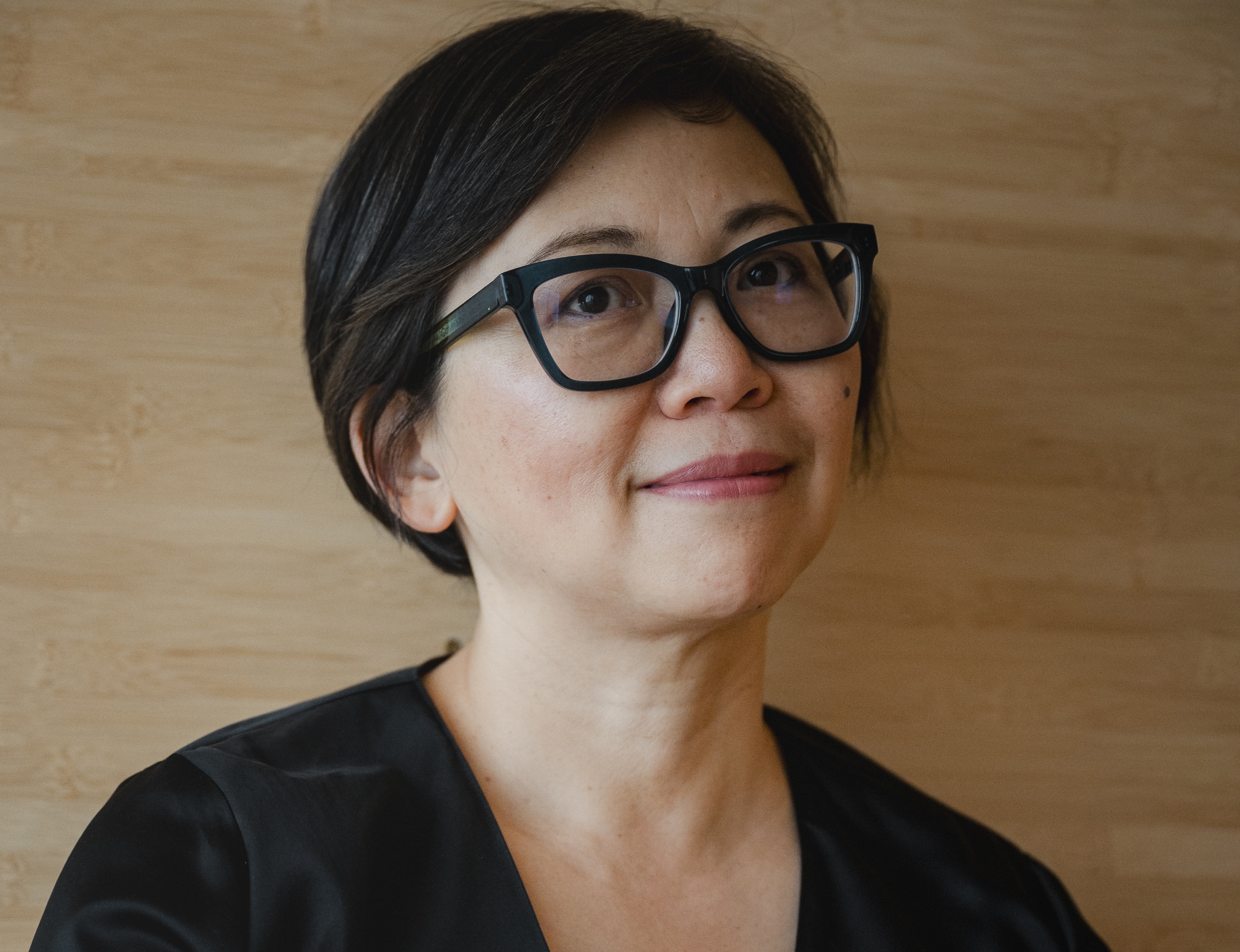
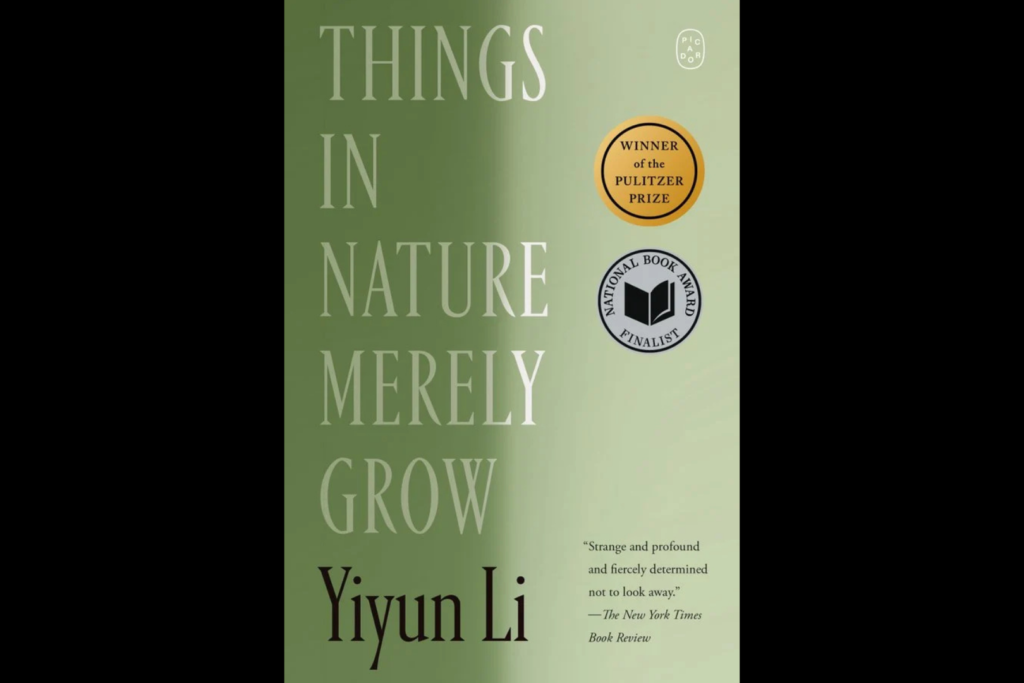
But in Yiyun Li’s experience, there is a limit to language, and there are no easy end points. Li’s searing memoir, “Things in Nature Merely Grow,” is about a wound that never fully heals: the death of her teenage son, James, who died by suicide six years after his brother Vincent died the same way.
Li eschews euphemisms and instead embraces hard truths that lay bare the realities of life after loss. “This book will not provide a neat narrative arc, which some readers may hanker for: from hardship to triumph, from incomprehension to newly gained perception and wisdom, from suffering to transcendence,” Li tells readers early on. “This book will not provide the easy satisfaction of fulfillment, inspiration, and transformation.”
And yet, it’s hard not to feel transformed after reading it. As someone who lost my mother when I was 11, I’ve read countless memoirs about death. But I have never read one that moved me as deeply as this one. The margins of my copy are marked by hearts and stars — reminders of passages that I loved and felt illuminated by. Page after page, I was struck by a pang of recognition, like when Li wrote that over time, “we learn to suffer better” and we realize that “still there is living to do.”
It comes as no surprise that “Things in Nature Merely Grow” has won numerous awards, including the 2026 Pulitzer Prize in Memoir and the Andrew Carnegie Medal for Excellence in Nonfiction. It was also a finalist for the PEN/Jean Stein Book Award and the National Book Award for Nonfiction.
The accolades are a testament to the power of Li’s unadorned writing and her examination of topics seldom seen in books about loss: the inescapable reality of facts, the insufficiency of language, and the understanding that some questions will forever remain unanswerable.
“Facts are the harshest and the hardest part of life,” Li writes, noting that her life “makes some fiction feel pale and feeble” in comparison. “That a mother could do all things humanly possible and sensible for a child but still could not keep him alive — that was a fact that I would have to live with, I thought, every single day, for the rest of my life.”
Facts, as she explains, can be wilder than fiction. Just four hours before Li’s son James died, she and her husband had put a deposit down on a house. These are the types of events, she said, that she would never have paired in a novel.
“In writing fiction, one avoids coincidences like that, which offer convenient metaphor, shoddy poignancy, and unearned drama,” Li writes. “Life, however, does not follow a novelist’s discipline. Fiction, one suspects, is tamer than life.”
Li, who teaches creative writing at Princeton University, has published several works of fiction, including “Where Reasons End” — a novel she wrote following her eldest son Vincent’s death. The book is structured as a dialogue between a mother and her dead son who communicate across the boundary of life and death.
“Things in Nature Merely Grow” explores a boundary too — between loss and language. Throughout the book, Li is reminded of language’s shortcomings in the aftermath of her son James’s death. She does not know, for instance, what to call a parent who can no longer parent. “The noun form of the word is forever disconnected from its verb form,” she writes.
Instead of being defeated by a lack of words or pretending it doesn’t exist, Li continues writing in spite of it. She shows that, even when there is not a single word to describe the meaning of something, writing can nevertheless help us move closer to interpretation.
She also grapples with the types of questions that tend to accompany tragedy: ones that defy easy answers and can linger for a lifetime. As a writer, Li doesn’t wallow in what-ifs centered on the past; she focuses on the present — or as she refers to it, “the now and now and now and now.”
In a memorable interview with CNN’s Anderson Cooper, Li said: “‘What if’ belongs to fiction because in fiction, you can say, ‘What if I did this, what if I did that?’ You can change the course of life. But in real life, you cannot talk about ‘what if.’ It’s about ‘what now.’ Things happen, what now? And that’s for the living.”
After hearing this interview and reading “Things in Nature Merely Grow,” I felt compelled to reach out to Li with questions of my own. In the annotation below, Li offers insights into her writing process and reflections on the first chapter of her book.
Excerpt: ‘Things in Nature Merely Grow’, Chapter 1
1
There Is No Good Way to Say This
There is no good way to say this—when the police arrive, they inevitably preface the bad news with that sentence, as though their presence had not been ominous enough. Mallary Tenore Tarpley: This is such a powerful opening line. You refer to ‘there is no good way to say this’ as a sentence, but here, it doesn’t stand alone as one. Instead of placing a period after it, you use an em-dash. Forgive me if I’m looking too deeply into this, but I can’t help but wonder: Why did you make this a part of the book’s first sentence, rather than the first full sentence in and of itself? (I noticed it does appear as a sentence of its own in the first line of the second chapter.)Yiyun Li: Later in the book, ‘there is no good way to say this’ is a full sentence spoken by the narrator. It’s a sentence processed by the narrator’s thinking so it has, in a way, become her thinking. Here the line is spoken by the policemen, a cliché, though there is never a more effective cliché than this one. It may also be important to start the book from the point of view of the world—for an introspective book, the externality has to be established right away. The first time I heard the line, I knew already what was about to be conveyed. Nevertheless, I paid attention to how the news was delivered: the detective insisted that I take a seat first. I sat down at the dinner table, and he moved another chair to the right distance and sat down himself. No doubt he was following protocol, and yet the sentence—there is no good way to say this— struck me as both accurate and effective. It must be a sentence that, though nearly a cliché, is not often used in daily conversation; its precision has stayed with me.
The second time, having guessed the news about to be delivered, I did not give the sentence a moment’s thought. I did not wait for the detective to ask me to sit down, either. I indicated a chair where my husband should sit and took the other chair in the living room. My heart already began to feel that sensation for which there is no name. I’m struck by the parallels between ‘there is no good way to say this’ and ‘that sensation for which there is no name.’ Both speak to the reality that language can fall short.Yes, that language falls short is a theme I revisit in my writing. I do think the point of writing is to use words despite the inevitability that they fall short. Call it aching, call it wrenching, call it shattering, but they are all wrong words, useless in their familiarity. This time, the four policemen all stood.
There is no good way to state these facts, which must be acknowledged before I go on with this book. The language is declarative here. Why did you decide to phrase this in such a direct way?There is little point to be coy or vague or indirect. Any meaningful writing is a way to go toward/to face/to look straight into the eyes of something difficult of inexplicable, rather than to run away from it. My husband and I have two children and lost them both: Vincent in 2017, at sixteen, James in 2024, at nineteen. Both chose suicide, and both died not far from home; James near Princeton Station, Vincent near Princeton Junction.
The detectives in charge of the two cases belonged to two agencies—one associated with Amtrak and the other with New Jersey Transit. As I type these facts, I come to a sudden realization, which was not available to me a few months earlier, or even yesterday. The facts would explain the confusion of the New Jersey Transit detective when he told me, on his second visit, that he couldn’t locate Vincent’s record in the files. He had an uneasy demeanor, perhaps feeling defeated by his inability to find Vincent or feeling the discomfort of having to face us again. On his first visit, he did all he could to avoid any reference to suicide, repeating the words “we can’t say more at the moment” and “active investigation” and “the crime scene.” Despite his fumbling, I already knew that James had died from suicide. I was the one to tell him that James’s brother had died of suicide near Princeton Junction a little over six years ago.
My friend Elizabeth, who had arrived from Austin, Texas, just in time to be with us before the detective’s scheduled visit, shook her head afterward. “Not quite competent, is he?” she said, and I agreed. I then told her about the other detective, who, on his second visit, had told us that he had worked for Amtrak for over twenty years, and every time he visited a family left by suicide, he would go home and hug his two children, even after they had outgrown the age to be hugged. It’s an awkward truth that I cannot help observing and noticing things even in the most terrible moments. I just finished writing a piece about what writers can learn from people-watching, and I can’t help but wonder: Do you think this tendency to observe makes you a better writer? If so, how?People watching is one of my hobbies. Or perhaps just something I do naturally. There is something to be said about being able to step back in any kind of situation and observe the world. This tendency not to put oneself in the center of a situation is perhaps why I write.
It was the seventh day after James’s death, and the New Jersey Transit detective was visiting a second time to return James’s backpack, just as the Amtrak detective had come back to return Vincent’s phone. A case involving life and death never miraculously closes itself at the time of the pronounced death.
Objects don’t die. Their journeys in this physical world, up to a certain point, are parallel to the trajectories of the humans to whom the objects belong. Then comes the moment when the separation happens. Vincent’s phone became a phone, James’s backpack, a backpack. They became objective objects, left behind in strangers’ hands.
Few objects speak. The phone and the backpack were reticent, so they could do little to illuminate the last moments of my children’s lives.
Many objects outlive people—this thought has often occurred to me when I see in a museum an eighteenth-century pianoforte or a twelfth-century sword or a bowl from 500 BCE. All of Vincent’s belongings and all of James’s belongings have outlived them; not a single item has left our care. This is such a powerful sentence. Did you write in the company of these objects? If so, did you find that their proximity helped you access more memories of your children?These objects are around the house. I don’t suppose I need the objects to access the memories, but they are the externalization of memories. There are Vincent’s many paintings hung around the house. There is James’s collection of pocket watches on a shelf. Everywhere I turn in the house there are objects: their meanings reside in the memories connected to them; the memories limn the voices, which cannot be filled by the objects.
Vincent’s copy of Les Misérables, with a bust of Victor Hugo placed on top of it; a circle of blue and white farm animals from Delft next to a cluster of origami animals James had folded; a giant stuffed lamb bought on a drive through west Ireland, which James named Marmalade and called his emotional support animal during a prolonged trip (he often felt anxious when he had to leave home); a doorstop in the shape of a quietly amused elephant, bought in Kilkenny, which has been sitting next to James’s computer for years; another doorstop, an owl with a startled expression, which Vincent picked up in an Edinburgh shop for James; forty-seven stuffed penguins of all shapes and colors, from different cities and countries, sitting in the middle of which is a crystal penguin brought by Vincent’s childhood friends to his memorial service. The objects you mentioned here really stuck with me. I especially liked learning the lamb’s name and the precise number of penguins. Of all the objects you could have written about, why did you choose these particular ones?You are right to imply that there are objects omitted or not named. I suppose one could go on listing the objects but somehow to write this is also an exercise of moderation.
To think our former state a happy dream:
From which awakened, the truth of what we are
Shows us but this: I am sworn brother, sweet,
To grim necessity.
Sometimes, walking around the house, among the objects I study closely or only glance at, I recite Richard II’s woeful words to myself. And yet I am not that dethroned king, our house is not a museum or a shrine, and our past is not merely a happy dream. I am not awakened, as I have stayed awake; I have been attentive and alert throughout all those years as the mother of my children. The necessity I face has no need of that adjective, “grim.” Necessity—my necessity—is an extremity: any adjective is an irrelevance when it comes to extremity. Throughout the book, you reflect on different parts of speech. In Chapter 2, you talk about how adjectives were Vincent’s ‘guilty pleasure,’ and in the final chapter you write that ‘a mother can do all things humanly possible for her children and yet cannot keep them alive—this is a fact that eschews any adjective.’ Why was it important to you to sit with the insufficiency of certain parts of speech?Adjectives are especially a troublesome group of words, because imbedded in adjectives are human judgments. A ball is a ball to all observers, but an exquisite ball or a cheap ball right away bring subjectivity to the observation. As we talked about it before, this is a book about the limitation of words, so it’s important to acknowledge that.
When the New Jersey Transit detective expressed his surprise at not being able to find Vincent’s record, I only nodded as though to say such things were expected: life is a muddle, bureaucratically, factually, metaphorically. I was eager for him to leave so my husband and I could have the backpack to ourselves.
But sometimes—just sometimes— things make a little more sense upon revisiting. I wouldn’t have solved that small mystery about the police agencies had I not started this book for James. “The book for James”—for months I have been talking about it with my friends Brigid and Elizabeth, calling it “the book for James,” just as once I was writing “the book for Vincent.”
Inevitably, there comes that moment when the book—which takes up one’s time, energy, mental space, even life—becomes a book. This is so true. You spend months, years, working on ‘the book,’ which eventually becomes ‘a book’ in the world. The shift from ‘the’ to ‘a’ is a good example of how time can change the language we use.Yes. And then it’s no more than an object, bearing a title, going on its own journey, parting ways with its author. This has happened to every book I’ve written, including the one for Vincent. Earlier, you wrote that objects’ meanings ‘reside in the memories connected to them.’ I wonder if you believe this to be true for books too. Given that books are objects, as you say, where do you think your memoir’s meaning resides?Books, once finished and published, become objects and go out to meet the readers. The meaning of a memoir or any book is that it goes out to establish a relationship with a reader. Not the readers in plural form, but a specific reader. My relationship with a Thomas Hardy novel is different than other readers' relationship with his work.
That earlier book—”the book for Vincent”— arrived without any conscious planning. One night, I was reading an Ivy Compton-Burnett novel, in which a character addresses her mother as “Mother dear.” Mother dear—a phrase sounding archaic and yet ever lively and present—Vincent used to jokingly call me that when he wanted my attention. So the book arrived, opening with that phrase.
Vincent died at the end of September; by the end of November, I knew the book was finished. This made me wonder: How long did it take you to write ‘Things in Nature Merely Grow’?Six weeks. This time, I was conscious that I hadn’t written a single word for James in that time frame. I kept telling Brigid that I knew the book was there; only, I couldn’t find a way to write it. You write a lot about friends in this book, and it made me think about the value in verbalizing our writing-related challenges. In what ways did talking with trusted friends help you through the writing process?Many readers comment on how friendship is a central theme of this book. I talk with a few close friends (Brigid Hughes and Elizabeth McCracken, especially) about every aspect when I am working on a project, oftentimes asking them to help me clarify my thoughts.
Those who knew Vincent all knew that he would have loved the book for Vincent. He would have been proud and amused; he would have found fault with some of the sentences; he would have added a few adjectives and adverbs where I’d insisted on keeping sentences unadorned. This word ‘unadorned’ made me think about how you don’t sugarcoat hard truths, and you don’t rely on common parlance when it falls short of describing how you feel about something. For instance, instead of using the word ‘grief,’ you use ‘abyss.’ Why abyss?Grief has become a convenient word in contemporary culture. People talk about grief or grieving as a process, with stages, with an end point, when a bereaved person ‘gets over’ the loss. All those things sound as though they bring hope but they are really dire for those bereaved, as they are constantly facing the demand from others to get over and to get to the finish line of grieving. Abyss to me is more natural a description. It’s not dire. The key is how to live in an abyss. The book, in which a mother and a dead child continue their conversation across the border of life and death, was as much written for Vincent as it was written by Vincent.
But in life James resisted metaphor and evaded attention. If Bartleby and Hamlet could merge into a singular being, James might have occupied that space with some comfort. (“‘Seems,” madam? Nay it is; I know not ‘seems’” and “I would prefer not to.”)
Brigid, quoting the opening line of a novel I had written some years ago—”Posterity, take notice!”—explained my difficulty to myself. A mother writes a book after a child’s death, and that book could become a child’s request for attention. James, Brigid said, is the antithesis of attention. It would be nearly impossible to write for James, she said; it feels as though you have to learn a new alphabet before you can write anything this time.
Learning a new alphabet—for weeks and months I’ve held on to that notion. James was a different child than Vincent, and James’s death left us in a different place than Vincent’s death. And yet a new alphabet can only be symbolic, as I have but this old language to work with. You acknowledge here that you cannot learn a new alphabet, and yet throughout the book you do such a beautiful job creating new ways of describing motherhood and loss. I’ve read a lot of books about both topics, but your descriptions were unlike any others I’ve ever read. One example of this is when you write: ‘One must strive to live beyond the letter Z, and one must strive to live beyond one language.’ As a writer, how do you ‘strive to live beyond the letter Z’?Any time I put down a thought, I ask myself if I have thought through. Having a thought is not difficult. Writing a thought down is not difficult. But thinking through requires more than just having a thought and putting it into words. It is to ask oneself: Is this it? Have you done all the thinking to the point that you cannot go any further? Words tend to take on a flabbiness or a staleness after a catastrophe, but if one has to live with the extremity of losing two children, an imperfect and ineffective language is but a minor misfortune.
There is no good way to say this: words fall short. I really appreciate how you returned to the opening line here. Except, this time it’s in your own words, not the police’s. You are now saying it as a mother and writer who is sharing a hard truth instead of seeking silver linings. As you say later in the book, ‘Sometimes there is no silver lining in life.’ I’m curious: Did the word shortage ever make you feel defeated during the writing process? If so, how did you find the strength to keep writing?I don’t feel defeated by this fact. For myself, it is a liberating sentiment: words always fall short, and I am forever limited, so I don’t seek the unattainable. I only aim for the unattainable to attain a certain kind of clarity.
And yet those two clichés speak to an irrefutable truth. Anything I write for James is bound to be a partial failure. Sooner or later there will come the moment when my understanding parts ways with his essence. I can ask questions—unanswerable or answerable—but it is likely that by the end of the book I will have failed to find the right questions, just as I will have failed to pinpoint the exact moment when James’s contemplation of suicide shifted from Vincent’s to his own. I think there’s so much power in acknowledging questions that loom large but remain unanswerable. You write about unanswerable questions here and in other passages. In Chapter 13, for instance, you ponder: ‘How did this happen? How can this be possible? How did I end up in this extremity called my life? It is a fact that these questions, unanswerable, fill in the gaps between two moments.’ Why was it important for you to not only silently ask unanswerable questions during the writing process, but to also put them down on the page?I suppose that is an example of thinking through. If there were an unanswerable question that I didn’t put into words, that would feel to me as though I didn’t push far enough and didn’t think through.
***
If you or someone you know is in crisis, please call, text or chat with the Suicide and Crisis Lifeline at 988, or contact the Crisis Text Line by texting TALK to 741741.
***
Mallary Tenore Tarpley is a journalism professor at the University of Texas at Austin and the award-winning author of the new memoir “SLIP: Life in the Middle of Eating Disorder Recovery” She publishes a weekly newsletter, Write at the Edge, featuring writing tips and best practices.