Sign up for the Nieman Storyboard newsletter, delivered every Friday in your inbox.
***
Dear Storyboard community:
Last year I asked you to share your favorite stories, books, podcasts, and documentaries of the year — and you showed up. Nieman Storyboard’s Best of 2025 ended up being a two-part series, packed with excellent recommendations and inspiring takeaways for journalists, writers, and producers.
So let’s do it again: Submit your favorites of the year by filling out this form. The deadline is Friday, Dec. 4. As with last year, you get to choose your own criteria — perhaps you learned something about a particular approach to reporting or storytelling, or you simply want to give a story (longform or short-form) some extra recognition.
Additional guidelines:
- You can share up to two recommendations. Provide a link, and up to 100 words on why you loved the work or what it taught you about the craft of journalism and storytelling. Check out last year’s lists for examples.
- Let’s focus on journalism, narrative nonfiction, and first-person/memoir.
- Please choose stories, books, podcasts, or documentaries that neither you, nor your closest friends, family members or employers, were involved in. Plus, it’s more fun when you can surprise a random stranger with your praise.
- If you discovered something in 2026, but it was published earlier than this year, we’ll allow it!
The great thing about best-of lists is that they remind us that there are many ways to tell a moving or powerful story, across many forms and genres. This week’s annotation takes us into the world of narrative podcast scripts, and how producer and host Laura Mayer created a show that didn’t always follow the rules she had learned from public radio.
Storyboard contributor and 2024 Nieman Fellow Julia Barton spoke to Mayer about her beloved limited-run series “Shameless Acquisition Target,” from 2022, which introduced us to Mayer’s voice and sense of humor by way of extended monologues about how the people around her were profiting during the so-called “golden age” of podcasting. That voice became the foundation for her memoir, “Tryhard: A Cautionary Tale of Clocking In and Spinning Out,” published this year.
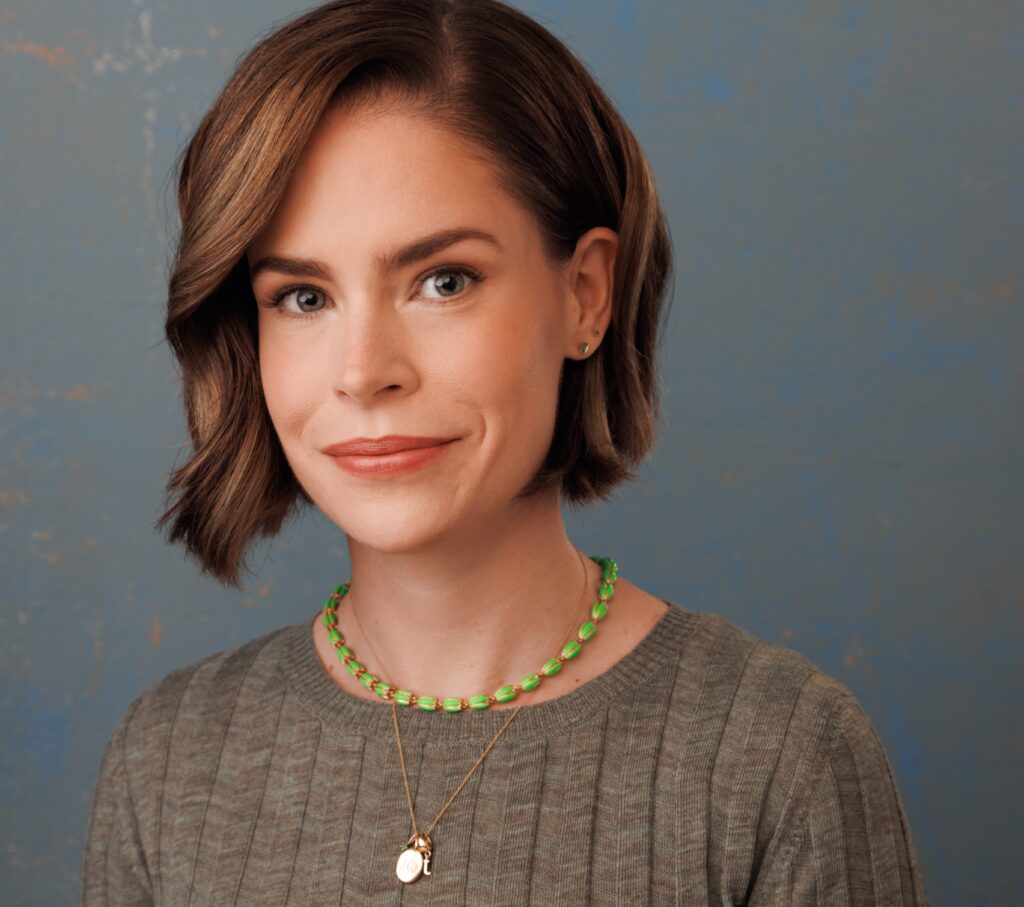
“I had three note cards for ‘this is the thing I’m interested in in this particular episode.’ And then I would try to write it, and get really frustrated. And then I would take to the streets in my Crocs, and with my phone with the voice memo. And I would just kind of talk through whatever I was trying to write.”
[ Read the story ]
Links of note
- Applications are now being accepted for the 2027-28 Nieman Fellowships, giving working journalists an opportunity to spend the academic year at Harvard. The application deadline is Dec. 1 for International Nieman Fellowships (non-U.S. citizens, including those working in the U.S.), and Jan. 31 for U.S. Nieman Fellowships (U.S. citizens, including those working outside the U.S.). For those interested in learning more, there will be an online Q&A session on Wednesday, Dec. 2 (12 pm ET), hosted by Nieman Foundation curator Henry Chu and featuring three of our current fellows, Rowan Moore Gerety, Ellen Nakashima, and Claudia Uceda.
- The Art of Writing About Life and Death: At her Reported Essay newsletter, Erika Hayasaki sits down with Sunita Puri, a palliative care doctor and author of “That Good Night: Life and Medicine in the Eleventh Hour.” Puri’s latest story for The New Yorker looks at the industry around pet hospice. “I think what unites my work as a writer with my work as a physician is that focus on observation. I’m taught to observe everything happening in a room when I walk into it. I’m looking at the patient, how are they breathing, for example? … but then there’s the palliative care level of observation of what is happening between people in the room? What is being said and what is being withheld? In reporting, I think it’s really similar. A big phrase I use is: ‘tell me more.’”
- “Do I Really Need a Writing Routine? (Really, Really?)” At the indispensable Scratch magazine, Maggie Mertens offers advice on whether we need to stick to a daily routine if we’re truly serious about our work. The answer, of course, is heck no: “I scheduled time for a ‘writing’ retreat, but it wasn’t really for writing. This time, my trip produced about 0 words that will appear in any future book. It was also absolutely invaluable. By carving out that time and space from all the little things that usually pull my attention away, I swear I could feel my brain exhale. And even though I hadn’t looked at the research, or outlines, or notes for many months, I was still able to get back into the project, which also meant a little bit back into myself.”
Keep making your own rules, and keep sharing your stories,
Mark Armstrong
Editor
Nieman Storyboard
Follow the Nieman Storyboard Podcast
On Bluesky: @niemanstoryboard.org
Subscribe to Storyboard
Get insights into the craft of journalism and storytelling in your inbox, delivered on Fridays.