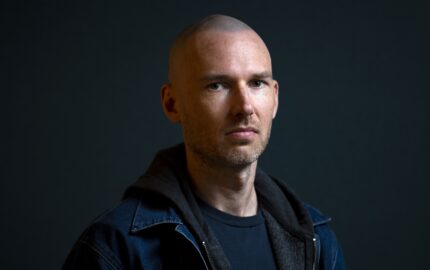
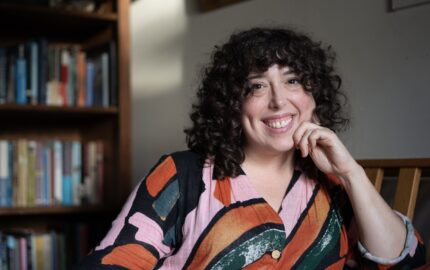
Author and essayist Grace Talusan is part of a cohort of professors who teach one of Brown University’s most popular humanities classes: “Introduction to Creative Nonfiction.” She encourages her students to find joy in essay writing, assigning exercises that spark creativity.
But before the holiday break, tragedy gripped the Brown campus in Rhode Island, as a gunman opened fire on students who were prepping for exams, killing two and wounding nine others. I interviewed Grace about her teaching and writing before the shooting, checking in with her again in the hours and weeks after. Still reeling, she is now focusing on helping students use writing to process and try to heal.
In the spring, Grace plans to bring back a course called “Writing Wonder, Joy, and Awe,” which she created a few years ago as a direct response to the constant barrage of news that her students lived with — wars, pandemics, climate disasters like fires and floods. She designed the class for students to have a place to “rest their eyes and turn their attention, even for just minutes a day, to the beauty all around us.”
“I’m still in shock about the mass shooting, just a block from where I teach, and processing the terrible loss and violence,” Grace told me. “When I teach this class in the spring, I hope it can be a respite for our students.”
Grace created “Writing Wonder, Joy, and Awe” around nonfiction from Aimee Nezhukumatathil, Ross Gay, and Brian Doyle, writers who pay attention to wonder and delight in some of their writing. The class begins with the exercise in Gay’s “Book of Delights” that became the book itself: “Write in your notebook for 30 minutes a day about a delight.”
Grace has written about her own experiences of delight, like making yogurt, as well as traumatic events in her life. She is the author of “The Body Papers,” which won the Restless Books Prize for New Immigrant Writing and the Massachusetts Book Award in Nonfiction. She serves on the board of the National Book Critics Circle (this year as chair of the Autobiography committee), which recently announced its longlists.
In 2024, Grace published “How to Drown in America,” about an incident with her then-boyfriend Alonso (now her husband), when they found themselves in a near-death experience while on a canoe excursion in Maine. As the only non-white people on the trip — surrounded by dozens of people bearing Confederate flags — the couple almost died together that day in the Saco River.
For years, Grace tried to write the story of their drowning. First, she tried it as fiction. Then, she shared it as a part of an oral performance on stage. But over time, her perspective about the experience deepened into an idea for a more multilayered essay.
The piece is not just a survival story. It examines her own privilege as an Asian American woman who is married to a Black American man. Time gave her essay perspective and depth. Grace uses this insightful perspective in her nonfiction.
My writing groups refer to this writing technique as “the older wiser narrator.” In a personal essay, the older wiser narrator reflects back on memories and moments with insight, perception, and hindsight on events that the younger “in-the-moment” self experienced. An essay can effectively draw from both voices.
Here is an example from Grace’s piece, with her as the older wiser narrator:
No one uses the term, “melting pot,” anymore, but people said this word aloud around me all the time and I believed that if I continued being a good immigrant kid, America would reward me. I was not ready to discard this delusion in my early 20s. I still wanted to believe that race didn’t matter.
And then there is Grace as the in-the-moment (younger) narrator, inside the scene:
We were a half-hour into our river adventure, our canoe floating on the Saco River, when the first Confederate flag — attached by a metal pole to a canoe shared by two white men with crewcuts and sunburned noses — glided beside us. They were so close I could have touched their freckled arms. I saw Alonso brace himself, but no one said a word; the twangy music from the other canoe radio was the only sound. Alonso paused his paddling and the canoe with the flag sped ahead on the current.
In our conversation below, which has been edited for length and clarity, Grace offers more ideas to write creatively, and find joy and healing in the practice.
In your essays, you go to scary places. You go to uncomfortable places. Maybe you could talk a little bit about getting to those places with honesty, and also how you teach that to your students.
Everything I do is with the idea that practice is going to get us there. This is what I say to my students: “If you are going to try something hard, do it in the smallest way possible first. Take the smallest bite of the sandwich.”
We start in three minutes of time. Then six minutes. There is so much work to do to untangle from how they have been taught to write, which is important and gets their academic writing done. I am not discounting high school teaching at all. We build on what they have learned. But what I tell them in the classroom is: “You have all of those skills already, but now I want you to untangle from all of it and be free. Do not think: Does this make sense? Is this any good? We do not care right now. We are just trying to make stuff.”
So, for the first two months, I really want them just to be making stuff. I trust that we can figure out grammar, and structure, and whatever else.
It takes them a little while to trust me, but what I want them also to feel is that energy of: “Oh, this is what I want to write about.” You cannot think your way there. You have to actually write. You have to jump to the page. You can tell me an awesome idea, but do it. You have to try it. I do not know if it is going to work or not. You have to see.
There are writers who have extensive outlines down to the scenes and every point, before they ever write. Other writers — and I am more in this camp — may have a map. I follow the map, but I have to sit down and start writing to listen to what I am actually trying to say. So you are right, it cannot be perfect at first. You just have to get it out, then go back and revise. It sounds like you are kind of like the “listen to yourself” camp.
I mean, even with reporting, you start with a list of people to talk to. But the best part is the unexpected. What happened along the way. That to me is the whole joy of reporting, you know, you should have a plan and places to go and people who will talk to you, but then things happen you never expected.
So that is what I want my students to feel and experience at least once throughout the semester. That feeling of discovery, because that is when you get the original thought, or an original way of putting things together. I keep telling them: “I want you to write like you.” That is actually very hard. What is your voice? But I think it can be found, because you can feel it when you are tapping into that part of you.
Can you talk about your class at Brown? It is so popular. We are constantly reading these articles saying every college student is using AI and they don’t want to write. But it does actually seem to me that so many do still want to write. They still want to create and share.
The beauty of my Brown students is they just genuinely want to learn. They have a genuine curiosity and interest. It’s not gone, and maybe it’s stronger now. Some of my colleagues do the class differently, but I just do a lottery. I don’t screen their samples. Just put your name in the hat and I’ll pick names to be in the class at random.
I’m reading “Joyride” by Susan Orlean right now. There are really good things about finding stories and thinking about stories. And students might be like, “I don’t have three years to report a story.” But look, she’s an amazing writer, like, let’s learn from what she has to say, about how she puts a magazine story together.
How do you start to think about writing exercises to bring into your classrooms and to get students inspired, or just creating, even if they do not know where it is going?
I took a workshop with Lynda Barry many years ago, and it taught me that no matter what the instructions for the exercise are or the theme or the content, the exercise itself is a way of calming a person down and transitioning them into the room and the space. It really is transformative. No matter what is on the page. It does not matter.
I tell them, we are not going to talk for the first 15 minutes. I want us to be in this place where we are working and writing. I want them in this place where stories are. And that is what I got from Lynda Barry.
So we will do Lynda Barry’s daily diary exercise. It is an observation exercise. We should be observant. We should be paying attention to what is out in the world, specifically, how you describe things, and very concretely. It is called a Daily Diary, from her book “Syllabus: Notes From an Accidental Professor.” We will start there. That is our warmup.
And then we will do the other exercise, which is often something I make up from the reading. We are reading Alexander Chee’s “How to Write an Autobiographical Novel.” From whatever we are reading for that day, I will take something from the essay, and that is what we will do our more substantive exercise on.
So, the students just read “100 Things About Writing a Novel.” I had the students go around the room and I said: “Okay, everyone has to pitch a line, your own headline. What would you write if you wrote an essay called ‘100 Things About…’?” They said things like “100 Things About Being an Immigrant Daughter,” “100 Things About Chickens.” They are just so fun. It is delightful to have them come up with all these ideas.
And then I said: “Okay, write yours for the next five minutes, as many items under that heading as you can. Now you have to do the person next to you. So if they had ‘100 Things About Chickens,’ you all have to do that one for five minutes.” It is always about loosening up and finding what you want to write, but not trying so hard about it, just finding it.
We did one about games. We had an alum come in. She had published an article for Orion about Wingspan, the board game. So we read it, and then she came to talk. Then I did an exercise where everyone had to write down the games that they played as a kid: car games, board games, playground games. Their faces changed. Then everyone had to talk and say what their game was. We wrote about a moment related to the game. It is a way for them to share with each other, and get vulnerable.
I tell them this too: “I can see you all as sixth graders, the excitement on your face for explaining this weird tag game that you only play on your playground.” And I want people to have positive experiences with each other and with writing and creativity. I want them to have good feelings about it, because I think a lot of their feelings have probably been bad. Oh, I am a terrible writer, oh, look at this page full of corrections. I want them to feel the joy.
It is like that first step. You just start to think about the games that you played. Then it is happening in the world. And I get them to start to describe it. And then, about five minutes or so later, I will give them other prompts. I will say: “Now I want you to reveal something that seems hard. Maybe it is an insight, or an observation, or a question, or a challenge. It is hard for you, but do it. Try to get to that edge where it feels a little bit scary, or risky, or hard to say. Just try it. You do not have to share it.”
Do you do those exercises yourself too?
I do. I write about the body, and I will end up writing about writing and exercising. I am getting to be athletic again. I used to be on sports teams all my life growing up, and then I kind of got out of the rhythm of it. But now I am learning exercises again from a trainer, and it is frustrating because I am having to re-learn. But I also know that once I learn these things, I am not going to have to think about them. It is kind of like writing. It is not going to feel like a good writing session unless I have done it. Unless I have done that thing that feels hard.
For more of Hayasaki’s conversation with Grace on coming up with ideas and writing books, check out her newsletter interview.
***
Erika Hayasaki is an author and independent journalist who teaches in the Literary Journalism Program at the University of California, Irvine. She publishes a newsletter on nonfiction craft and freelancing, The Reported Essay.