Sign up for the Nieman Storyboard newsletter, delivered every Friday in your inbox.
***
Dear Storyboard community:
This week the Pulitzer Prize for Feature Writing was awarded to Texas Monthly senior editor Aaron Parsley for his harrowing and heart-wrenching first-person account of the 2025 Guadalupe River floods in Texas, written just days after the tragedy swept away his house and plunged his family into the waters. Parsley lost his 20-month-old nephew Clay in the flood.
As Parsley wrote on Bluesky this week: “Being recognized for a story that honors my nephew Clay and the strength of my family means the world to me. I’m grateful to the Pulitzer Prizes committee, my dear friends, and incredibly talented colleagues at Texas Monthly.”
Former Storyboard editor and New Yorker staff writer Paige Williams chose the story for our Best of 2025 compilation, saying the story “can only contribute to our shared understanding of how the unthinkable unfolds, and, let’s hope, of how to spare others the same measure of suffering.”
With so many significant pieces published each year, how do the Pulitzers get chosen in the first place? I asked two of this year’s Pulitzer Prize jurors, Storyboard contributors Erika Hayasaki and Minda Honey for insight. Hayasaki, who first served as a Pulitzer juror for Feature Writing last year (when the award went to Esquire’s Mark Warren for “A Death in Alabama”), said: “We are actually jurors, not judges — which means we select the finalists, which then go to the Pulitzer Board to select a winner. The winner is a surprise to us until the announcements.” She added:
I can’t speak specifically to what we looked for or deliberated on, but I can say that one of our jurors sent a note after thanking all of us that said: “It was like being in the world’s greatest college seminar.”
Three of the jurors had won Pulitzers themselves, and everyone at the table brought another layer of brilliance and perceptiveness to our discussion. It did at times feel like an unparalleled craft workshop, as we dissected what makes feature stories feel immersive, closely observed, rigorously reported, or profound beyond simply the arrangement of facts. It was also invigorating to be reminded that so many excellent pieces are still being published regularly, despite all of the challenges in media.
Minda Honey added:
The invitation to serve as a Pulitzer Prize juror came at a much needed moment. This past year — like many years, as of late — was a hard year for media workers. Similar to the journalists who experienced the mass layoffs at The Washington Post, I was part of a newsroom that was dismantled, and I’ve been a bit adrift professionally since being laid off last July. So it was an immense honor to learn that the leaders of our industry respect me and my writing enough to request that I serve as a Feature Writing juror for the most prestigious prize in Journalism. It was a timely reminder that who I am and the caliber of my writing has never been dependent on any single job or title.
Of all the high points of this experience, I will never forget how well taken care of I felt throughout the entire process by the Pulitzer Prize’s Joseph O. Legaspi, the leadership and warmth of our committee chair Erika, and the master class in dissecting a piece of writing I received from my fellow committee members. (And shoutout to everyone who let me believe that snow boots are business casual because there was no way I was trudging around the slushy streets of NYC in anything else!)
You can see the full list of Pulitzer Prize winners here.
With so much great reporting and storytelling across the categories, Storyboard will bring you more from this year’s winners and finalists in the weeks and months to come.
Links of note
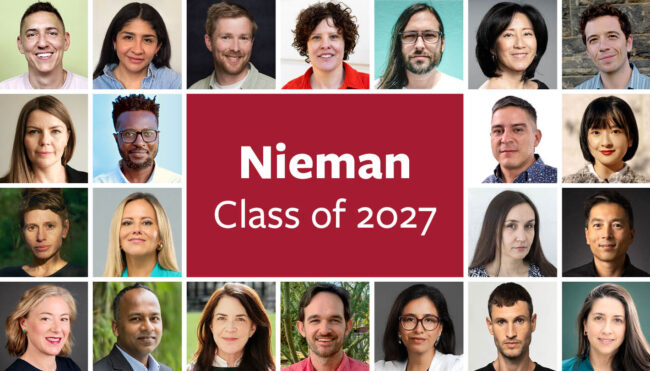
- Congrats to the incoming 2027 Nieman Fellows: The Nieman Foundation has announced its latest class of 22 talented journalists from around the world who will spend the next year at Harvard. “These accomplished new fellows have shown through their work why journalism still matters — how it illuminates the forces shaping our lives, uncovers hidden stories, and holds the powerful to account,” said Nieman Interim Curator Henry Chu. “The year they’ll spend at Harvard will strengthen them as leaders in the field at a time when press freedom has become increasingly precarious worldwide.”
- Another spotlight on watchdog journalism: Investigative Reporters and Editors (IRE) has announced the winners of its 2025 IRE Awards, honoring work from large and small newsrooms across 23 categories.
- Audio Flux, the podcast dedicated to showcasing great audio storytelling in 3 minutes or less, announced finalists for their latest “circuit,” or season. You can listen to the finalists here until May 19.
- Curious about how a deep investigation unfolds? The Journalist’s Resource at Harvard’s Shorenstein Center on Media, Politics and Public Policy is hosting a free webinar on May 12 at 1 p.m. ET with New York Times reporter Hannah Dreier, winner of the 2026 Goldsmith Prize for Investigative Reporting for the series, “Exposed and Expendable,” about wildfire fighters getting sick and dying young from exposure to poisonous smoke. You can register here.
- Just announced: I’ll be in Phoenix Oct. 22-24 for the Society for Features Journalism’s national conference at Arizona State University’s Walter Cronkite School of Journalism and Mass Communication. I’m excited to be interviewing New York Times national correspondent Kurt Streeter, whose work has been featured on Storyboard many times over the years.
Keep showing up, and keep sharing your stories,
Mark Armstrong
Editor
Nieman Storyboard
Follow the Nieman Storyboard Podcast
On Bluesky: @niemanstoryboard.org
***
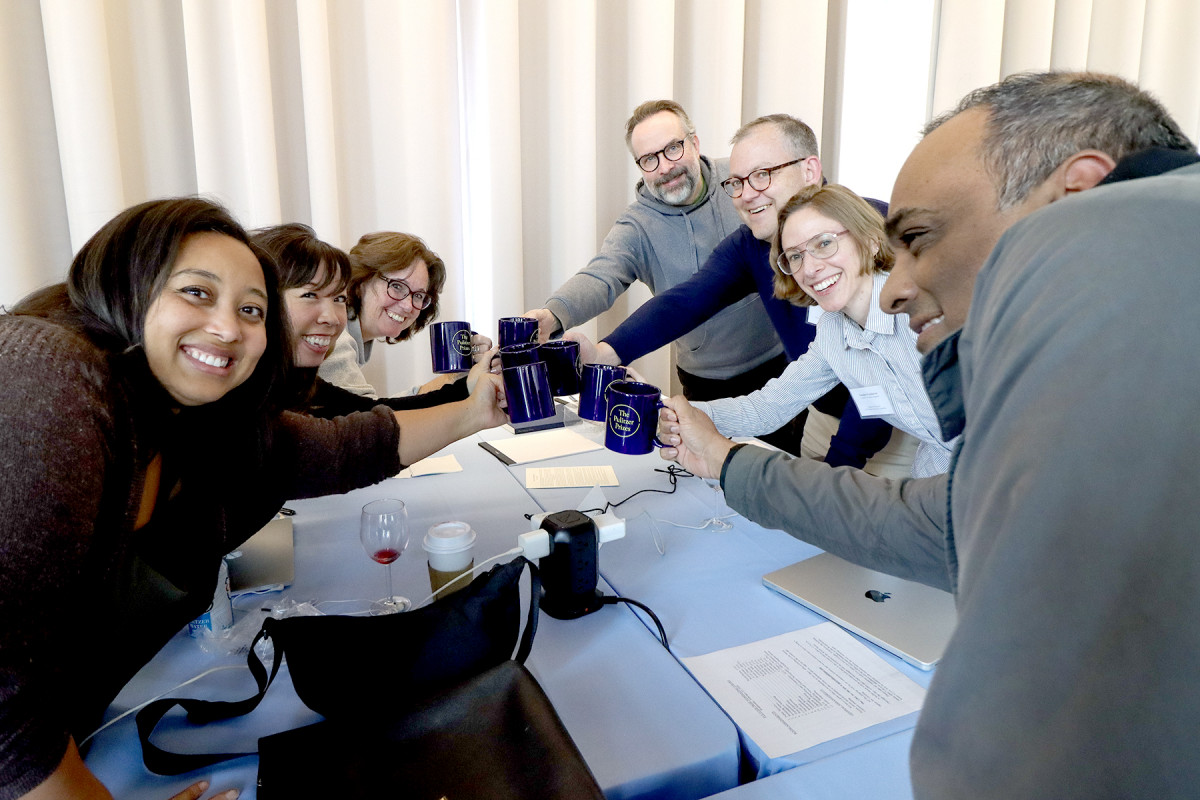
Photo from behind the scenes at this year’s Pulitzer judging by Jose R. Lopez.
Subscribe to Storyboard
Get insights into the craft of journalism and storytelling in your inbox, delivered on Fridays.
Follow the Nieman Storyboard Podcast
[ Follow us in Apple Podcasts, Spotify, or your favorite podcast app ]