Sign up for the Nieman Storyboard newsletter, delivered every Friday in your inbox.
***
As traditional news outlets like the Washington Post undergo layoffs, and more journalists are working independently, it makes sense that the legacy POV of traditional newsrooms — including an institutional voice and the avoidance of revealing personal backgrounds or biases — is giving way to a more individualized and transparent version of storytelling.
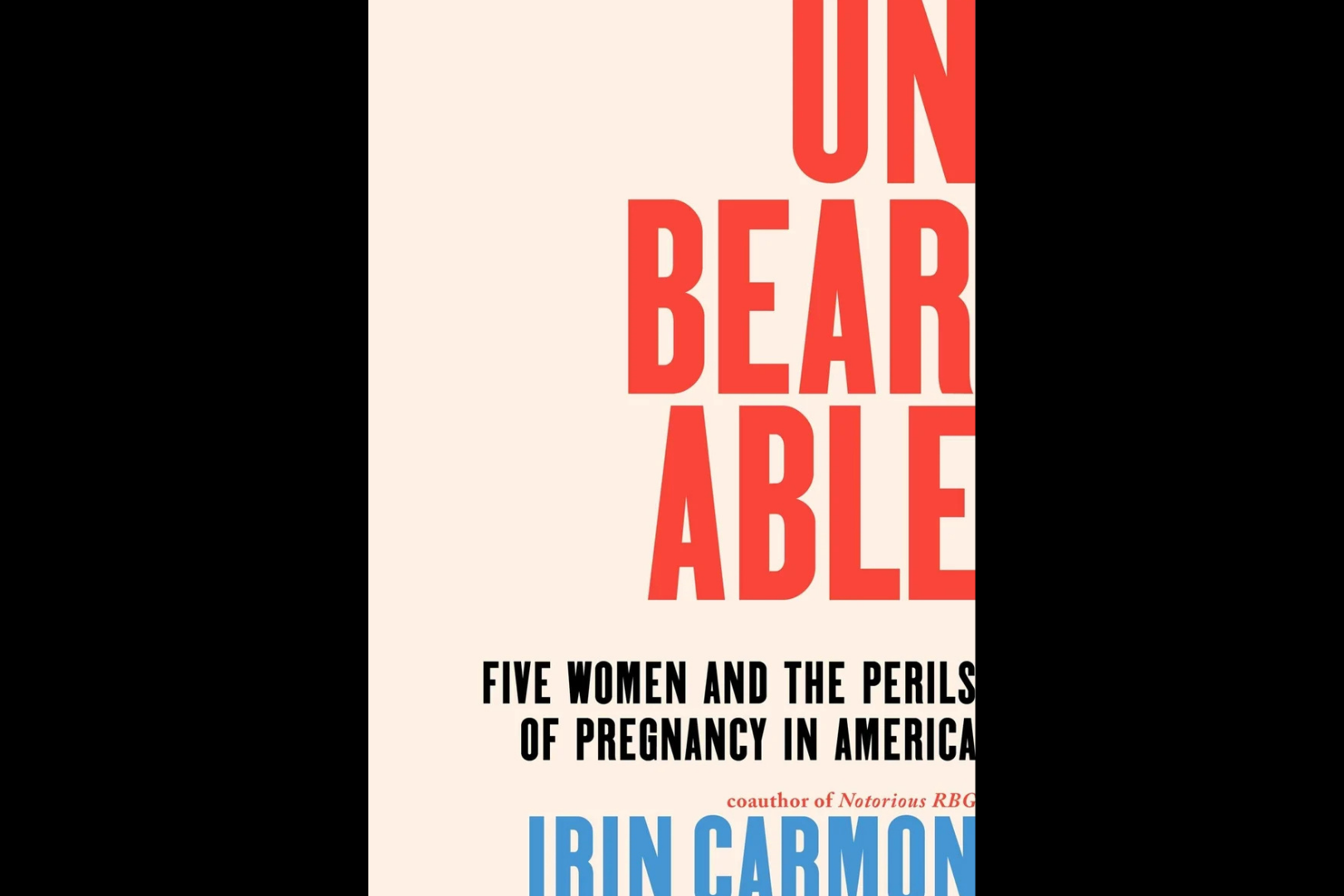
When reporting on the stories of others, our own experiences naturally get reflected back in the retelling. Each writer has the choice over how they want to incorporate themselves into the work. Journalist Irin Carmon took on her latest book project, “Unbearable: Five Women and the Perils of Pregnancy in America,” after the birth of her second child, and following the Supreme Court’s Dobbs decision overturning Roe v. Wade. It’s not a memoir, but Carmon shares personal background and a clear point of view while weaving together deeply reported stories of five women in the post-Dobbs era.
“I am transparent that the book has a particular perspective — unabashedly in favor of reproductive freedom and justice,” says Carmon, a New York magazine reporter who has covered gender, reproduction, and the law for over a decade. “To me, journalism is about process: reporting, research, challenging one’s assumptions, and putting as much of that on the page as possible. It does not require pretending that you don’t bring your own values and perspectives to what you’re writing about.”
This week, Carmon talks with Storyboard contributor Carly Stern about how the project came together, starting with the book proposal, and annotates a chapter to share her writing and reporting decisions at the sentence level.

“This was a timeless story that became more salient to people — that they understood better — because the Dobbs decision was bringing everything to a head. To me, there was no particular rush. But I understood that there was a market reason to sell the proposal during this window because that was when publishers were interested in this subject.”
[ Read the story ]
Links of note
- Harvard’s Shorenstein Center on Media, Politics and Public Policy announced its semifinalists for the 2026 Goldsmith Prize for Investigative Reporting. The award celebrates reporting that makes an impact on U.S. government, public policy, or the practice of politics, and the winner will be announced at the Goldsmith Awards Ceremony on April 9.
- The USC Center for Religion and Civic Culture is accepting applications for the Stories of Change in American Religion Journalism Fellowship. Journalists are invited to propose story ideas “that capture the changing nature of American religion.” The fellowship will help fund deeply reported stories in written or multimedia formats, including audio, video, and photography. The application deadline is May 4.
- “Armed Only With a Camera: The Life and Death of Brent Renaud,” the Oscar-nominated documentary short about American journalist Brent Renaud, who was shot and killed by Russian soldiers in Ukraine in 2022, is being turned into a full-length narrative feature film. “The Renaud Brothers” will be based on the true story of Brent (a 2019 Nieman Fellow) and his collaborator brother Craig, who is writing the script with director Jay Russell.
- Finally, an excerpt from Stephen Rodrick’s latest story for Rolling Stone, about the arrival of ICE in the town of Shakopee, Minnesota (population: 47,158). Rodrick illustrates how the threat of terror impacts one family’s most basic daily activities: “Camila spends most of the day preparing meals for her family. It isn’t easy. She shows me how she cooks in a crouch or on her knees so that her shadow doesn’t appear in the window. The kitchen sink is broken, but she doesn’t dare call a repairman. Camila must do all of the dishes and kitchen prep in the bathroom sink. She says she feels like her mental health is deteriorating. She feels guilty about her son, who must do all of the shopping and errands while also taking college classes. Recently, he hurt his back. Camila gets teary telling me how bad she felt that she couldn’t take him to the doctor. It’s time for Camila to start making dinner, and I thank her and Isabella for letting me into their home. Camila tells me that it is important to tell their story.”
Keep telling their stories, and your own,
Mark Armstrong
Editor
Nieman Storyboard
Follow the Nieman Storyboard Podcast
On Bluesky: @niemanstoryboard.org
Subscribe to Storyboard
Get insights into the craft of journalism and storytelling in your inbox, delivered on Fridays.
Follow the Nieman Storyboard Podcast
[ Follow us in Apple Podcasts, Spotify, or your favorite podcast app. ]