When Patrick Radden Keefe finds a story, he doesn’t let go. He talks to every person until there’s no one left to talk to. He looks for documents and evidence to verify claims. He spends enormous amounts of time on story structure.
But, he admits, he’s somewhat of “a dilettante”: while he wants to know everything there is to know about a topic, he also wants the ability to walk away from it once the work is done.
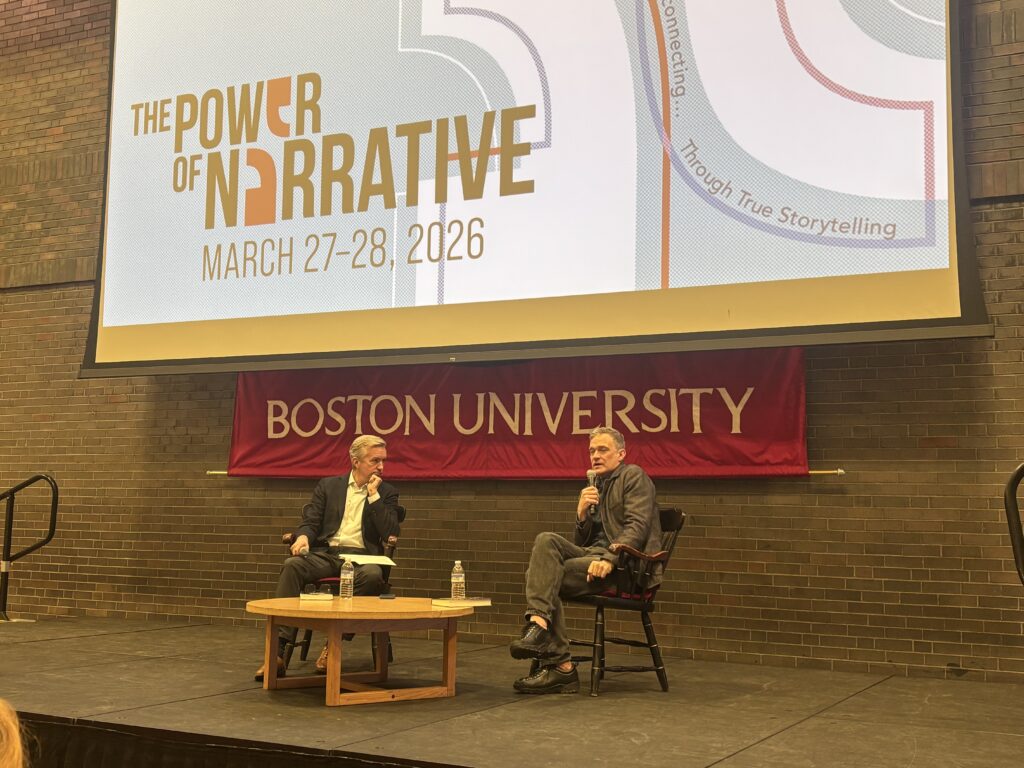
“The best is when you sort of write your 10,000 words and then you say, ‘That’s all I’m ever going to have to say on this subject ever again,’” Keefe said at Boston University’s Power of Narrative conference on March 28. “There have been four times in 20 years where I’ve gotten to the end of a piece and thought, ‘I’m not ready to move on.’”
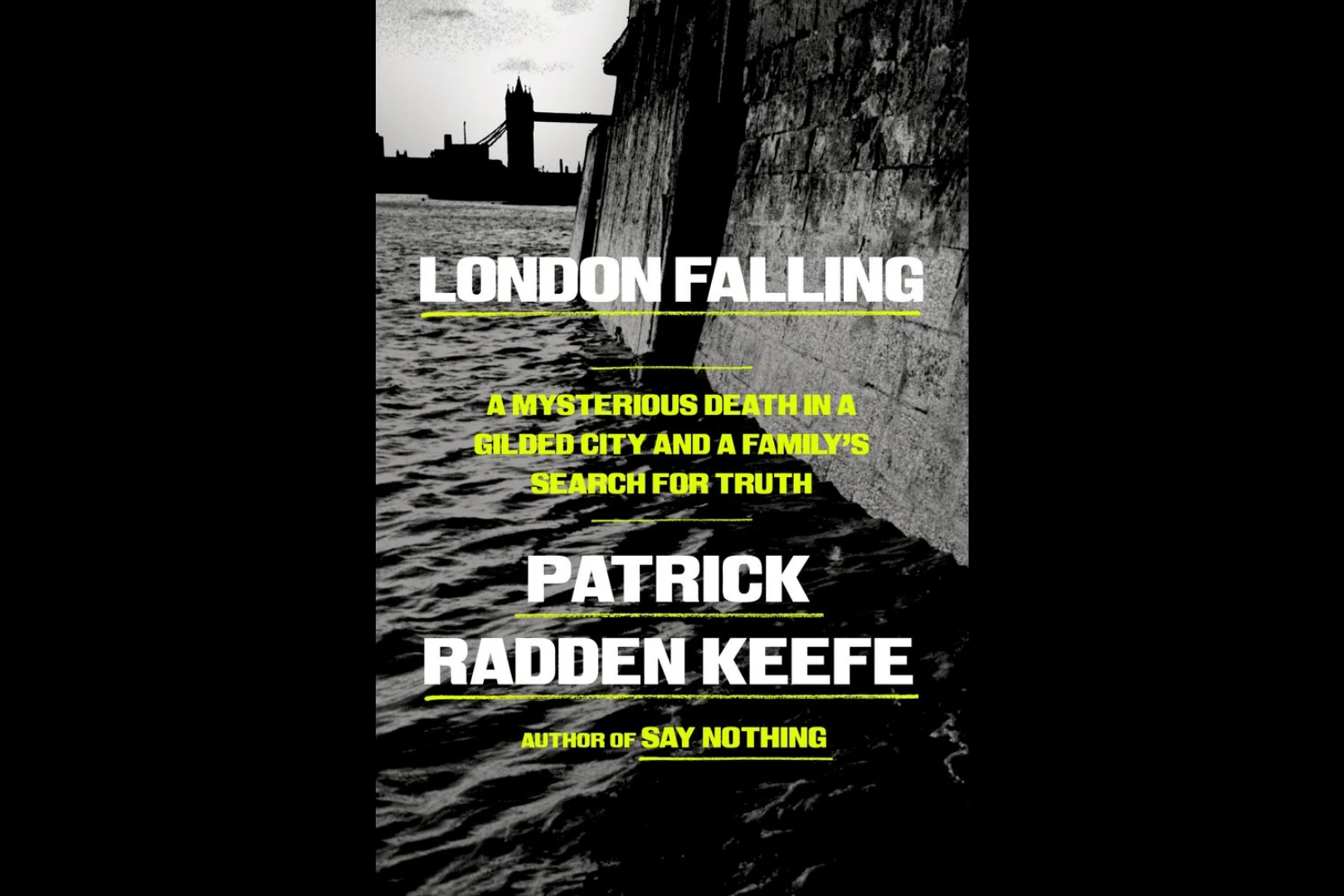
That fourth time is the story of 19-year-old Zac Brettler, who led a secret double life in London before plunging to his death from an apartment balcony into the River Thames in 2019. Keefe wrote about Brettler’s mysterious death, and his family’s investigation into what happened, for a 2024 New Yorker story, and he has now expanded it into a book, “London Falling,” published on April 7.

Keefe, the author of bestsellers including “Rogues,” “Empire of Pain,” and “Say Nothing,” discussed his process with Nieman Storyboard editor Mark Armstrong at the 28th annual conference. Here are four takeaways for journalists:
1. Meeting your subjects with no strings attached
Keefe learned about Brettler while talking to a stranger — something he often does. At the time, he was working on the television adaptation of his bestseller “Say Nothing” in London, and the person (a friend of the director) told him about Brettler’s family.
He went home that evening and tried Googling everything the man told him — but nothing came up. He later learned the family was intentionally trying to maintain their privacy and not speak to the press during the investigation.
When Keefe contacted Zac’s parents, Matthew and Rachelle, he suggested a meeting in a local cafe with “no commitment in either direction.” This way they didn’t have to prepare for a formal interview, and Keefe could decide whether he’d want to follow the story further.
“Our initial conversation … I didn’t even take out a notebook. I wasn’t recording it,” he said. “It was entirely just conversation.”
Over the next two hours, the Brettler family told their story. They didn’t have an official agreement after that chat, but they were “inching towards one” and had another meeting a week later.
People who experience profound loss and trauma, Keefe said, are often willing to share their story with those who want to listen. He said it was a privilege to do this work and have people open up to him about the worst days of their lives.
“I think it felt good for them to talk about it,” he said. “I think it feels good for anybody to tell their story, particularly if it’s a story that they’ve, for one reason or another, kept a little bit locked away.”
2. Access can be overrated
Keefe had full access to the Brettlers for this story, and he admits that they were key in making the book happen. But there were other key figures who would not speak to him, and access to central people shouldn’t make or break a story.
“Just because people don’t want to play ball doesn’t mean you shouldn’t write the story,” he said. “Sometimes you should write the story.” Keefe recalled his 2018 New Yorker profile of “Apprentice” producer Mark Burnett, who wouldn’t speak to Keefe for the story. (Burnett’s ex-wives, however, did speak to him.)
For this story, Akbar Shamji, one of the men who was with Zac Brettler the night he died, didn’t grant Keefe an interview or a meeting but did email him quite a bit. Communication ceased after Keefe and The New Yorker sent Shamji over 230 fact-checking inquiries.
Because of this, Keefe had to lean more on the Brettlers and the materials he could get from them. But, he wanted to make sure they were all in. In their second meeting, he prefaced that they could not back out of the process if they were to go on the record. As he puts it, “the train is leaving the station.”
“[It’s] one thing that I’m trying to kind of get better at over the years, or that I’ve made more of a point of with each passing year, is just being very transparent with people on the front end of any kind of reportorial engagement, in part because I’ve seen where things can go wrong,” he said.
3. Deciding if a story should be an article, a book, or both
Keefe said he uncovered a lot from his conversations with the Brettlers, but only so much can go into a 15,000-word piece for The New Yorker.
One example he gave was Zac Brettler’s grandfather, Hugo Gryn. He had survived Auschwitz during World War II and, once he landed in London, he became a well-known BBC broadcaster and a beloved rabbi. Keefe noted that Gryn was a famous figure in London, but he wasn’t mentioned in his initial New Yorker story.
“This was one of the things that made me feel as though there probably was a book here — that there was this deeper history I’ve always been interested in, the way any of us are formed by our family lineage, the way families come to new places,” he said.
He felt each piece had a thematically different purpose: the article told the story of Zac Brettler while the book told the story of decades of family history that led to who Zac was.
Keefe also said he often feels torn about the right time to publish. The New Yorker will be publishing a new story from Keefe soon that he had been working on since 2020 and felt it was finally the right time.
“I love the process of going from knowing nothing about something to feeling pretty smart to feeling as though I’ve earned the right to weigh in on something, and it’s usually a good sign if I feel like I can summon the confidence, honestly, to write,” he said. “That’s a kind of helpful inflection point, and I certainly wouldn’t publish before getting that point.”
4. How much to share with sources before publication?
A rule of thumb for many newsrooms is to not allow sources to read pieces before publication, and Keefe generally follows that same rule. But the Brettlers were an exception.
Because the material was deeply personal for the family — history, secrets, and inner thoughts — it didn’t feel right to Keefe to have reviewers read the book before they did. So it made sense for him to send three early copies of the book to Zac Brettler’s mom, dad, and brother.
“Those were stressful days for me,” he said.
He felt it was necessary to give an advance copy to the Brettlers to prepare them for the “weird” experience ahead of them. In tandem with being transparent at the beginning, he wanted to be clear about the feeling they might get when they see someone in public reading about their intimate family details.
“I’m a little bit like a vampire, because if you invite me in, I’m going to do what I do,” Keefe said. “There were some things that I think they, in the beginning, never imagined would end up in the book that ended up in the book, because if you set me free in your family history, I’m going to dig around a little bit.”
***
***
Emilia Wisniewski is a general assignment reporter and engagement editor at the Concord Monitor in New Hampshire. She previously worked at Boston.com and The Boston Globe as a correspondent where she covered local politics, business, health, and environment.
Subscribe to Storyboard
Get insights into the craft of journalism and storytelling in your inbox, delivered on Fridays.