Sign up for the Nieman Storyboard newsletter, delivered every Friday in your inbox.
***
Dear Storyboard community:
Our summer reading list keeps growing. First came the Pulitzer Prizes, and this week the American Society of Magazine Editors (ASME) handed out its 2026 National Magazine Awards in New York City. You can get links to the full list of winners here, but let’s dive into a few moments from the winning stories.
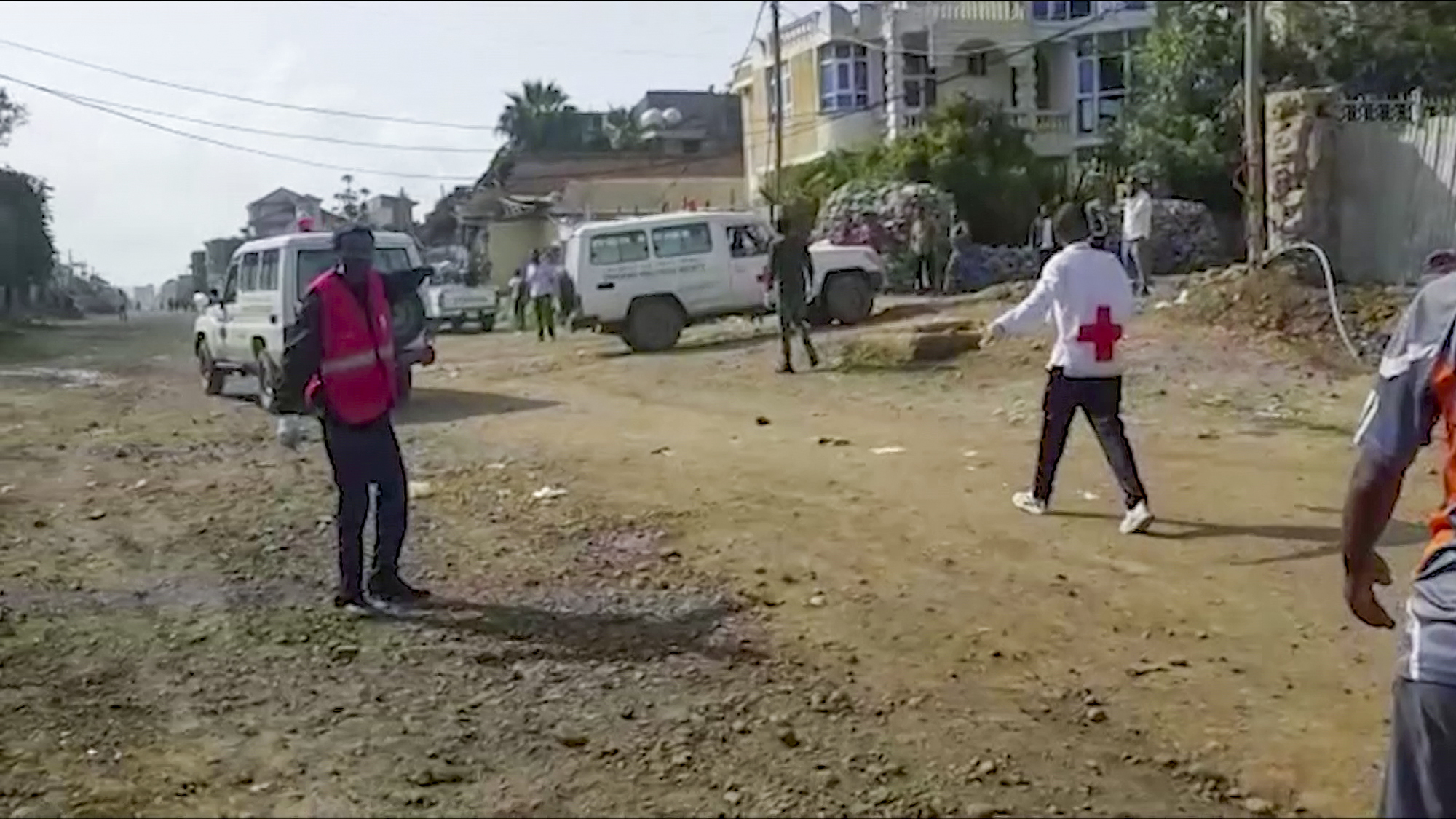
In the Reporting category, “‘There Will Be No Mercy,’” by Drew Philp, earned The Atavist Magazine its second consecutive National Magazine Award, for a story about hospital workers helping victims during a two-year war in Ethiopia’s Tigray region — a conflict, and potentially a genocide, that was not widely covered in Western media. Philp traveled to Ethiopia for the story and met with doctors, nurses, and other staff — he interviewed “two or three dozen people” who worked at the hospital, searching for people to serve as the main characters in the story, he told the Creative Nonfiction Podcast. “We wanted to put faces on what was happening here,” he said. One of the doctors featured was Hale Teka, an OB-GYN at Ayder Comprehensive Specialized Hospital, who Philp brought to life in the story:
Hale had long believed that people were inherently good and that the world tended toward progress. But as more and more civilians assailed by war arrived at Ayder, he lost faith in his fellow man. In more optimistic moments, Hale clung to a sliver of hope. If individuals couldn’t stop this, surely institutions would. Once word about what was happening in Tigray reached the wider world, the international community would respond. Powerful countries would step in and demand that the atrocities stop. Abiy’s government would be forced to yield.
In the Lifestyle Journalism category, Storyboard contributor Kim Cross won for a Food & Wine feature that took her to Alaska to trace the path of the Pacific’s wild salmon, all the way from Bristol Bay to the world’s kitchen tables. During a trip on a commercial fishing boat, Cross replays the moment she catches a five-pound salmon:
“Your first fish!” a crewmate chirps. I smile, fighting tears. Quietly, so the crew won’t hear, I whisper the thing I say to every trout I land on a fly rod: “Thank you, fish!”
This is one moment of truth on my yearlong quest: to learn the provenance of my salmon. The searing revelation of this moment? Whatever I pay in the store ... it’s worth it! Salmon fishing is hard.
The ASME award also highlights an Instagram video that Cross shot and narrated to go with the story. She says it wasn’t part of her original pitch: “I had done some GoPro and video footage as part of my reporting and in anticipation of promoting the story and doing presentations after publication. I was asked to write the script and do the voiceover, which the F&W team then edited.”
As for the written piece, Cross documents two journeys — one for the 50 million salmon swimming through Bristol Bay, and one for herself. Read to the end to see how Cross wraps up her trip with a satisfying callback.
Links of note
- Two new cautionary tales this week about AI slop infecting the publishing world (and everything else around us). First, a short story by Jamir Nazir published in Granta magazine, which won the Commonwealth Foundation Short Story Prize, was accused of being at least partially AI-generated. Author Lincoln Michel and Literary Hub’s Brittany Allen break down the red flags within the story itself. (The Commonwealth Foundation, for its part, is investigating the accusations.) And The New York Times discovered that a new book about AI, “The Future of Truth: How AI Reshapes Reality,” by Steven Rosenbaum, contained “more than a half-dozen misattributed or fake quotes” as a result of the author relying on AI tools for research. “As I disclosed in the book’s acknowledgments, I used A.I. tools ChatGPT and Claude during the research, writing and editing process,” Rosenbaum said in a statement. “That does not excuse these errors, of which I take full responsibility.”
- Manil Suri, author of the new memoir “A Room in Bombay,” shares how he resolved challenges with the narrative structure of his book by creating “a book X-ray” to zoom out and view the different threads as color-coded storylines, to see where there might be a disconnect. “Try this yourself on a book. The strands will generally be the storylines of the main characters. You’ll be able to see how these interact, whether there’s enough continuity, whether a character’s been ignored for too long a stretch.” (Via Carly Stern)
- Let’s end with Pulitzer Prize-winning writer and 2021 Nieman Fellow Sarah L. Kaufman, who offers her own advice for fighting off AI, from her new book on writing, “Verb Your Enthusiasm: How to Master the Art of the Verb and Transform Your Writing”: “No bot — so far — can craft poetic physical language that makes us feel something. That is your territory. You can surprise and move your reader with your own irreplaceable sensitivity, your necessary nervous system, and your deliberate, intentional, refreshing verbs to connect it all.” (Hat-tip: Henry Chu)
Keep leaning in to your humanity, and keep sharing your stories,
Mark Armstrong
Editor
Nieman Storyboard
Follow the Nieman Storyboard Podcast
On Bluesky: @niemanstoryboard.org
Subscribe to Storyboard
Get insights into the craft of journalism and storytelling in your inbox, delivered on Fridays.
Follow the Nieman Storyboard Podcast
[ Follow us in Apple Podcasts, Spotify, or your favorite podcast app ]