Sign up for the Nieman Storyboard newsletter, delivered every Friday in your inbox.
***
Dear friends, I am away this week, so in my place I’m excited to welcome back Storyboard contributor Erika Hayasaki for a guest edition of the newsletter. — Mark Armstrong
***
Dear Storyboard community,
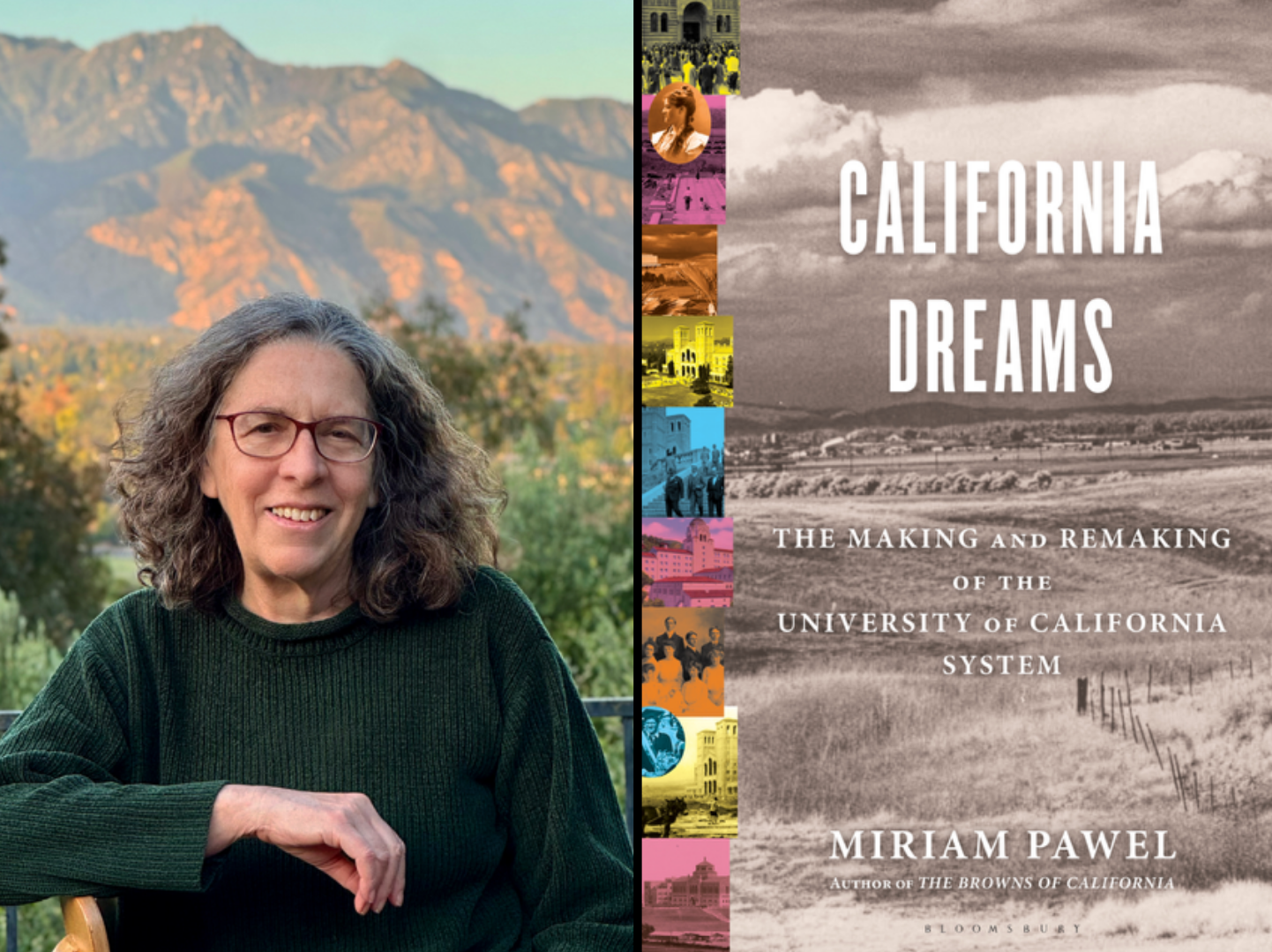
Last week, Pulitzer Prize-winning journalist Miriam Pawel released a new book: “California Dreams: The Making and Remaking of the University of California.” Miriam is the author of three previous books, including “The Crusades of Cesar Chavez,” the first biography to lay bare how he was never the “secular saint” the public marketed him to be.
Miriam’s nonfiction has delved into the farmworker movement and a California family dynasty. She is one of the nation’s most prominent chroniclers of California, meticulously weaving the arc of history with detail-rich stories about people and places.
“I love the archives,” Miriam said of the many hours she spent sifting through documents and letters. This is where she also came across gems about Joan Didion’s time at the University of California, Berkeley. Didion, as Miriam writes in “California Dreams,” was a Delta Delta Delta sorority member who attended plays in San Francisco, sipped Manhattans at baby showers, got drunk at the Claremont Hotel, and shopped for shoes in Oakland. Miriam also noted how Didion:
…sat in the front row when Robert Frost lectured (“he’s an old man, stooped, now-white hair, you just love him the minute he walks on the platform”) and cried when he read “Death of a Hired Hand.”
Miriam uses archives, including oral histories, to illuminate moments or people within a depicted narrative frame — rather than stepping out of time and clunking up the flow with multiple attributions. She saves most source references for the extensive bibliography (ie: “Robert Frost lectured DIDION, Box 235, Correspondence, Joan to parents, 1953.”)
“California Dreams” is structured along the chronology of the UC system’s emergence as one of the world’s elite universities, tracing its social and economic impacts. As the narrator, she hands the story baton to a handful of unique central characters, five alumni whose journeys intersect with the university system’s trajectory.
I have been a professor for over 15 years in the University of California, Irvine’s Literary Journalism Program (the campus is also a key character in the book). But I never knew — or thought I even cared to know — the backstory of the UC system. Reading Miriam’s book captivated me because it’s really an epic saga about hopes, dreams, and human transformations.
Besides being a prolific writer, Miriam also happens to be one of my great mentors. She took a chance and hired me right out of college at the Los Angeles Times when she was an editor for the Metro section.
Over the years, I’ve thought a lot about how mentors make a writing life and literary career possible. I’ve learned how to be a mentor myself through people like Miriam who have guided me. Mentors, I’ve realized, come in three kinds (some embody all of these aspects):
- The Coaches: These are the editors. The wordsmiths. The close readers who teach you how to tighten your prose, handing back drafts with frank feedback. They love language, and live for good stories. They help make your words sparkle.
- The Believers: The people in your corner, cheering you on. Perhaps they are not writers themselves, but they show up for you. They buy your books and share your stories. Perhaps they are literary agents, convincing an editor to take a chance on you. Or the fellow writers you lean on for support. The ones who lift you up along the way.
- The Connectors: These may be individuals you do not even know personally. They are behind the scenes following your work, recommending you for awards or grants, reviewing your writing for committees, sharing your work with influential people. They are silent champions who connect you to opportunities and recognition.
At her launch at Vroman’s Bookstore in Pasadena, Miriam explained how she loves to solve puzzles. She plays Scrabble and The New York Times puzzles (Wordle, Spelling Bee, Connections, Pips). She sees reporting and writing books as giant puzzles to be solved.
But her penchant for puzzle-solving also applies to her mentoring. She is a truly perceptive and thoughtful connector. In the newsroom, I remember how she quietly observed reporters’ strengths, matching them with others who could help them grow and flourish.
She took note of my own interest in feature writing early on and connected me to masterful narrative editors who also became mentors. In so many ways, I owe my career to her — but also I met some of my best friends because Miriam played a role in selecting them to be among my peers in METPRO (the Minority Editorial Program, now the Los Angeles Times Fellowship).
The Literary Journalism Program’s Center for Storytelling will be hosting an event at UC Irvine featuring Miriam and “California Dreams” on Tuesday, Nov. 10, where she will discuss craft, research, higher education, and her approach to telling vibrant, multilayered stories. You can find a full list of upcoming appearances here.
Links of note
- The National Book Foundation announced its 2026 finalists this week, and many of its nonfiction finalists experiment with literary style, including hybrid nonfiction forms.
- The Columbia Journalism School announced it will pause its Master of Arts program, which was designed for working journalists with three or more years of experience. Reuters reported that a decline in international students — who made up about half of the M.A. Program enrollment applications — impacted the decision. The school’s Master of Science programs in Journalism and Data Journalism will remain intact, and Columbia also announced its first online Master of Science in Journalism.
- The MFA Narrative Nonfiction Program at Grady College of Journalism and Mass Communication, at the University of Georgia is a low-residency program that allows students to travel to Athens, Ga., for intensive stints to learn from expert nonfiction writers and teachers. Its director, former CNN journalist Moni Basu, reflected this week on “The Jane Doe I know,” and how the Cornell rape case took her back to another gang rape that occurred at Florida State University nearly four decades ago.
- Garrett Therolf, a senior reporter and editor at UC Berkeley’s Investigative Reporting Program, covered the death of a child named Gabriel Fernandez for years as a staff writer for the Los Angeles Times, as well as in a longform piece published in The Atlantic in 2018, “Why Did No One Save Gabriel?” and in a six-part Netflix docuseries “The Trials of Gabriel Fernandez” in 2020. Now, his work has led to change: Gov. Gavin Newsom recently signed “Gabriel’s Law,” requiring child welfare social workers to obtain emergency medical care for children under their supervision, and making intentionally falsifying child protection records a crime.
- Finally, please beware of writer scams! Over at The Reported Essay this week I talked about recent impersonators I’ve encountered, including one that my friend Maya Kapoor alerted me to: A story covered in Bethany Brookshire’s newsletter Team Trash about an accomplished science writer, Caroline Williams, who discovered not only that her name was being used to pitch editors — but the impersonator emailed her actual sources, and got a pitch accepted and a story published in Science (it later printed a retraction and took the story down).
Be vigilant and keep helping each other grow,
Erika Hayasaki
Professor of Literary Journalism at the University of California, Irvine
Follow The Reported Essay
Subscribe to Storyboard
Get insights into the craft of journalism and storytelling in your inbox, delivered on Fridays.