Fact-checking in journalism can mean many different things — and the process can vary whether you’re working on a book or podcast, a longform magazine feature, or a breaking story in a 24/7 newsroom.
But given the rise of disinformation and AI content, we need fact-checking more than ever. And there’s an opportunity to bring more clarity to the process, both for journalists and for our audiences.
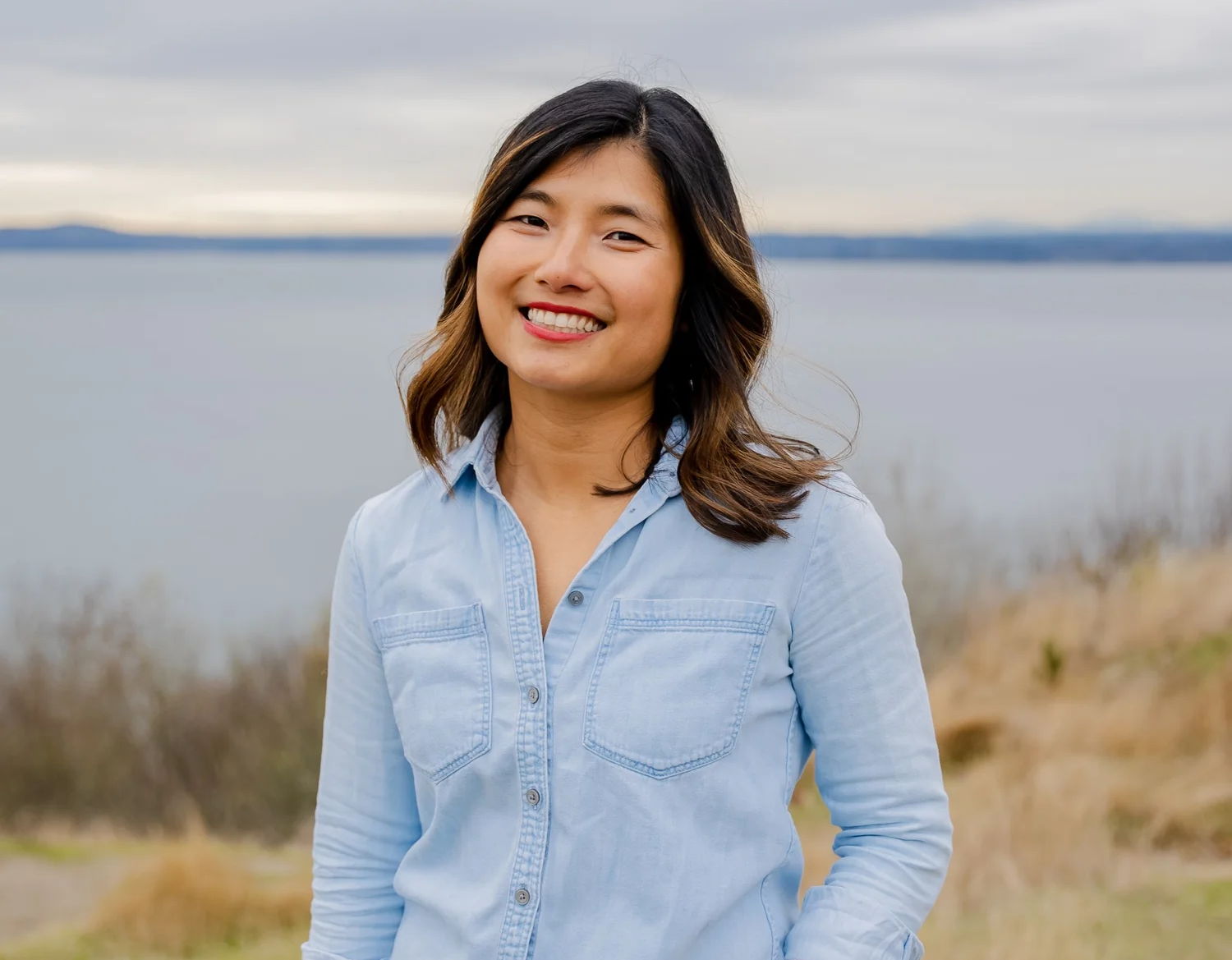
This week’s guest on the Nieman Storyboard podcast, journalist Wudan Yan, is founder of the fact-checking agency Factual, which provides fact-checking services for journalists, authors, and nonprofits. Writing for her newsletter, she recently made the case that fact-checking itself needs to evolve to meet the moment, so we talked about how journalists can make the most of the process in their own work.
[ Follow us in Apple Podcasts, Spotify, or your favorite podcast app. ]
“ My true fear is that people are just going to become desensitized to the amount of fake information that’s out there and not care,” Yan told me. But “as long as people care and value accuracy, I think fact-checking has a place, I think journalism has a place.”
Yan was pursuing a doctoral degree in cancer biology when she decided to make the jump into journalism, starting as a fact-checker for publications including the science magazine Nautilus. She eventually moved into reporting, developing an understanding for what it meant to tell science and environmental stories through a narrative lens. Her writing has appeared in The Atlantic, California Sunday Magazine, High Country News, MIT Technology Review, The New York Times, and Popular Mechanics, among other publications.
The excerpts below are edited for length and clarity.
Defining fact-checking as a form of ‘peer review’
I think people value accuracy intellectually. … Humans who conduct fact-checking are expensive. We’re not AI, and so there’s a price to pay, and it’s really important for me to work with clients who understand that value.
I usually describe fact-checking as a peer review for accuracy in the same way that coming from my previous career as a scientist, you cannot peer review your own work in a journal for publication. Somebody else has to do that peer reviewing for you. So when you are writing for a daily newspaper, if you’re just making sure that what you wrote that’s about to go to press is accurate, you’re double-checking yourself. You’re not fact-checking yourself.
On organizing your reporting and taking time to process it
Early in my career, I got a really amazing glimpse into how other reporters organize their work, and that gave me frameworks for how to organize my own reporting. So I use Google Drive, and for a project like this turmeric feature [“The Vice of Spice: Confronting Lead-Tainted Turmeric"], that’s the main folder. There are interview notes, audio files, research papers, and then another folder just called field reporting. Quickly, you’re going to realize all I have in my life are these like Russian nesting dolls of Google Drive folders.
Then outside of Google Drive — I think this is an Ira Glass tactic — once you’re done with all the interviews and field reporting from a day, you kind of just sit and basically journal about the day.
The way that I interpreted that advice was to write about my day as if what I discovered that day was going to be the lead of my story. So I did that every single day, even if there wasn’t really a story and it was really boring. It just got me into a very cinematic way of writing.
Quite honestly, in many of the features that I have produced over my career, I am just plagiarizing off of myself when I start writing the lead. And I can’t tell you how many hours it saves me there because I’ve already done that hard work.
On the future of fact-checking and journalism
I think for fact-checking right now, I don’t think the robots are going to come for this type of work yet. I went to a professional conference the other weekend, and just talking to people who are getting all these spammy emails from AI agents being like, “If you want us to verify a paper, send it to us, and it’s $25, and we’ll look at primary sources only and let you know how a claim stacks up.” And nobody in my world is really taking that seriously. I’m curious about who’s paying $25 for a robot to check a claim, or what’s attributed to a single paper. AI can make a recommendation, but you still definitely need a human to make sure that whatever’s coming up on Google search or Claude or ChatGPT actually makes sense for the context and the story that’s involved.
My true fear is that people are just going to become desensitized to the amount of fake information that’s out there and not care. … As long as people care and value accuracy, I think fact-checking has a place, I think journalism has a place.
Reading list: Authors, books, essays, and publications mentioned
- Wudan Yan’s website
- Factual agency
- Nautilus Magazine
- “The Vice of Spice: Confronting Lead-Tainted Turmeric" (Wudan Yan, Undark, 2023)
- UC Berkeley Journalism Fellowships
- Pulitzer Center on Crisis Reporting
- “The traditional ways of thinking about fact-checking aren’t enough anymore” (Wudan Yan, 2026)
- “We need fact-checkers more than ever. Here’s how to work with one.” (Kim Cross, Nieman Storyboard 2025)
Show credits

Hosted and produced by Mark Armstrong
Episode editor: Kelly Araja
Audience editor: Adriana Lacy
Promotional support: Ellen Tuttle
Operational support: Paul Plutnicki, Peter Canova
Nieman Foundation curator: Henry Chu
Music: “Golden Grass,” by Blue Dot Sessions (www.sessions.blue)
Cover design by Adriana Lacy
Nieman Storyboard is presented by the Nieman Foundation for Journalism at Harvard.
***
Subscribe to Storyboard
Get insights into the craft of journalism and storytelling in your inbox, delivered on Fridays.