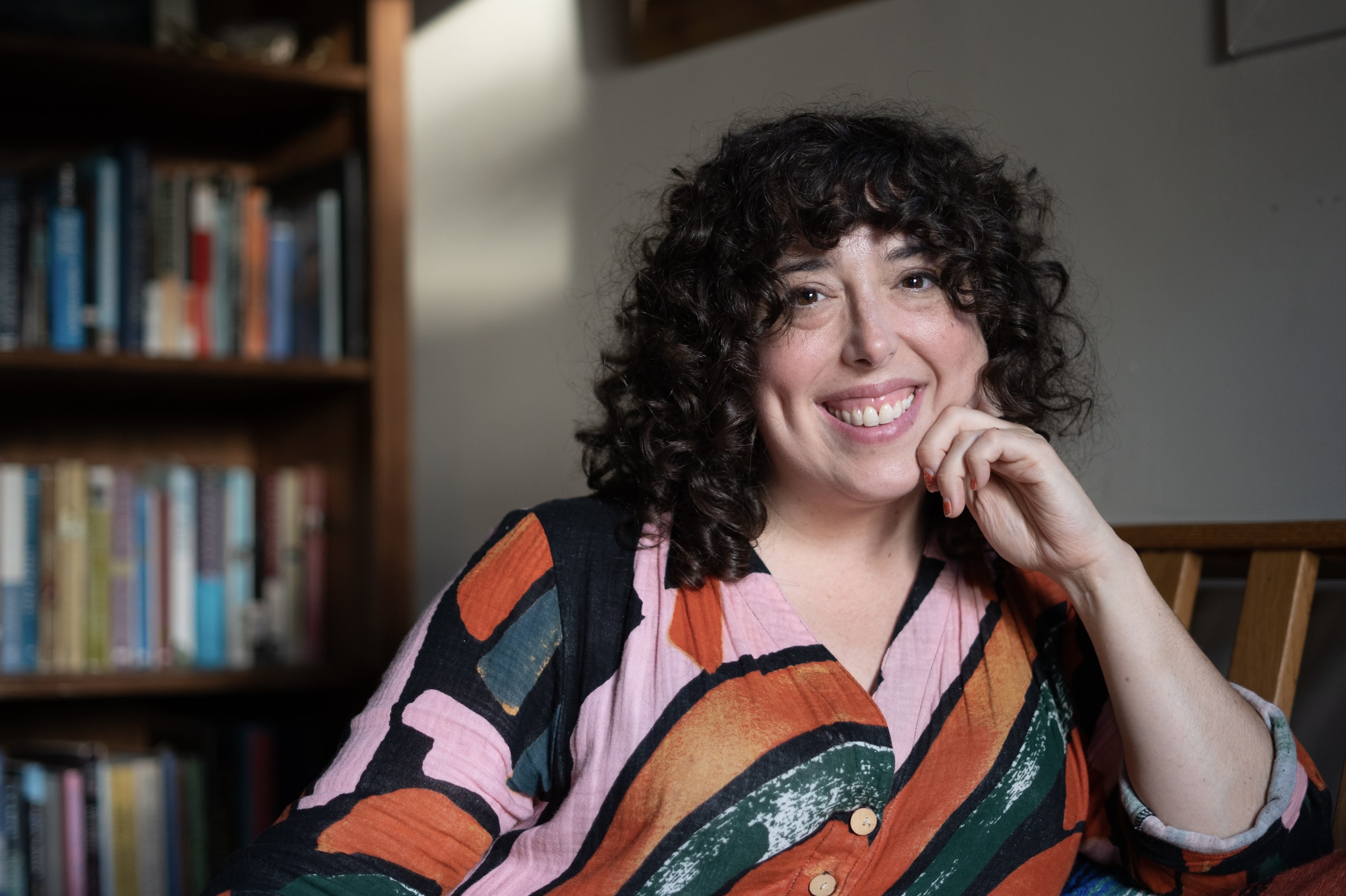
On the latest episode of the Nieman Storyboard podcast, Storyboard editor Mark Armstrong sits down with journalist and Pulitzer finalist Shoshana Walter to discuss how she writes about addiction, recovery, and the criminal justice system — and how journalists can cover these stories with care.
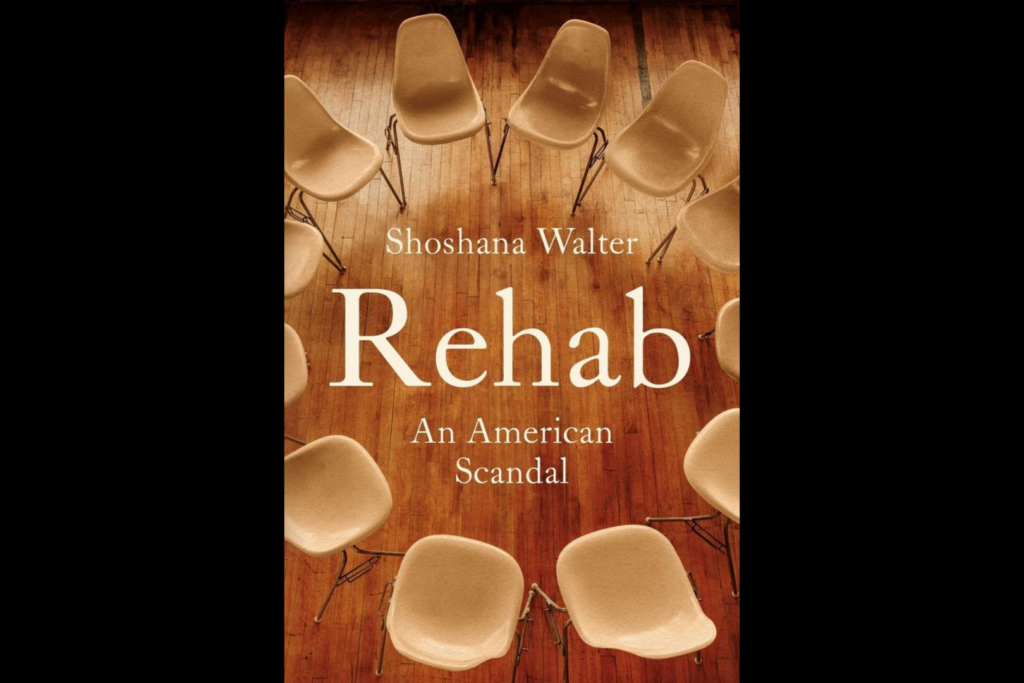
Walter is an investigative reporter for The Marshall Project and author of “Rehab: An American Scandal,” published last year and released this month in paperback. The book weaves together four different stories of people whose lives or work have been impacted by addiction treatment in the U.S., and it shines a light on a system where private treatment centers have little oversight, leading to potential mistreatment, exploitation, and corruption.
“ I think for everyone who participated in this book, the driving force was wanting their stories to mean something, to serve a higher purpose,” Walter says. “My hope with any piece of investigative journalism that I do is to raise awareness of an injustice that’s going on in the hopes that it can help lead eventually to change.”
[ Follow us in Apple Podcasts, Spotify, or your favorite podcast app. ]
Over the last several years, Walter has reported a series of stories for The Marshall Project, Reveal from The Center for Investigative Reporting, and The New York Times Magazine on pregnant women who had their children taken away after false-positive drug tests or after taking doctor-prescribed Suboxone to treat opioid addiction. In response to Walter’s reporting, the state of New Jersey announced in July that it was instituting major reforms to its drug-testing policies for pregnant patients.
Walter was the lead reporter-producer on the acclaimed investigative podcast “American Rehab,” and her reporting has won national journalism awards including the IRE Medal, the Livingston Award, the Knight Award for Public Service, and two Edward R. Murrow awards, among others. “All Work. No Pay,” her story with Amy Julia Harris for Reveal from The Center for Investigative Reporting, was named a Pulitzer Prize finalist for Investigative Reporting in 2018. Her reporting has also been nominated for Emmy Awards and the National Magazine Awards.
The excerpts below are edited for length and clarity.
On taking a trauma-informed approach to reporting on addiction and recovery
With stories that I’ve done before, I had experiences interviewing people in active addiction, and it just always felt ethically dubious to be documenting behavior that was influenced by whatever substance this person was on, behavior that they might not ordinarily consent to me documenting. As a journalist, I’m in this position of power and authority. I’m the one who is shaping the story. Even with someone who is in recovery, who’s not in active addiction, you still need to take care and ensure that you’re starting that relationship from a position of trust.
I find that starting from that place of total transparency provides this person with the opportunity to make an informed decision about whether or not they actually want to participate in this process, to ask questions, to raise concerns. I find, too, that it helps them feel more confident in my abilities as a journalist, that I have a sense that I know what I’m doing, I know what it entails.
I think for everyone who participated in this book, the driving force was wanting their stories to mean something, to serve a higher purpose. My hope with any piece of investigative journalism that I do is to raise awareness of an injustice that’s going on in the hopes that it can help lead eventually to change.
What sparked Walter’s interest in reporting on drug treatment centers and policies for ‘Rehab’
I was really curious how they actually operate, where people are getting sent for treatment. I knew there was a treatment shortage. This was kind of towards the beginning, middle of the opioid epidemic. I ended up taking a look at drug treatment programs, and I just happened to stumble across this program that was being utilized by courts throughout Oklahoma and Arkansas that had been founded by a former poultry industry executive and was sending defendants to work without pay at for-profit chicken processing plants where they were making chicken products for KFC and Walmart and Popeyes and Rachael Ray Nutrish. And it just kind of opened the door to a topic I had no idea even existed, this idea of uncompensated labor being a form of rehabilitative treatment.
It made me really curious about if this is something that a lot of people consider treatment. If judges and high-powered court officials and lawmakers believe that unpaid labor is a form of treatment in this day and age in the United States, then what does the rest of our treatment landscape look like?
On contacting the subject of an investigative piece early in the process
Something I really like to do whenever I can when I’m working on a story is approach the subject of the story as soon as possible. I like to approach the reporting process from a place of genuine curiosity. It’s easier, and often leads to more fruitful conversations with the subject of your story if you can approach them without really knowing that much about them, about their motivations, about what you’re writing about.
So we contacted the founder of the program very early on in the reporting process, and I think it was very eye-opening to hear from her directly what her program consisted of, what she didn’t mention, what she did mention, what she chose to emphasize, and it opened the door to further communication. So then throughout the rest of the reporting process, we had this open door to her. She actually responded to our calls and our emails, and when we finally got to the point of having our findings and wanting to go through every single aspect with her she actually invited us to visit the program, to tour the program, and to sit down with them and a number of their participants.
I think it made the story richer, and it allowed us to answer some questions we weren’t able to answer, and it allowed us to include her perspective, which is, I think, very important.
On the intersection of storytelling and journalism
I wanted the book to explore this really difficult dense policy topic of addiction treatment. I knew I had a lot of ground to cover, a lot of spinach to include. But I didn’t want readers to be bored. I wanted them to get excited about the book and I wanted there to be suspense in the book and drama in the book. And so I thought that the best way to accomplish that was by weaving this dense policy story through the narratives of these four individuals, and then interspersing them throughout.
On the demonization of women of color and the decades-long repercussions of the policies and practices that affect them
There are very few groups in the United States that are more demonized than women who use drugs, particularly women who use drugs during pregnancy, particularly women of color who use drugs. There’s a whole history during the crack cocaine epidemic of demonizing Black women who used crack during pregnancy. This idea that their, quote-unquote, “crack babies” would become a drain on the system. Were destined to be super predators. This demonization of Black women during that time led to some laws that continue to have harmful consequences for birthing people in the United States.
During the ’80s and ’90s is when we really started to see substance use during pregnancy classified as child abuse and neglect, and that’s not only led to women getting separated from their children and incarcerated, but it’s helped establish fetal personhood in numerous states and has reduced reproductive rights in many states. So these policy changes can have decades-long repercussions.
For [“They Followed Doctor’s Orders. The State Took Their Babies”], I didn’t want people to read it and just dismiss it because it’s about a woman who used drugs. I really wanted people to have an understanding of how difficult it is to recover in the United States and all the odds that are stacked against you when you’re a pregnant person of color who is trying to recover.
Walter’s advice for emerging journalists
Don’t let anyone deflate your ambition. If you have an idea of journalism that you want to do, try to find time, make time to do it. I think oftentimes young journalists are told to pay their dues, and that’s true. You have to start somewhere, right? But also have confidence that you have a particular perspective you can bring to your reporting, and you should follow that instinct and really pursue stories that are compelling to you.
Reading & Listening List: Authors, Stories, Podcasts, and Journalists Mentioned
- “Rehab: An American Scandal” (Shoshana Walter, 2025)
- Reveal Podcast: “American Rehab” (2020)
- “All Work. No Pay.” (Amy Julia Harris and Shoshana Walter, Reveal 2017)
- The Marshall Project Podcast
- Amy Julia Harris
- “They Followed Doctor’s Orders. The State Took Their Babies” (Shoshana Walter, Reveal, 2025)
- “She Ate a Poppy Seed Salad Just Before Giving Birth. Then They Took Her Baby Away” (Shoshana Walter, The Marshall Project, 2024)
- “They Followed Doctors’ Orders. Then Their Children Were Taken Away.” (Shoshana Walter, The New York Times, 2023)
- “Tens of Thousands of Mothers Were Flagged to Police Over Flawed Drug Tests at Childbirth” (Shoshana Walter, The Marshall Project, 2026)
And don’t miss Walter’s most recent story, a collaboration with CBS Sunday Morning on moms who are placed on a child abuse registry or imprisoned for cannabis use during pregnancy, including medical marijuana and legal CBD.
- “How THC tests have landed new mothers onto child abuse registries” (Shoshana Walter, CBS Sunday Morning)
Show credits

Hosted and produced by Mark Armstrong
Associate producer: Marina Leigh
Episode editor: Kelly Araja
Audience editor: Adriana Lacy
Promotional support: Ellen Tuttle
Operational support: Paul Plutnicki, Peter Canova
Nieman Foundation curator: Henry Chu
Music: “Golden Grass,” by Blue Dot Sessions (www.sessions.blue)
Cover design by Adriana Lacy
Nieman Storyboard is presented by the Nieman Foundation for Journalism at Harvard.
***
Subscribe to Storyboard
Get insights into the craft of journalism and storytelling in your inbox, delivered on Fridays.