Sign up for the Nieman Storyboard newsletter, delivered every Friday in your inbox.
***
Dear Storyboard community:
Five years after the January 6th insurrection, Washington Post reporter Ellie Silverman takes us into an incongruous place: a middle school classroom. Teacher Nathan Tate tells his students about his previous job as a D.C. police officer who defended the U.S. Capitol from pro-Trump protesters on that day.
Silverman begins the story in Tate’s classroom:
Nathan Tate had told almost no one about that day five years ago. He worried people might not believe him. Or they’d think he sounded weak. Or Tate would laugh, because that’s what he does when he’s nervous, even though nothing about Jan. 6 was funny to him.
Looking out at his classroom of 23 middle-schoolers — kids shifting in their seats and doodling in their workbooks — he wasn’t sure what they already knew. They were third-graders in 2021. This lesson could be the first time they heard about it from someone they trusted.
“Let’s talk,” the social studies teacher said.
Finding an ending for the 3,000-word feature proved trickier. When she turned in an early draft of the story, it left space with the note, “Something as the kicker,” said Silverman’s editor, Kelley Benham French.
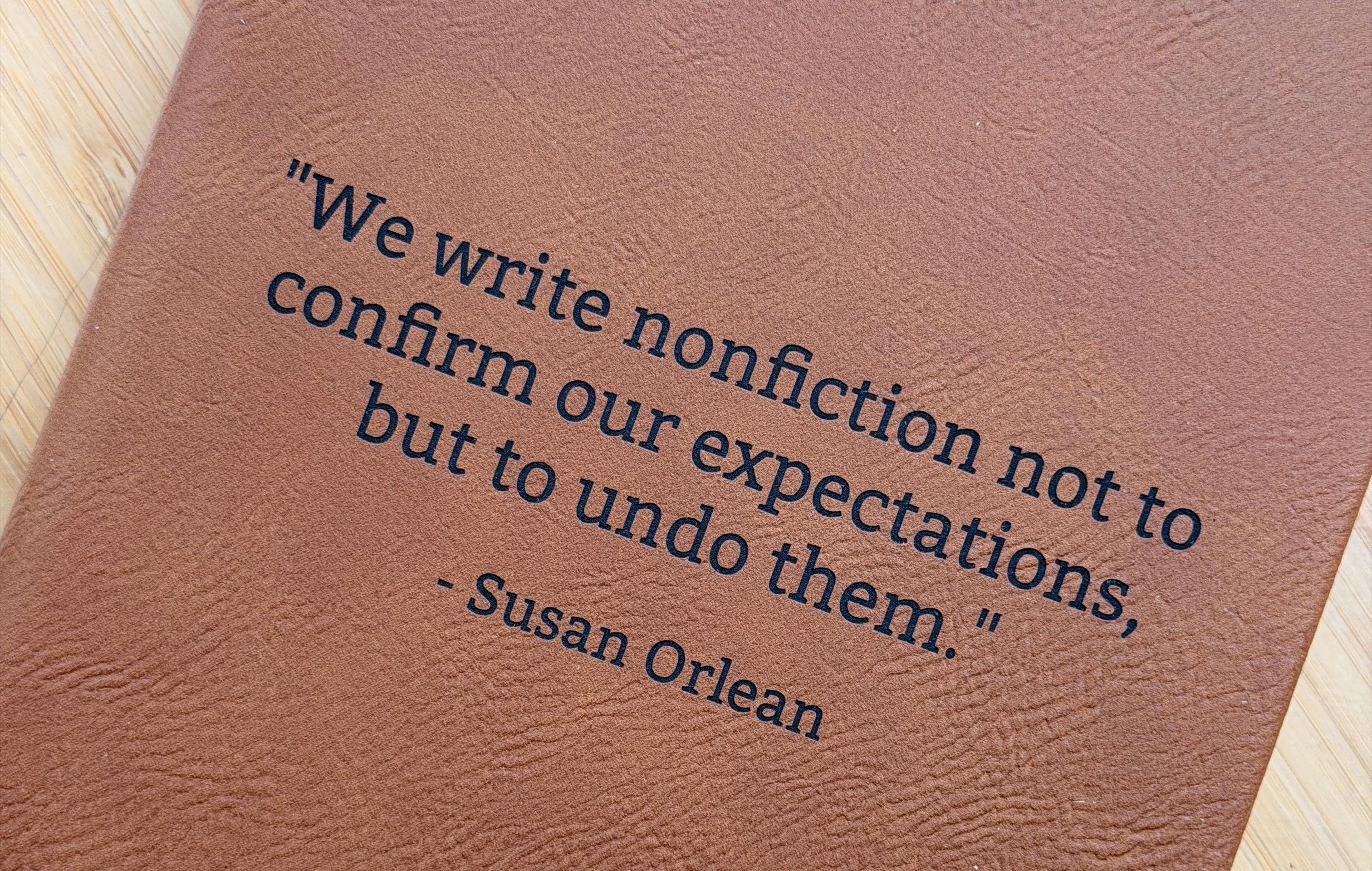
As it happened, French and other Post staffers had been reading Susan Orlean’s memoir “Joyride” for their book club. Advice in the book, along with a Zoom discussion with Orlean herself, helped them find an ending. Here’s Orlean on why stories often can’t be neatly summarized:
Conclusions, though, bedevil me. What are they supposed to accomplish? You’ve already followed me to the end of the story, so the act of seduction has succeeded; what do I do with you now? How do we say goodbye? It’s confounding. Stories do have beginnings, but do they ever truly have endings? The real finale of the story, the terminus, is the end of my relationship with the reader. I’ve led you all this way, and now I’m setting you on your way; our journey together is done. The story doesn’t finish—but our time together, yours and mine, does. That’s the conclusion, that separation of storyteller and listener, the small sorrow of the journey’s end.
My first significant editing experience at The New Yorker had to do with the ending of a piece. When Chip [McGrath, Orlean's editor] chopped off that wagging tail of a conclusion I had written at the end of my story about Benetton, I was dismayed. I thought it was like someone had stopped the action midmoment, the reading equivalent of inhaling sharply and holding it, holding it—and not letting it out.
After my initial shock at this excision, I read the piece again, and this time the abruptness felt right. Had I gotten used to the lingering note of the unfinished end? The way it left the reader falling forward, to complete the piece in his or her own head? I began to unlearn my habit of writing those summary upsurges, rehashing what I’d already written and then, effortfully, trying to round out the story, complete it, give it ballast, make it matter. But does a story end because the journalist’s eye has drifted from it? Can any of us set the seal on a story, ever? Should I tell you what a story meant, or is the point that you read it and then it’s up to you to determine what it means? I’ve come to understand that no story is ever over, and it’s the reader’s duty and privilege, not mine, to take stock of the story and give it weight.
Silverman went back through her notes. “I started asking her what else she had in her notebook,” French said, “and we were going through things and filling out sections and rearranging sections.”
Here’s how Silverman ended the piece:
The class was getting a little rowdier, and Tate thought this could be a good moment to tell them what he wished the country had already realized.
He pointed at Allisson and said, “I was defending your democracy.”
She looked puzzled, and then she said: “Mine?”
Democracy, he wanted them to know, wasn’t just built or broken in revolutionary moments or clouds of smoke. It required one person, and then another, to pay attention.
Allisson blinked.
“Wait,” she said. “Mine?”
“That quote just felt to me like a Susan Orlean kind of ending,” French said. “Just let the reader experience that moment, too, and let the reader take it the rest of the way.”
It’s one small moment in one classroom, about an event that is still playing out right now. No story ever really ends, but the way we tell it matters — in real-time and five years later — to future generations.
***
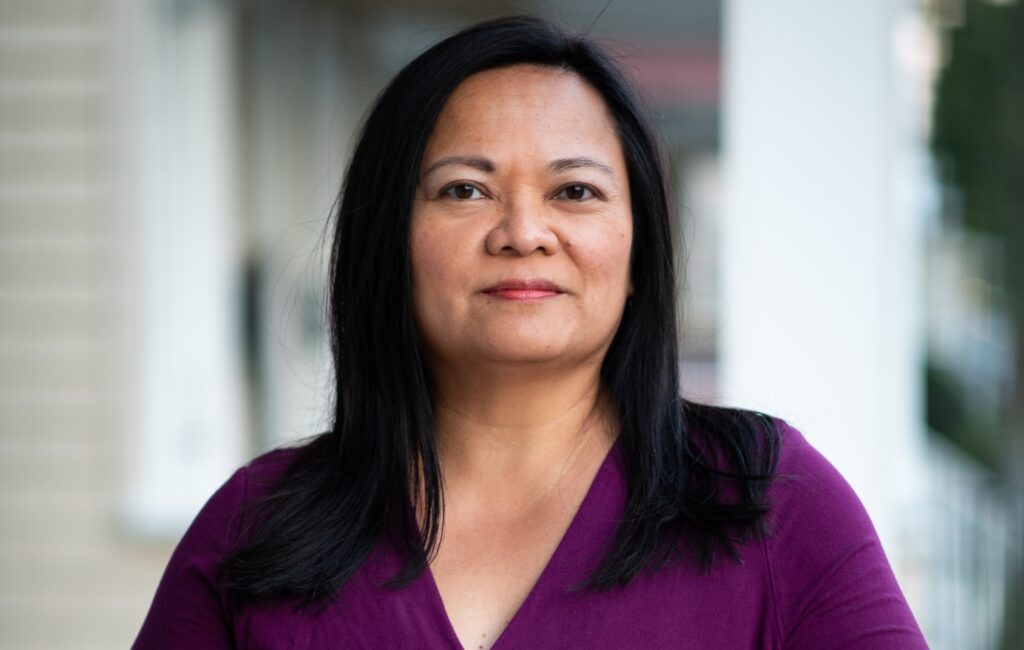
Storyboard contributor Erika Hayasaki speaks with author and essayist Grace Talusan, who teaches creative nonfiction at Brown University. As Hayasaki writes, “Before the holiday break, tragedy gripped the Brown campus in Rhode Island, as a gunman opened fire on students who were prepping for exams, killing two and wounding nine others. I interviewed Grace about her teaching and writing before the shooting, checking in with her again in the hours and weeks after. Still reeling, she is now focusing on helping students use writing to process and try to heal.”
[ Read the story ]
Links of note
- “Learning Succinct Storytelling from Pop Songs.” For her Culture Trip newsletter, culture writer Jennifer Keishin Armstrong takes us through the structure and emotional detail in the lyrics of some classic and modern pop hits — from the devastating three-act structure of Tracy Chapman’s “Fast Car” to the foreshadowing of conflict in Chappell Roan’s “Good Luck, Babe!” “You just know when the opening lines are, ‘It’s fine, it’s cool,’ that it is neither fine nor cool. I love an opening line that implies ‘things are not right here’ without explaining everything.”
- “When the only game in town is your own.” Journalist Paul Kix tells a story about any writer’s dream scenario: having their GQ magazine story adapted into a feature film that goes on to premiere at the Sundance Film Festival. But what if the real dream is something else entirely? “Happiness is found when you listen to what you feel called to do and then you do it, over and over and over. The real prize of Sundance, I realized in the months after the festival, was the opportunity to write more.”
- “A ‘news’ story (more than) a year in the making.” The path to publication is usually not a straight line, as journalist Christian Elliott reminds us in his newsletter. He shares a refreshingly transparent timeline of publishing his latest piece, an 1,100-word story for Science Magazine about deep-sea mining that he first started working on in May 2024.
- Speaking of long journeys to publication: At Sari Botton’s Memoir Land, poet-writer Maggie Smith offers words of encouragement from her book, “Dear Writer: Pep Talks & Practical Advice for the Creative Life”: “Before Meryl Streep read ‘Good Bones’ at Lincoln Center, before the poem was featured on an episode of ‘Madam Secretary,’ before it went viral and was read by millions of people, before it was published by the online journal Waxwing, ‘Good Bones’ was rejected by a few other magazines. I sent the poem out to a few print journals I admired, and it was rejected by all of them. (No, I’m not naming names.)” As Smith continues: “Sometimes you don’t know that a loss isn’t a loss, because what it makes space for is better—a good reminder for all of us working on creative projects, putting ourselves out there, trying, and then trying again.”
Keep trusting the process, and keep sharing your stories,
Mark Armstrong
Editor
Nieman Storyboard
Follow the Nieman Storyboard Podcast
On Bluesky: @niemanstoryboard.org
Subscribe to Storyboard
Get insights into the craft of journalism and storytelling in your inbox, delivered on Fridays.
Follow the Nieman Storyboard Podcast
[ Follow us in Apple Podcasts, Spotify, or your favorite podcast app. ]