Sign up for the Nieman Storyboard newsletter, delivered every Friday in your inbox.
***
Dear Storyboard community:
To the citizens and journalists on the ground in Minnesota and around the country, who are putting themselves in harm’s way to document what is happening in real time: Thank you for your tireless work.
The nation is following along via the Minnesota Star-Tribune, Minnesota Public Radio, the Minnesota Reformer, and many other independent outlets and community members reporting on the escalating chaos from the U.S. Department of Homeland Security (DHS) and Immigration and Customs Enforcement (ICE) buildup in Minneapolis.
As Kelly McBride writes at Poynter, “This moment will be defined by what we choose to record.” Supporting local journalism — and the people creating that record — is more important than ever.
***
This week, we have a new Nieman Storyboard podcast conversation with Leah Sottile and Ryan Haas, two journalists who have made local and regional storytelling part of their mission, as they’ve spent more than a decade investigating stories in Oregon and the Pacific Northwest.
Sottile and Haas are the reporting team behind the investigative podcast “Hush,” which recently wrapped its second and final season focusing on the unsolved case of 18-year-old Sarah Zuber, who was found dead just 400 feet from her home in rural Oregon in 2019.
They first started working together in 2019, on the Oregon Public Broadcasting/Longreads podcast “Bundyville” (which is how I met them). Through their podcasts, Sottile and Haas do deep investigative work on a single case, but they also look closely at how one event affects an entire community; Sottile says place is very much a central character in any story they tell. And with Season Two of “Hush,” they take a step back to examine the “true crime” genre in journalism, and how to report on a tragedy with care and sensitivity.
This week, they’ve announced that they’re starting an independent publication called The Western Edge. (For updates, you can follow Sottile and Haas on Bluesky or on their individual Substacks.)
Our conversation ends with Sottile’s straightforward advice for journalists on how to cover difficult stories: "Sometimes the strongest way to be a journalist is to just be a freaking human."
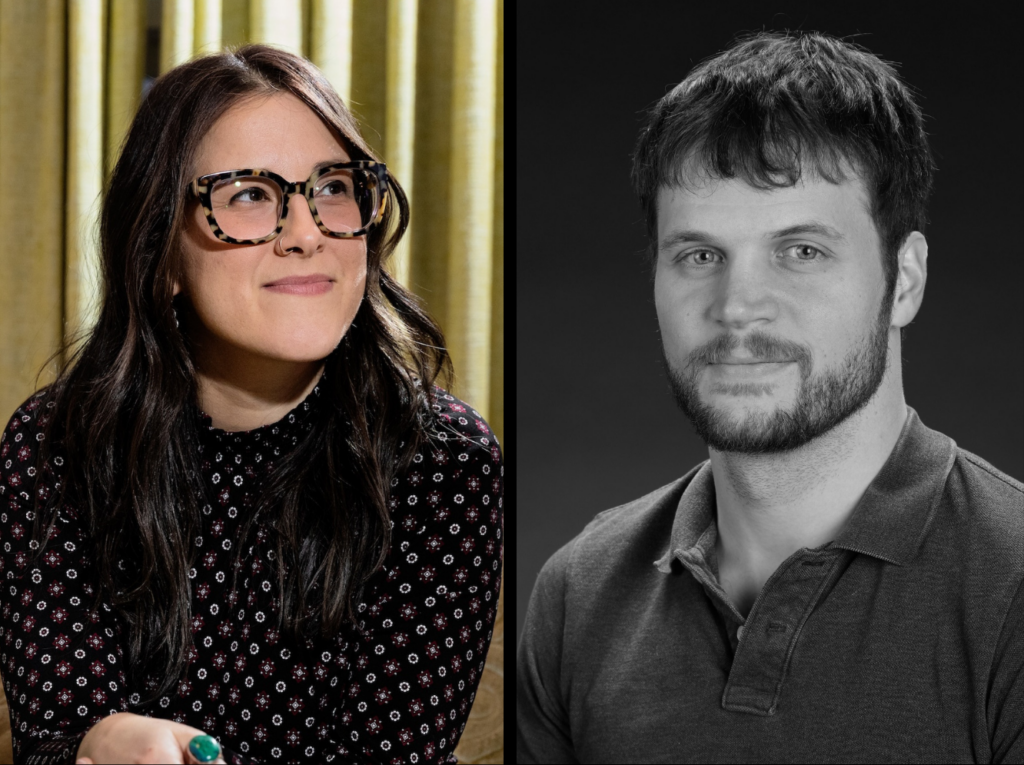
“I think if you're going to get into a crime and something that is tragic and has happened to a person, you should at least think a little bit about: what is the benefit of this? I think Justin St. Germain [an Oregon State University professor who teaches courses on nonfiction and true crime] puts it really well in our show and he says, ‘what's the benefit of this beyond your own careers?’ And I think if you're being ethical, you should be asking yourself that question.”
[ Read the story ]
[ Follow us in Apple Podcasts, Spotify, or your favorite podcast app. ]
Links of note
- “Armed Only With a Camera: The Life and Death of Brent Renaud,” a documentary short about American journalist Brent Renaud, who was shot and killed by Russian soldiers in Ukraine in 2022, has been nominated for an Oscar. Renaud, a 2019 Nieman Fellow, was working on a film about the experiences of refugees and migrants in 10 countries around the world for Time Studios. His brother and longtime filmmaking partner, Craig Renaud, made the documentary as a tribute to his brother and journalists who have been killed doing their work. “ Brent and I had many conversations about the ‘what-ifs,'” Craig Renaud told IndieWire’s Filmmaker Toolkit podcast. “‘What if we get captured? What if we get kidnapped? What if one of us dies? What do we do?’ And we [decided], we always keep filming.”
- Former Storyboard editor Andrea Pitzer has spent years studying the history of concentration camps. In 2017 she published “One Long Night: A Global History of Concentration Camps,” and she’s written for Storyboard about efforts to collect survivor stories from Auschwitz. In her latest newsletter, she makes the historical case for calling U.S. ICE detention centers what they actually are: “Concentration camps involve the mass detention of civilians without due process on the basis of political, racial, ethnic, or religious identity. And that is where we’re at right now.”
- For Southlands magazine, Storyboard contributor Kim Cross wrote a beautiful essay about her grandmother, featuring a paragraph that evokes all of our senses to reveal her character: “She was stoic and regal, the doctor’s wife, a lady from another era. She smelled like Oil of Olay, wore pearls, and spoke fluent Spanish. She moved with a lightness, like a dancer, floating through a realm where everything around her seemed denser. She was the only one who could call me ‘Kimberly’ without making me cringe. She signed her letters, All my love, Grandma Hisako.” (Hat-tip: Tommy Tomlinson.)
Keep observing, recording, and sharing your stories,
Mark Armstrong
Editor
Nieman Storyboard
Follow the Nieman Storyboard Podcast
On Bluesky: @niemanstoryboard.org
Subscribe to Storyboard
Get insights into the craft of journalism and storytelling in your inbox, delivered on Fridays.