Sign up for the Nieman Storyboard newsletter, delivered every Friday in your inbox.
***
Dear Storyboard community:
This week, I'm going to point you straight to Kerry Howley's heartbreaking and infuriating New York magazine feature story about the families of the 27 children who died at Camp Mystic during the Guadalupe River floods in Texas last year.
The story details the confusion, then the horror and grief, as families processed what happened in those early morning hours of July 4, 2025. As the facts became clearer, lawsuits followed. Now, the anger has deepened as Camp Mystic's owners announced plans to reopen for campers this summer.
You'll also want to read Emily Gould's interview with Howley for details on how she reported and structured the longform piece, and her decision to lead with the perspective of the families:
For a long time, I wasn’t sure if I would tell the story of that night because I wanted us to be with the parents. They’re lost and they don’t have access to where their children are and they’re literally miles from the camp — like, physically miles from where they last knew that their children were safe, and they’re not getting information, and there are these terrible press conferences where they’re just being stonewalled. I wanted us to be with them and kind of desperate to know and unable to get that information. So, then, when do you reveal what happened? Once the parents have fully pieced together the horror of what happened that night — and particularly how close those girls were to safety — that is the time to tell it. That’s why I withheld that information until the end.
Howley adds: “So many of the stories about Camp Mystic told on morning television or even the local news have a positive spin, like, ‘Oh, here’s how they found hope in their sorrow.’ And ultimately I don’t think this is a story about resilience or hope. It’s a story of a complete failure of accountability.”
Her story, and the story of these families, is one that I will remember for a long time.
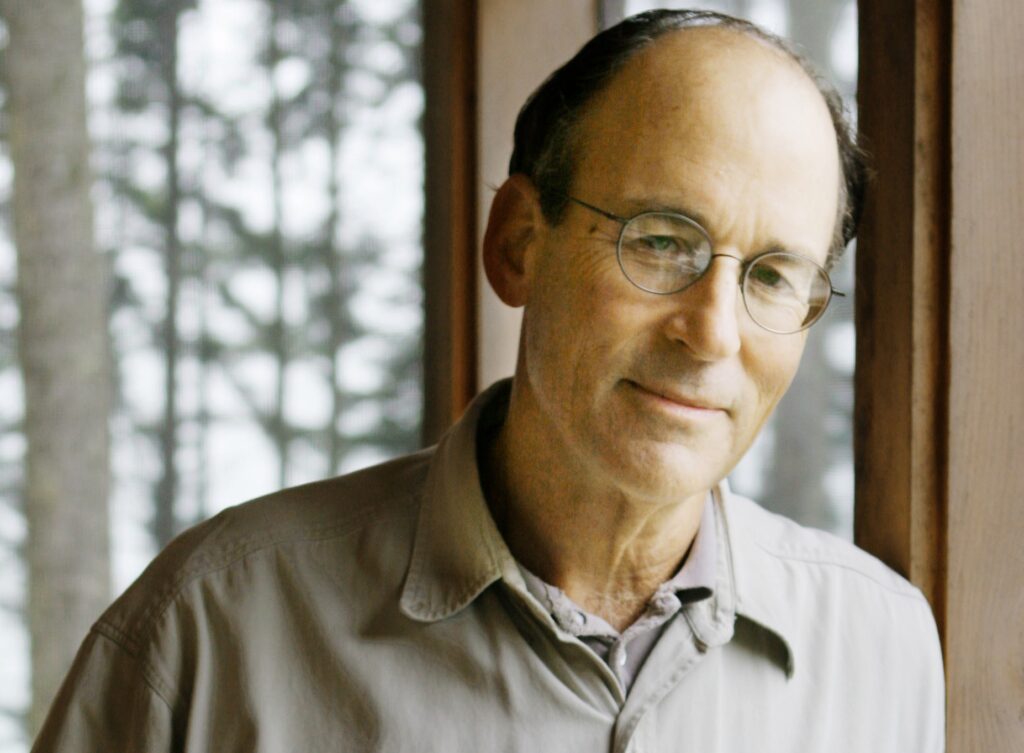
Tracy Kidder, the Pulitzer Prize-winning journalist and author of books including “The Soul of a New Machine,” “Mountains Beyond Mountains,” and “Among Schoolchildren,” died Tuesday in Boston. He was 80.
Kidder's wide-ranging work has inspired and guided many journalists — many of whom wrote about what they learned from Kidder in Nieman Storyboard. His book, “Good Prose: The Art of Nonfiction,” written with his longtime editor Richard Todd, is featured in the Nieman Storyboard Guide to Books on Storytelling. Here are a few lessons from the Storyboard archives:
- “Every story has to be discovered twice, first in the world, and then in the author’s study. One discovers a story the second time by constructing it.” From “20 writing and editing tips from Tracy Kidder and Richard Todd,” by Paige Williams, 2013.
- “I do explain [to sources and subjects] this is likely to be a pretty large invasion of privacy. And I do this in part because I now know quite well how much better it is for someone to say, ‘No, I’d rather not do that’ when there’s nothing invested on either side and there’s likely to be no hard feelings, than a year down the road when it might be much more painful — it would be much more painful to have to abandon the project.” From “Tracy Kidder in conversation with Darcy Frey, part 1,” 2010.
- “For me, it’s very important to find out what the actual chronology is, the absolute chronology of the story. As my editor, Dick Todd, likes to say, it’s surprising how often writers that he’s worked with don’t actually know the chronology. We have a rule, he and I, which is if you’re going to break chronology, you have to have a good reason for doing it.” From “Tracy Kidder in conversation with Darcy Frey, part 2,” 2010.
Links of note
- Congratulations to this year's finalists for the National City and Regional Magazine Awards, honoring the best work from city magazines around the U.S., including 5280 (in Denver), Boston, Chicago magazine, D Magazine, Philadelphia magazine, St. Louis Magazine, Texas Highways, and Texas Monthly. Get the full list here.
- Submissions are open for the Gerald Loeb Awards for Distinguished Business and Financial Journalism. Nominations are also open for two career achievement honors, the Lifetime Achievement Award and the Lawrence Minard Editor Award. The journalism competition deadline is April 30. Full submission guidelines can be found here.
- The Fund for Investigative Journalism is accepting submissions for its Spring 2026 grants, awarding up to $10,000 for “investigative stories that break new ground – which means they uncover wrongdoing in the public and private sectors and reveal information that was previously unknown or hidden.” The organization is also accepting applications for seed grants of $1,000 to $2,500, to “cover the expenses of preliminary reporting, such as open-records requests and initial reporting trips.” The due date for both is April 27. Get more details here.
- Mallary Tenore Tarpley, in her Write at the Edge newsletter, discusses the importance of embracing rejection on the long path to publishing a book: “My perfectionistic self equated rejections with failures. They made me feel like a fraud, as though the ID I’d been carrying around as a writer was suddenly fake. My inner critic got loud, especially after so many publisher rejections. Who do you think you are? You’re never going to become a ‘famous’ author, let alone a no-name one. I remember apologizing to my literary agent at that stage, letting her know I was sorry if I had wasted her time. (She assured me I hadn’t and stuck by my side the entire time.)”
- Leah Sottile attends an elementary school career day, and explains to the curious students what it means to be an investigative journalist: “How would you explain to a child why a police officer would lie? What do you say so they can understand? I wanted this child to know that his question was a wise one, truly one of the most important questions of our lives, one question with so many answers. So what I said was: ‘that’s a really good question. You might want to become a journalist.’”
Keep asking good questions, and keep sharing your stories,
Mark Armstrong
Editor
Nieman Storyboard
Follow the Nieman Storyboard Podcast
On Bluesky: @niemanstoryboard.org
Subscribe to Storyboard
Get insights into the craft of journalism and storytelling in your inbox, delivered on Fridays.
Follow the Nieman Storyboard Podcast
[ Follow us in Apple Podcasts, Spotify, or your favorite podca