The 28th Power of Narrative conference returned to Boston University on March 27 and 28. Journalists, authors, podcast producers, and filmmakers came to the second floor of the George Sherman Union to share the lessons they’ve learned from their work.
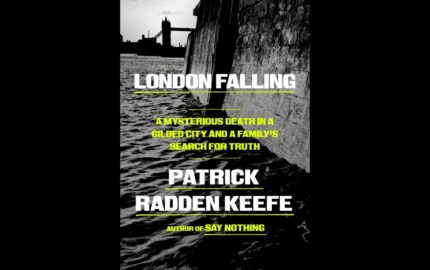
We’ve already shared a few notes from this year’s conference, including Nieman Storyboard editor Mark Armstrong’s Power of Narrative conversation with “London Falling” author and New Yorker staff writer Patrick Radden Keefe. Now, here are six more takeaways from a weekend full of inspiration and education:
1. Find the narrative, don’t build it: Ken Burns
Ken Burns, whose latest PBS documentary series was 2025’s “The American Revolution,” created a history of the colonies before, during, and after gaining independence from the British — fitting it all into six episodes, or 12 hours.
Burns said the material often spoke for itself. The desire to seek out the truth is central to his work, but he’s often dealing with “grades of imperfection” since there is no such thing as objectivity, he said. But the story will tell you if it’s important to include.
“The greatest thing I love to hear is what I left out,” he said. “Bring it on … I know exactly the thing, I made a decision to leave that out. We’re not an encyclopedia.”
What also tends to speak for itself is the narrative. Burns gives an example of a mother named Rebecca Tanner of the Mohegan tribe from Connecticut who lost five sons fighting for the Patriot cause. There were many women, children, and enslaved people that fought on either side of the conflict. It’s Burns’s job to collect those lost or hidden stories.
“You find [narratives]. You never tried to build it. It’s there, and it’s inherent,” he said.
Burns acknowledged that current times are fraught, divided, and unpredictable. But so were the times during the Revolution, Civil War, and Vietnam War. He said there are “features of right now that are hugely terrifying and ought to be talked about.”
While Burns feels confident in telling these complex historical narratives, he said it took decades to get to that point. He realized that he knew how to do the work, even if something goes awry. And he leans into the unknown, working out the problem and coming out the other side having learned something.
“You have to first know that you have something to say, and that has to do with an incredible amount of introspection about what you want and who you are and what your capabilities are,” he said.
2. Telling someone’s story without a ‘perfect interview’: Giulia McDonnell Nieto del Rio and Jazmin Aguilera, The Boston Globe
The detention of Tufts University student Rümeysa Öztürk in March 2025 was one of the earliest moments in Trump’s second term that the nation witnessed increased aggression by U.S. Immigration and Customs Enforcement (ICE) officers on the streets across the country.
The Boston Globe followed the story since Öztürk’s arrest and detainment, publishing dozens of articles. Behind the scenes, Globe team members including senior audio producer Jazmin Aguilera and immigration reporter Giulia McDonnell Nieto del Rio worked to bring Öztürk’s story even closer to readers and listeners, creating the two-part podcast series, “Rümeysa Öztürk: An American Story.”
The central question the team sought to answer was, “Why had the Trump administration chosen Rümeysa to arrest?”
“We very quickly started learning that she wasn’t a protester or an activist that you would usually think of using those words on campus. She’s a very quiet, soft-spoken student. She loves children, she was simply passionate about the rights of children,” McDonnell Nieto del Rio said. “We wondered how the Trump administration had even found her, and those were answers we didn’t think we were going to get directly from officials, and so we had to figure out basically other ways to do that.”
McDonnell Nieto del Rio saw that professors were suing the Trump administration over an ideological deportation policy, and she started attending hearings in Boston. She saw ICE agents take the stand to testify, and she learned that they had most likely discovered Öztürk through a website that doxed protesters.
The team then went on to acquire hundreds of pages of court documents and hours of video footage to tell a bigger story. It also helped add context to Trump’s immigration enforcement crackdown, a story that was “touching everyone,” McDonnell Nieto del Rio said.
One challenge for the team: how to tell a great narrative without a “perfect interview” with the central character. They were able to get written answers from Öztürk during the reporting process, but it wasn’t quite what they expected. They largely turned to other characters around Öztürk, such as her lawyer, a woman who was detained with her in Louisiana, and even the man who got the viral video footage of Öztürk being taken off the street by ICE officers.
“We all think the dream is to have the perfect interview with the person at the center of the piece. But I think there are a lot of other ways to go about these stories too,” McDonnell Nieto del Rio said. “And what’s great about having restrictions on a story is that it forces you to be creative and find workarounds, and sometimes you’ll get things from those workarounds that you wouldn’t have already gotten.”
3. Look beyond the headlines for the hidden stories: The New Yorker’s Sarah Stillman
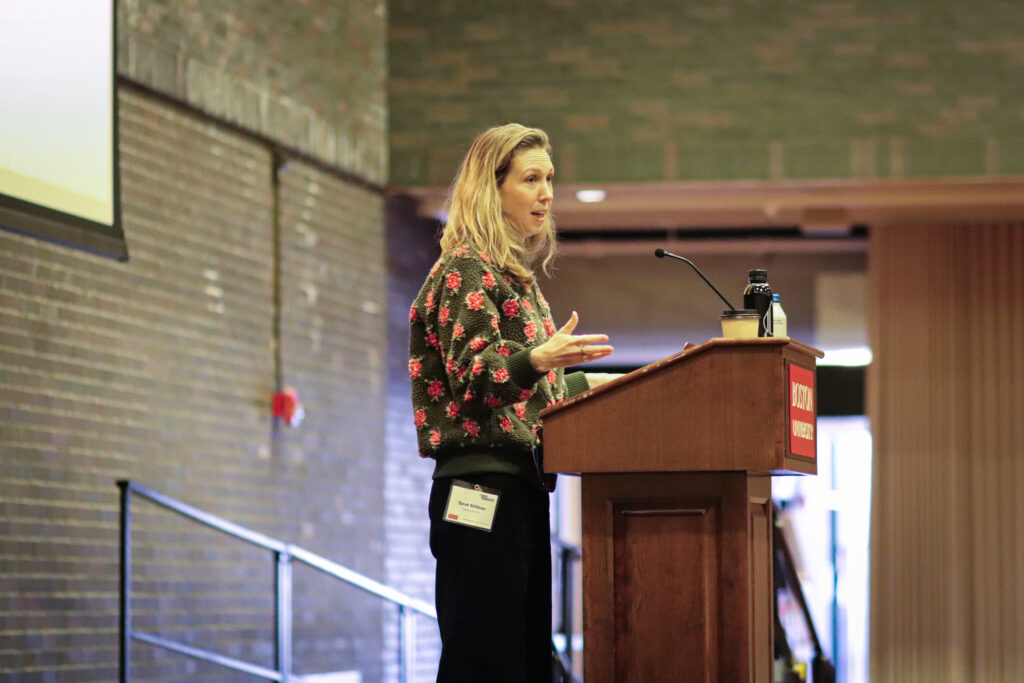
The first story New Yorker staff writer Sarah Stillman ever reported was during her senior year in college. She saw a Fox News report while at the gym with the headline “Body Found in Lake Is Not Missing Fla. Girl,” about the 2005 search for the missing 9-year-old Jessica Lunsford.
When Stillman saw the report, she wondered about the woman whose body was found in the lake. She went back to her dorm room and called the sheriff’s office in Florida and asked for the woman’s name, revealed to be Donna Cooke. Once she got it, she did a background check on her and found her last known address. Stillman traveled to Florida and learned about Cooke’s story — about her prostitution charges, and being brought on as a confidential informant for police, which led to her death. Stillman later wrote about confidential informants for The New Yorker, 2012’s “The Throwaways.”
“One of my very first reporting experiences then became the story, not just of telling who Donna was, but also of telling how she wound up there, which had to do a lot with current U.S. drug enforcement policies around how we use confidential informants,” Stillman said. “It’s been incredibly guiding to me as a journalist, learning to watch news headlines and seeing where is something not adding up for me.”
Stillman also learned that the best stories come from learning one’s strengths. After joining The New Yorker, she went to cover Iraq and Afghanistan during the Iraq war. She didn’t know the nuanced history of the Middle East and certainly didn’t know the language, but she sought out stories using her background.
Stillman, whose family included labor workers, always thought about how labor fit into a bigger story. Through that lens, she reported on thousands of international workers being sent to Iraq to do menial jobs on military bases. She spoke with hundreds of these workers and found they had been sent to the bases under false pretenses and also found cases of sexual assault.
“So much of what I think is the most compelling kind of narrative journalism is thinking about, ‘Where are people encountering black holes, whether it’s policy or whether it’s of the existing narratives?’” Stillman said. “How do we create narratives that push back on that and actually fill in the blanks and ask for accountability?”
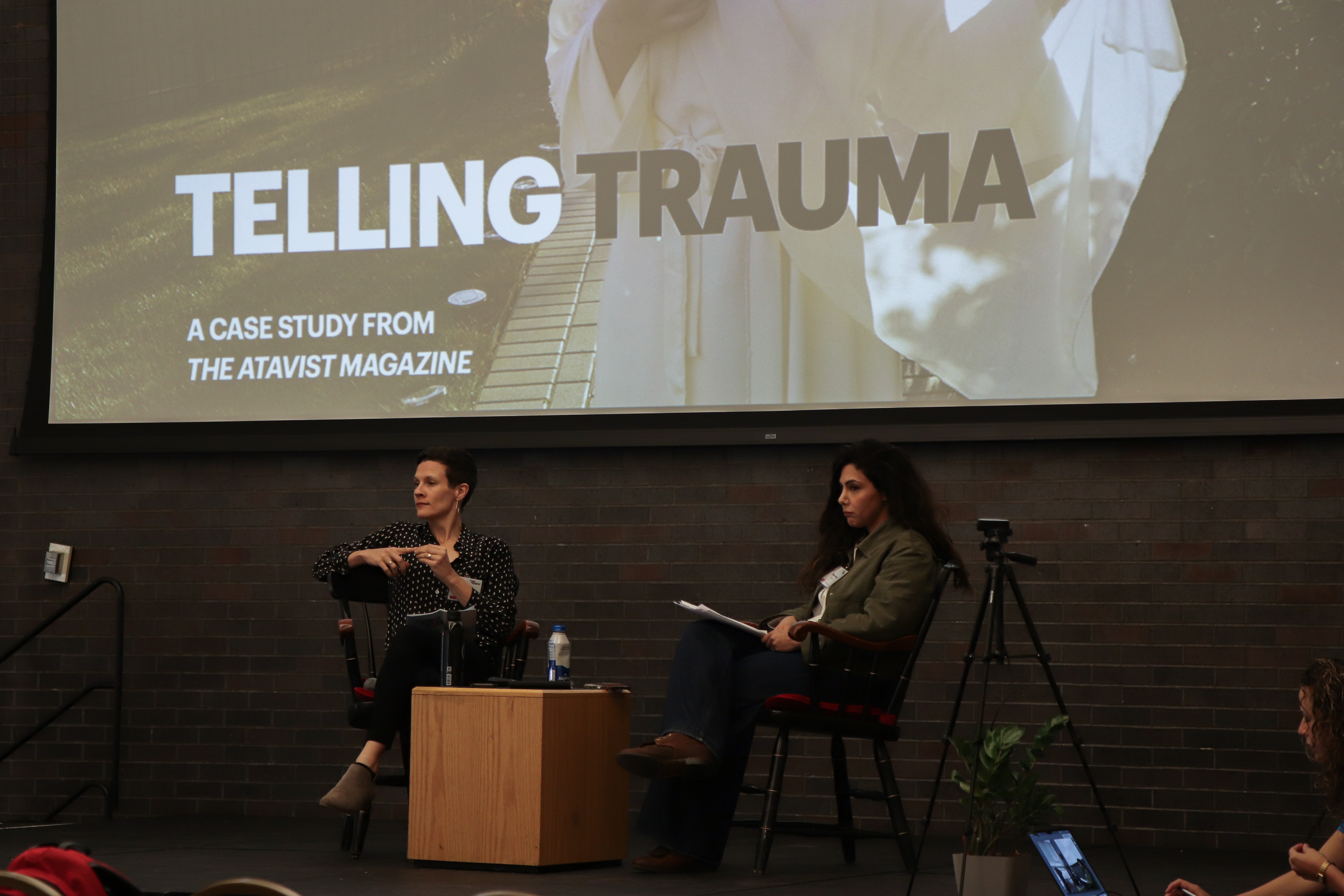
4. Showing the true humanity of a bombing victim: Rhana Natour and Seyward Darby, The Atavist Magazine
Over 1,000 children in Gaza lost a limb in the first two months of the war. That statistic stuck with freelance journalist Rhana Natour as she considered covering a conflict that has produced the largest number of child amputees in history. Natour spoke with photojournalist Eman Mohammed and learned that some organizations had been helping young children from Gaza come to the U.S.
She said finding stories from the Israel-Hamas war proved difficult, as international journalists could not access the region directly. But children were “coming to us” and could shed light on the war and their experience. Natour’s National Magazine Award-winning story, “Coming to America,” featuring photos by Mohammed, was published in The Atavist Magazine in July 2024. It tells the story of a 14-year-old girl named Layan Albaz who lost her legs in an Israeli airstrike that also killed many of her family members.
Natour learned she needed to equip herself with the right reporting tools to handle the story with sensitivity. She understood she was talking to a child that had gone through significant trauma in the last month. She consulted experts in childhood trauma ahead of speaking with Layan and other children. She also had Mohammed, who’s fluent in Arabic and has a deep understanding of Middle Eastern culture, to translate for Natour.
Some of these practices included “asking them frequently if you want to take a break, or the way that you approach a child,” Natour said. “The underlying suggestion is … that child doesn’t want to feel obligated to tell you anything. You don’t want to exhaust them through the interview process. You don’t want to do harm.”
But before Natour met Layan, she was described as “angry,” “moody,” “furious,” and “mean.” She wasn’t the sad and gracious “perfect victim” that Natour may have expected. Natour leaned heavily into writing about that anger.
“If in a story you come up against an obstacle, don’t think of it as something, ‘Oh gosh, I need to somehow tuck this under the narrative.’ Maybe it’s actually part of the narrative. Maybe it makes for a richer story,” said Seyward Darby, Natour’s editor on the story and editor in chief of The Atavist. “She is trying to assert agency. She’s trying to process trauma. She is trying to regain a sense of control in her life. She’s furious that so many people and institutions failed her. So maybe her anger is part of the story. Maybe it is the story.”
5. Building a literary toolbox: Jabari Asim
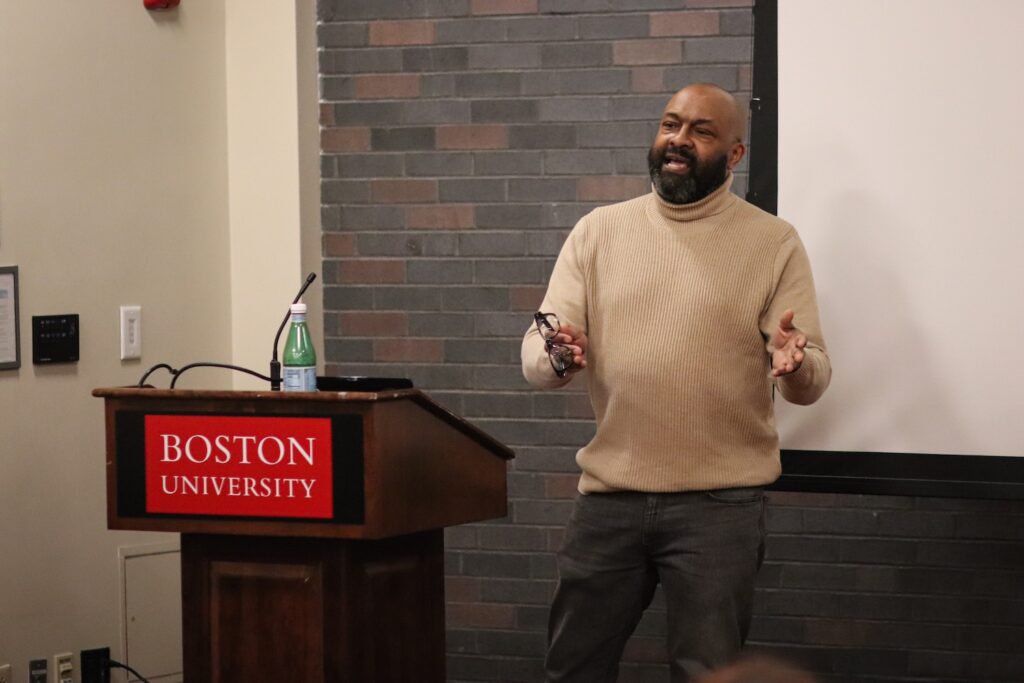
Jabari Asim, a professor at Emerson College who has published 23 books including fiction, nonfiction, poetry, essays, and children’s books, likes to visualize his audience before beginning a project. He thinks of three different readers: himself (and his appetite for something he’s interested in or hasn’t seen anywhere else), someone who isn’t attracted to the subject matter at first but would read something that is well written, and someone who is adversarial to the topic he writes about.
Asim, who was previously an editor at The Washington Post and editor in chief at the NAACP’s magazine The Crisis, also visualizes the finished product. “I see the book on the shelf. I see the spine. I see my name. I see the title. I see the color scheme. So I convinced myself that on some level, somewhere, my book already exists, and now it’s just a matter of working backwards.”
He’s a big believer in the “ass to chair” theory of writing — and letting every idea spill onto the pages of the notebook with little distraction. He also encouraged finding a routine or habit that unlocks a creative flow state, whether it’s a regimented routine like that of Haruki Murakami or just some good beer and pizza. Either way, “Consistency is the operating principle. Find what works for you and stick to it.”
Asim keeps a “commonplace book” that contains profound phrases, observations or ideas that convey an element of style or prose that informs his own work. The book reminds him that he is entering into a collective discussion, and his ideas may only add onto what has already been expressed, keeping him grounded. The quotes in his book include the likes of Toni Morrison, Mary Oliver, Robert Frost, Andrei Tarkovsky, and many others.
Asim said he creates rough outlines, and it evolves as he goes through multiple drafts. After having a comprehensive outline, he can shuffle parts around and jump from place to place when writing (he said this is an antidote to writer’s block for him). In his drafts, he often highlights a “golden paragraph” that showcases everything he was trying to achieve and compares that paragraph to the rest of his paragraphs to see how he can strengthen the others.
Cleanliness, precision, ease and force are Asim’s four elements for writing. For cleanliness, “Don’t give [publishers] a chance to dismiss you easily. Get rid of all typos, grammatical errors and misspellings.” For precision, quoting E. B. White, “omit needless words.” For ease, “Never let your readers see you sweat. Successful writing tends to be a fingerprints-free exercise.” For force, “Your conclusion presents the final opportunity to close the sale, to gather your narrative momentum and drive home the full eloquence and fury of your prose.”
6. Becoming less of a stranger in a small town: Keith O’Brien
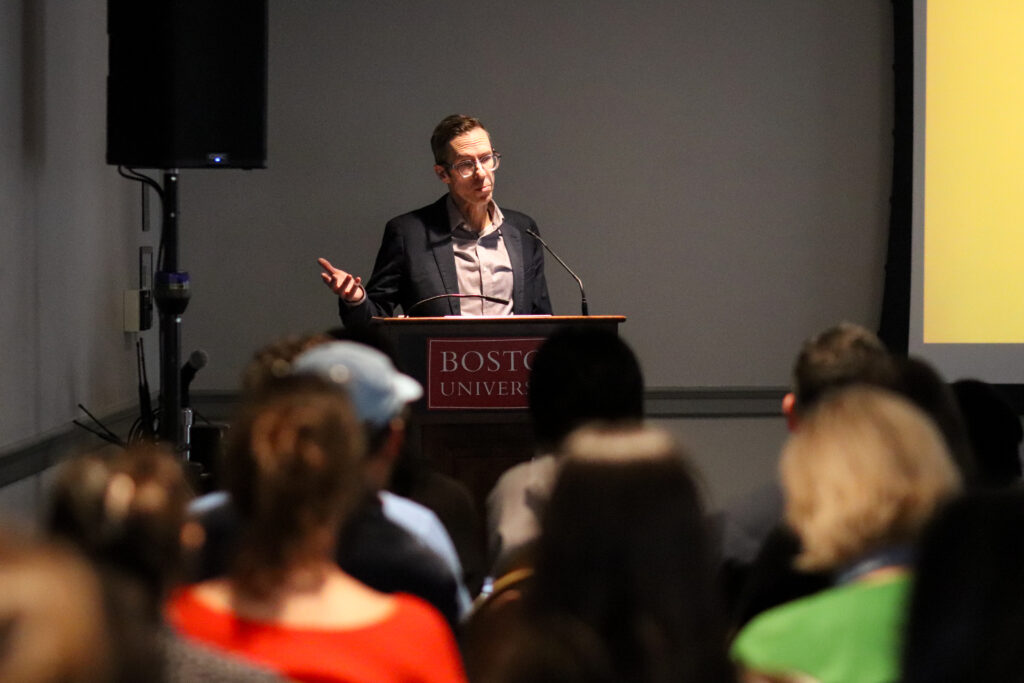
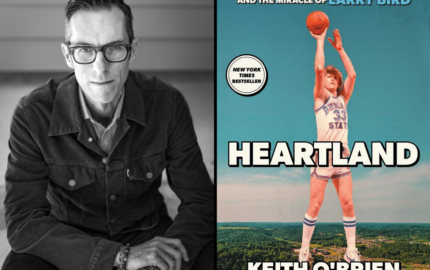
Keith O’Brien, an award-winning author and journalist whose work has appeared in New York Times Magazine, The Atlantic, and Rolling Stone, wanted to dig into the early years of Boston Celtics legend Larry Bird. But Bird is a notoriously private person, rarely doing interviews or projects unless he has some control over it. So it came as no surprise when Bird couldn’t be reached for O’Brien’s recently published book, “Heartland,” covering his high school career in his hometown of French Lick, Indiana.
O’Brien didn’t necessarily need Bird’s participation for the story. He wanted to tell a “compelling human narrative.” Perhaps Bird would have told a completely different story about those early years than the people around him that shaped his future career. To get those outside voices, he collected phone numbers and started calling around. Nobody answered him.
“I need to invest in the story,” O’Brien said. “If people aren’t calling me back, maybe what I need to do is just go to French Lick. And so that’s what I did: bought a plane ticket, got a rental car and booked a room at the Best Western on the edge of town. And then before I left with those numbers and those addresses that I knew were right, I reached out again … and it was then that people started getting back in touch with me.”
One of the important figures in Bird’s life that O’Brien identified was his father Joey Bird. He was a well-known person in town but struggled a lot; a few months after his son graduated high school, he took his own life. Since neither of the Birds could — or would — speak to him, O’Brien learned about Joey Bird through military records, newspaper clippings in the public library, and at the local bar in town.
O’Brien could feel that he was out of place, especially at the bar where he had to immediately introduce himself and his intentions. But he quickly started to acquaint himself with Bird’s high school friends, college teammates, and mentors. There was one person he still couldn’t get a hold of who was essential for the story: Bird’s high school coach, Jim Jones.
In a last-ditch effort, O’Brien decided to drive to Jones’s home an hour outside of French Lick. He knocked on the door and his wife answered. After a few moments, Jones came to the door and wordlessly let O’Brien through. They talked for the next three hours in Jones’s kitchen, where Jones showed O’Brien a custom Larry Bird championship-style ring and a letter from Bird to Jones, thanking him for all he’d done.
“I knew two things for certain,” O’Brien said. “First was, I had this story, whether Larry Bird was talking to me or not. I had it. And number two, I knew that I was not a stranger in this place anymore. I belonged here.”
***
Emilia Wisniewski is a general assignment reporter and engagement editor at the Concord Monitor in New Hampshire. She previously worked at Boston.com and The Boston Globe as a correspondent where she covered local politics, business, health, and environment.
Subscribe to Storyboard
Get insights into the craft of journalism and storytelling in your inbox, delivered on Fridays.