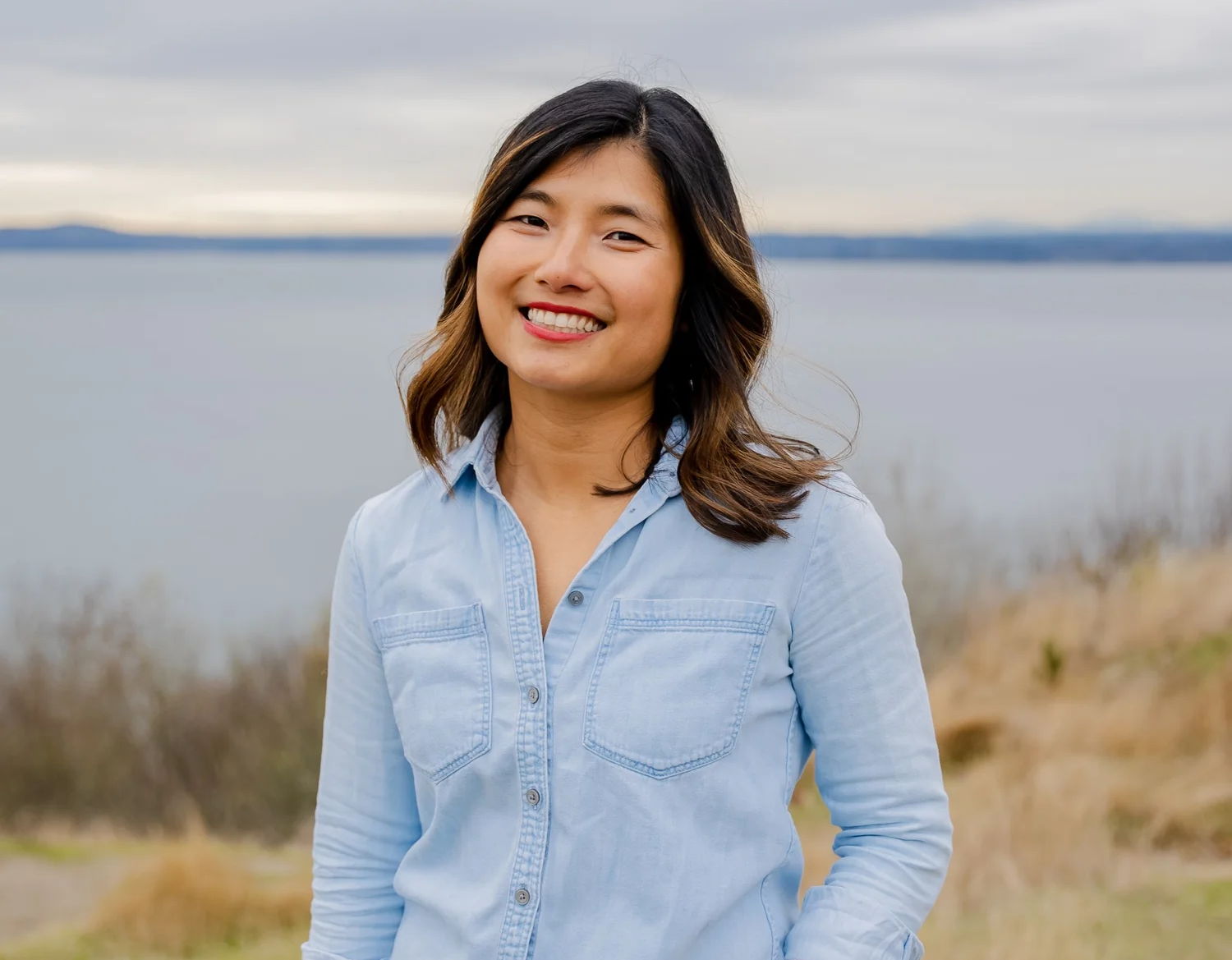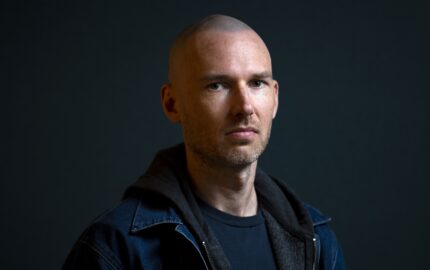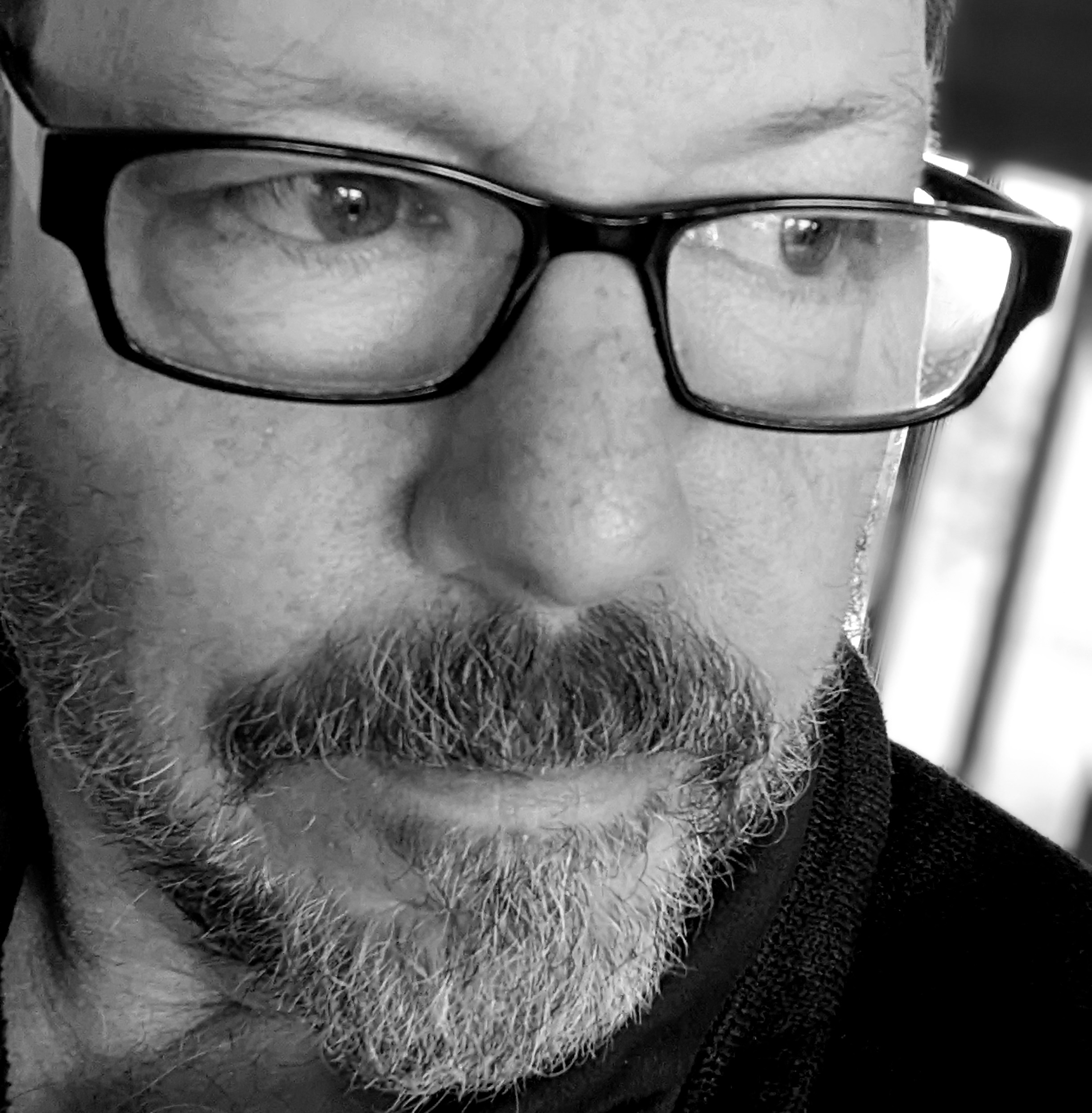
Ken Armstrong has reported, written, or edited many award-winning stories over his career, and that work has taken various forms — including traditional longform writing, podcasts, and television. But last year an experimental reporting project at Bloomberg News led him to explore an entirely new path: the world of web comics and graphic novels.
The resulting story, “TrAPPed,” illustrated by Anand RK, and written by Suparna Sharma, and Natalie Obiko Pearson, told the story of a neurologist in India who was held captive under "digital arrest” as part of an elaborate scam. The web comic was paired with a written longform narrative about the dark side of India’s digital revolution.
In May, the story was awarded the Pulitzer Prize for Illustrated Reporting and Commentary. It’s just one example of the many ambitious stories Armstrong was hired to help bring to life at Bloomberg in his role as senior editor and narrative coach for global investigations.
For this week’s Nieman Storyboard podcast, I talked to Armstrong about the importance of storytelling in investigative journalism, and how narrative has been central to his work throughout his career.
[ Follow us in Apple Podcasts, Spotify, or your favorite podcast app. ]
It’s a career that has spanned publications including the Chicago Tribune, The Seattle Times, The Marshall Project, and ProPublica. Armstrong, a 2001 Nieman Fellow, has won or shared in four Pulitzer Prizes — including his win with Michael Berens in 2012 for Investigative Reporting for their Seattle Times series, “Methadone and the Politics of Pain”. Armstrong and T. Christian Miller shared the Pulitzer for Explanatory Reporting in 2016 for the Marshall Project / ProPublica story, “An Unbelievable Story of Rape” — a story that also was featured on “This American Life” (winning a Peabody Award) and was later adapted into an eight-part Netflix series. And in 2023, Armstrong’s ProPublica and Milwaukee Journal-Sentinel story with Raquel Rutledge, “The Landlord & the Tenant,” won a National Magazine Award for Feature Writing.
Armstrong has also won the Edgar Allan Poe Award for nonfiction books (“Scoreboard, Baby: A Story of College Football, Crime, and Complicity,” with Nick Perry), and the John Chancellor Award from Columbia University for lifetime achievement. At the Chicago Tribune, his reporting with Steve Mills helped prompt the Illinois governor to halt executions and commute 167 death sentences, the largest blanket clemency in capital punishment’s modern era.
The conversation excerpts below are edited for length and clarity.
On the power of stories in investigative journalism
What I found is that stories stick with people in a way that information doesn’t. People remember stories. They remember being surprised, feeling outraged. They remember relating to someone or feeling for someone. They remember having their heart broken. And if memories from reading a story are attached to meaning, to a sense that something important is broken and needs to be fixed, then it’s not just a story. It also has a takeaway. To my mind, if a story sits at the middle, it will be remembered, and it also can make a difference. And that’s what we want.
We put a lot of work into our stories, into our reporting. We want it to make a difference. And a story makes it easier for people to give a damn than a bullet point with information.
You know, I probably haven’t written a bullet point in many years. In fact, I often don’t even write a nut graph. You know, I would rather write a story and let the reader understand the takeaway from the story itself. I often think that that’s more powerful. You have to get buy-in from the newsroom and the editors, but I’ve been lucky enough to get buy-in on multiple occasions to write very long stories that don’t have a nut graph.
On experimenting with illustration and web comics for ‘TrAPPed’
It was a learning experience, and a delightfully fun one, I have to say. My home right now is filled with stacks of graphic novels I bought last year, including classics like “Persepolis,” to more recently published ones, so I could sort of learn the form and how people manage to do what they do. We had an editor at Bloomberg early last year who challenged us to think about different story forms and in particular how we might be able to use illustration more effectively to tell stories.
And when she made that challenge to us on the investigations team, we happened to have a story in progress that suited the challenge beautifully. Natalie Obiko Pearson, who is an investigative reporter in our Tokyo office, was working on a story about digital scams in India. And another editor realized that this would be a terrific pairing, that taking the challenge to do an illustrated piece and matching it with Natalie’s story was the way to go.
The story takes place in the digital realm, in the psychological realm. You’re inside the victim’s coerced imagination. It’s the kind of story that would be difficult to capture in photographs or in video. But when you have the liberty of illustration, it just seemed to suit it because we could get inside the victim’s life, head, imagination in a way that would have been difficult in other forms.
Embracing the role of editor and coach (but not manager)
The one condition I asked when I took a job at Bloomberg was that I not be a manager. I would be terrible at it. I’d be unhappy. I don’t want to supervise anyone. I want to work with people on stories... It changes the dynamic. It changes the relationship. I’ve spent almost the entirety of my career as a reporter, so it’s very easy for me to relate to what reporters are going through because I’ve been there many times.
You’ve probably talked with other reporters on the podcast who tell you what a head-spinning experience it is. There are few things that are more likely to bring out every kind of anxiety that we have than doing investigative reporting in the form of long-form storytelling, right?
We question everything. Is this still a story? Why did I ever start this? Why did I go into journalism? Why didn’t I go into architecture? What am I doing? Will this ever end? All of those questions come into play, and since I’ve had all those questions, I think it’s just easier for me to relate to what reporters are going through at particular points in the process and perhaps help encourage, support, whatever might be needed at any given time.
And it’s easier to do that if you’re not the supervisor, but you’re a colleague.
Reading List: Books, stories, writers, and editors mentioned
- Ken Armstrong’s official site
- Stories by Ken Armstrong at Nieman Reports
- “trAPPed” by Anand RK, Suparna Sharma, and Natalie Obiko Pearson (Bloomberg, December 2025)
- Ram V
- “Persepolis” (Marjane Satrapi)
- “The Egg” (Natalie Obiko Pearson, Jessica Brice, Susan Berfield, Vernon Silver, Kanoko Matsuyama, Cindy Wang, Sinduja Rangarajan, Fani Nikiforaki, Bloomberg Businessweek, December 2024)
- Lauren Etter
- “Methadone and the Politics of Pain” by Michael Berens and Ken Armstrong (The Seattle Times, 2011–12)
- “An Unbelievable Story of Rape” by T. Christian Miller and Ken Armstrong (ProPublica/The Marshall Project, 2015)
- Notable Narrative: Ken Armstrong, T. Christian Miller and “An Unbelievable Story of Rape” (Michael Fitzgerald, Nieman Storyboard, 2016)
- “Anatomy of Doubt” (This American Life, 2016)
- “A radio producer and print reporters partner on a narrative for multiple platforms” (Carly Stern, Nieman Storyboard 2021)
- “The Landlord & the Tenant” by Ken Armstrong and Raquel Rutledge (ProPublica, Milwaukee Journal Sentinel, 2022)
- Story Annotation: “The Landlord & the Tenant” (Carly Stern, Nieman Storyboard, 2023)
- Joe Sexton
- Bill Keller
- Kirsten Danis
- Ira Glass
- Robyn Semien
- Dave Boardman
- Kathy Best
- Suki Dardarian
- Jacqui Banaszynski
- James Neff
- “Hiroshima” (John Hersey, The New Yorker, 1946)
- Katherine Boo
- Hannah Dreier
Show credits
Hosted and produced by Mark Armstrong
Episode editor: Kelly Araja
Audience editor: Adriana Lacy
Promotional support: Ellen Tuttle
Operational support: Paul Plutnicki, Peter Canova
Nieman Foundation interim curator: Henry Chu
Music: “Golden Grass,” by Blue Dot Sessions (www.sessions.blue)
Cover design by Adriana Lacy
Nieman Storyboard is presented by the Nieman Foundation for Journalism at Harvard.
***
Subscribe to Storyboard
Get insights into the craft of journalism and storytelling in your inbox, delivered on Fridays.