Sign up for the Nieman Storyboard newsletter, delivered every Friday in your inbox.
***
Dear Storyboard community:
For your Labor Day weekend reading, I thought I’d share a few vivid scenes from stories that you’ve recommended to me this summer. Thanks to everyone who continues to send over their favorite stories — ones that you’ve read or written. You can always reach me at editor@niemanstoryboard.org.
New Yorker staff writer and former Storyboard editor Paige Williams passed along the latest must-read story from her colleague Rachel Aviv — a horrific account of a Nobel Prize-winning scientist, Carleton Gajdusek, who spent decades adopting children from Papua New Guinea, bringing them to the United States, and then sexually abusing them, under the guise of research for the National Institutes of Health. As in Aviv’s previous work, she centers the victims and their stories through personal journal entries, including those of Luwi Ikabala, who was brought to the U.S. by Gajdusek as a child. Aviv writes:
Luwi, who is fifty-seven years old, took up journal writing at the urging of the Nobel Prize-winning pediatrician and virologist D. Carleton Gajdusek, whom he described as “Father of America.” Gajdusek lived in Papua New Guinea while researching kuru, a fatal brain disease that existed only in the country’s eastern highlands. Until the nineteen-thirties, the people there remained unknown to the outside world. Luwi and his friends used to crowd around Gajdusek’s typewriter, their hands on his shoulders and thighs, as he documented their lives: the insects they ate, their moods, the way they sang to birds. Gajdusek wrote six hundred thousand pages of journals, beginning when he was thirteen and ending weeks before he died, in 2008, at the age of eighty-five. Luwi keeps a copy of the journal in which Gajdusek recorded his birth. “When I was born, Carleton was there to bring me out into the world,” Luwi told me.
[ Read the story ]
***
Former Washington Post reporter turned independent journalist Gillian Brockell has created her own beat, tracking the flight data of military aircraft and private airlines that have contracted with U.S. Immigration and Customs Enforcement (ICE) to run deportation flights around the world. She follows the flights through her own newsletter, and now writes longform pieces for The American Prospect. From her latest story, about an estimated 71 detainees who were taken on a third-country deportation flight to Africa, and left in countries where they had no previous ties:
I first heard about this flight on July 29, a day before it took off on July 30, from immigration attorney Keith Hilzendeger, whose client, a 19-year-old asylum seeker from Nepal, had been told he was going to be removed to the Central African Republic, an isolated and impoverished country that has been in a near-constant state of civil war for more than a decade. A motion for a temporary stay had just been denied, Hilzendeger told me, but he’d filed an appeal. Could I scan public flight data and see if any ICE charter planes were near the Dallas-area ICE camp where his client had been moved a few days earlier?
Unfortunately, there was one, an Eastern Airlines Boeing 767 parked at Perot Field Fort Worth Alliance Airport.
[ Read the story ]
***
Finally, our friends at Texas Monthly have just published a special report, “The War for the Rio Grande,” in which reporter Jack Herrera and photographer Jordan Vonderhaar spent a year traveling the river’s 1,900 miles to document the water crisis and the vanishing river’s impact on communities, agriculture, and politics. Here, Herrera traces the climate emergency to its origin:
The crisis starts in the mountains. A few dozen miles north of the New Mexico state line, in Colorado’s San Juan Mountains, the headwaters of the Rio Grande form early each summer when the snowpack starts to melt. Creeks appear on steep mountainsides like dense sets of braids, trickling down and collecting into the master stream. In June of last year, I hiked through these mountains, sleeping at the edge of swollen creeks and trekking across ice fields.
Even in early summer I got hit by snow flurries, as thunderstorms rumbled through the alpine. For thousands of years, the peaks of the San Juans have scraped the undersides of clouds traveling east from the Pacific Ocean and the Gulf of California, releasing the torrent of rain and snow that turns into the Rio Grande. But the world has changed. At the turn of this millennium, a record-shattering drought took hold in the American Southwest. This drought has refused to break. The snowpack in the San Juans has shrunk to a fraction of what it was in the twentieth century. Last year its level was just 56 percent of its historic median. This year it was a terrifying 8 percent—the worst in recorded history.
[ Read the story ]
Links of note
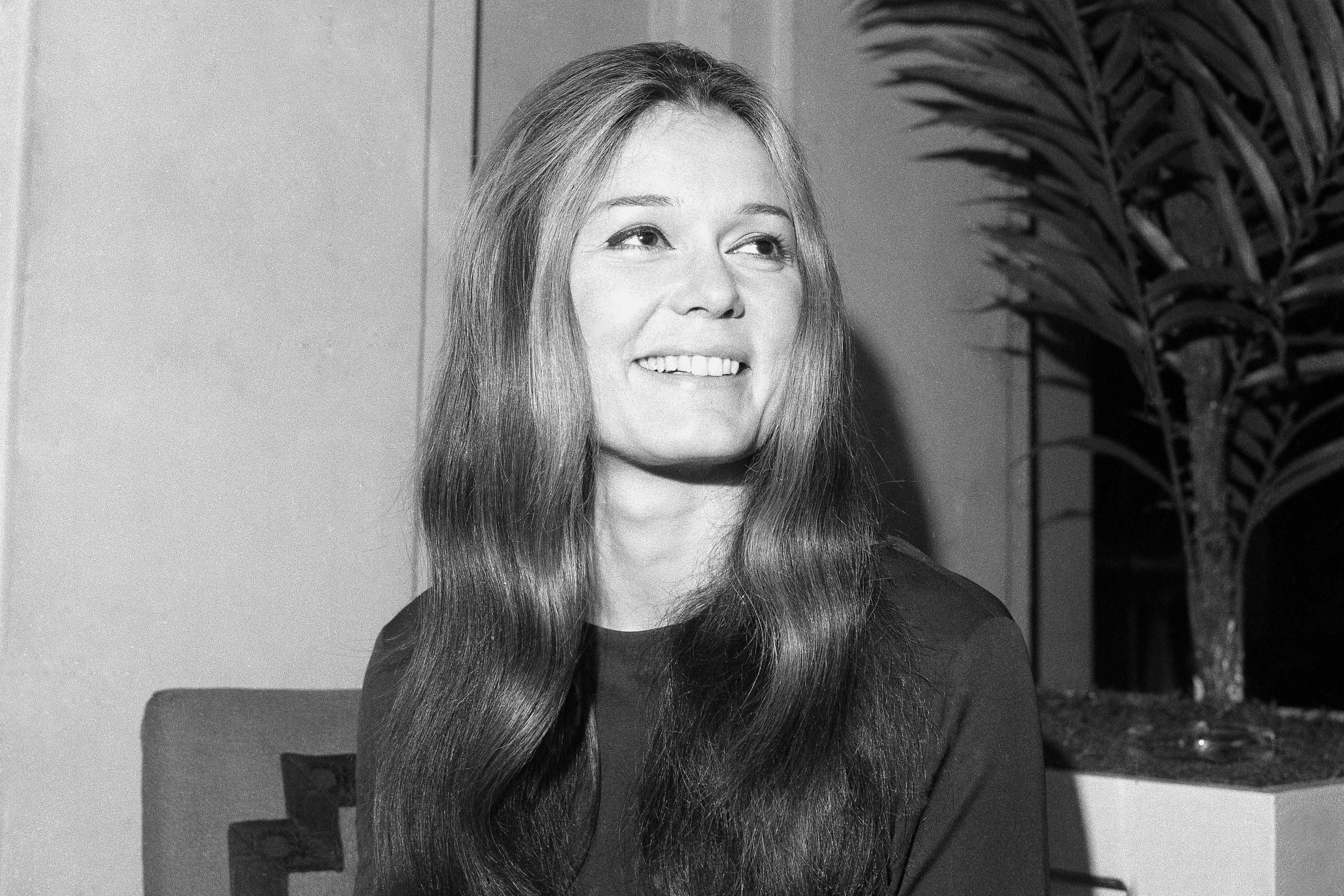
- Pulitzer winner (and Nieman Fellow) Mary Schmich on Gloria Steinem, who died Wednesday at age 92: “When I was 29, I read Steinem’s book, ‘Outrageous Acts and Everyday Rebellions’ and it gave me courage to live the way my instincts told me to. A few years later, when I came to the [Chicago] Tribune, my trailblazing colleague Carol Kleiman—who had crusaded with her in the early days—was showing her around the newsroom and I met her. I thought, ‘I’m meeting Gloria Steinem??’ Many years later, when she was a little older than I am now, I got to have lunch, in Chicago, with her and a few other women. She was, well, a normal, funny, incisive person, though, of course, she was not normal. She was a remarkable woman who helped to change the norms for millions of women—and men—of her time and the times that came after.”
- Storyboard contributor Mallary Tenore Tarpley speaks to Ayana Lage, author of the memoir “Missing Me,” about her experience with postpartum psychosis, and the unique structure of her book. “I tend to write in the present tense because it feels more raw to me,” she tells Tarpley. “I wrote the entire thing in present tense and then realized in edits that some chapters made more sense in past tense. I was nervous that it’d seem disjointed, but I think it came together.”
- “I’m starting to realize that the traditional way we have thought about magazine fact-checking is starting to crack in our AI-addled, fast-paced news environment.” Wudan Yan, who runs the fact-checking agency Factual, breaks down several ways that news organizations have recently published false reporting, and how writers and editors can stay vigilant throughout the editorial process.
- “The fine art of hanging out.” That’s the title of my upcoming conversation with New York Times national correspondent Kurt Streeter, who I’m excited to interview for a live edition of the Nieman Storyboard podcast at this year’s Society for Features Journalism Conference, to be held Oct. 22-24 at Arizona State University. You can find more details here.
Keep rebelling, and keep sharing your stories,
Mark Armstrong
Editor
Nieman Storyboard
Follow the Nieman Storyboard Podcast
On Bluesky: @niemanstoryboard.org
Subscribe to Storyboard
Get insights into the craft of journalism and storytelling in your inbox, delivered on Fridays.