Sign up for the Nieman Storyboard newsletter, delivered every Friday in your inbox.
***
Dear Storyboard community:
Recently, I was chatting with Storyboard contributor Kim Cross, and we got to talking about freelance assignments and work projects. She shared a goal for her current work, which was to, essentially, close the laptop and get out in the world. Her reason? The stories are outside.
Yes, there are millions of stories on the internet — troves of data, leads, information, and contacts that can be found online and on social media. But for a narrative journalist who is looking for real-life moments, the strategy of getting offline and getting face-to-face with friends and strangers seems like a brilliant approach, not to mention one that is also good for mental and physical health.
Our conversation came to mind as I read Emilia Wisniewski’s latest Power of Narrative recap, in which author and journalist Keith O’Brien discovers that in order to get the untold origin story of NBA legend Larry Bird, he needed to travel to Bird’s hometown of French Lick, Indiana, to find connections and build trust in a way that emails, phone calls, and the internet simply couldn’t match. He showed up in the town (population: 2,000). The result is O’Brien’s new book, the New York Times bestseller “Heartland.”
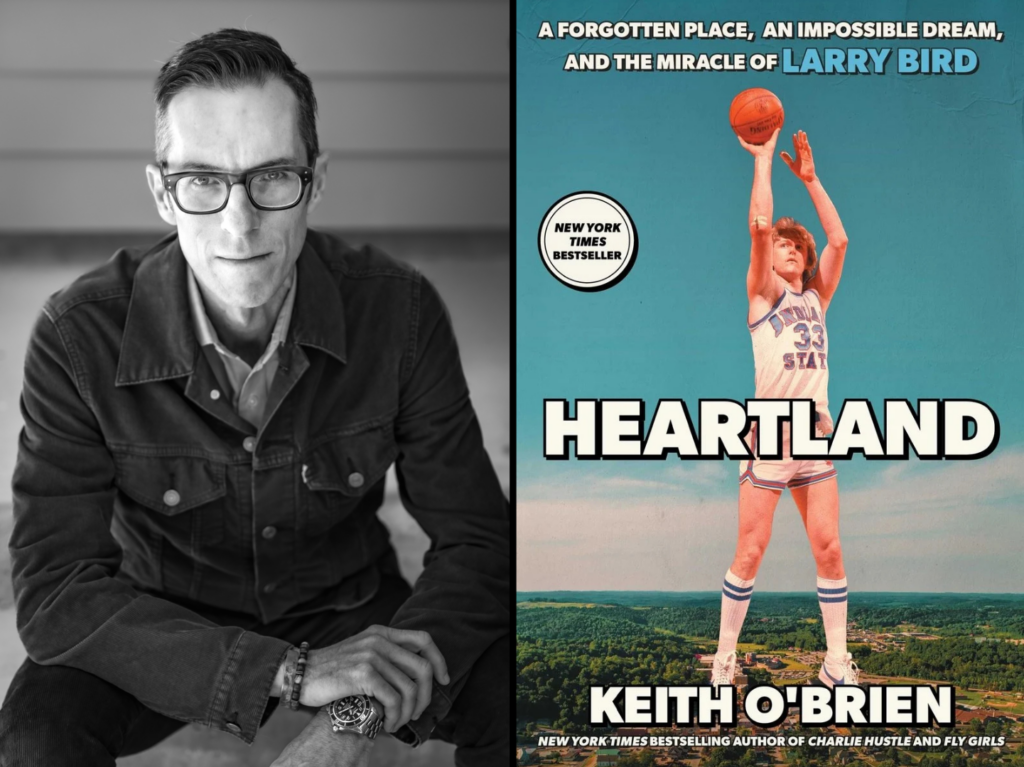
“I need to invest in the story. If people aren’t calling me back, maybe what I need to do is just go to French Lick. And so that’s what I did: bought a plane ticket, got a rental car and booked a room at the Best Western on the edge of town. And then before I left with those numbers and those addresses that I knew were right, I reached out again … and it was then that people started getting back in touch with me.”
[ Read the story ]
Question of the week: Tell us your favorite graduation speech
It’s cap-and-gown season, which seems like a good moment to share storytelling lessons from our favorite graduation speeches.
Like wedding toasts, this is a tough genre to do well, complete with a tricky audience to keep happy. Ira Glass recently dismissed the entire category as a “doomed form” (though he’s still given many of them). But these short, punchy addresses can be memorable and life-affirming — you might remember when Chicago Tribune columnist Mary Schmich redefined the entire genre with the following words: “Wear sunscreen.”
So I’m curious: what are your favorite graduation speeches, and what storytelling lessons can we take from them? Email me your picks and why you love them: editor@niemanstoryboard.org
Links of note
- ProPublica has launched a new podcast, “Paper Trail,” hosted by investigative journalist Jessica Lussenhop. The first episode, released Thursday, digs into the gaps in the U.S. Food and Drug Administration’s approach to vetting the safety and efficacy of generic prescription drugs. “It turns out the FDA doesn’t regularly test generic drugs that are coming into the U.S. to make sure they are safe and effective. It just lets the companies do the tests themselves. But the inspectors found serious issues with some of these tests, too.”
- At Brendan O’Meara’s Pitch Club newsletter, freelance journalist Shawna Kenney shares the story behind a successful pitch to her local public radio station, WHQR in Wilmington, N.C., to produce “Wild Things,” a limited-run podcast series “focusing on the creatures and critters of Coastal Carolina — and the people who care for them.” Kenney discovered the station’s Fourth Estate Fund as a way into her pitch, and leads with her connection to the community. “Normally I would open with a dramatic scene in pitching longform stories, and that is what I look for as an editor with Narratively. But here I was pitching a public radio station, an NPR affiliate who just lost their NEA funding. I felt it was more important to establish my long-term relationship with this region and community. I didn’t want to come off as some parachute journalist who just moved back from L.A. and knew what this little town needed.”
- It’s easy to get depressed about the internet and our social media platforms being inundated with AI slop — content that, due to the gaming of algorithms, can outperform carefully reported, fact-checked journalism. But it’s important to remind ourselves that in a toxic media ecosystem, credibility and trust are more important than ever. It takes years to build credibility, and just minutes to burn it all down. This Kate Davies essay, “Knitting Bullshit,” (hat-tip: Today in Tabs) takes us through the dystopian world of AI knitting podcasts, which are hosted by AI “personalities.” The AI podcasting company that created these series — publishing 3,000 different podcast episodes per week — chose knitting (among other points of interest) because “most of our content sits squarely in topics that aren’t life or death necessarily. So gardening, for example, knitting, cooking, these things we can afford to be wrong.” But for many people like Davies, knitting is incredibly important. There is always a cost to cutting corners, being cynical, and being wrong. Despite what the slop will have you believe, there are still no shortcuts.
Keep doing your best, and keep sharing your stories,
Mark Armstrong
Editor
Nieman Storyboard
Follow the Nieman Storyboard Podcast
On Bluesky: @niemanstoryboard.org
Subscribe to Storyboard
Get insights into the craft of journalism and storytelling in your inbox, delivered on Fridays.
Follow the Nieman Storyboard Podcast
[ Follow us in Apple Podcasts, Spotify, or your favorite podcast app ]