Sign up for the Nieman Storyboard newsletter, delivered every Friday in your inbox.
***
Dear Storyboard community:
I’ve been keeping an eye on stories from the narrative team at NOTUS, the Washington, D.C.-based news site that snapped up former Washington Post staffers including editor and Pulitzer finalist Kelley Benham French. Last week Ellie Silverman uncovered the surprising backstory of the woman who was in the viral photo on the D.C. Metro, surrounded by a group of white nationalists on July 4th.
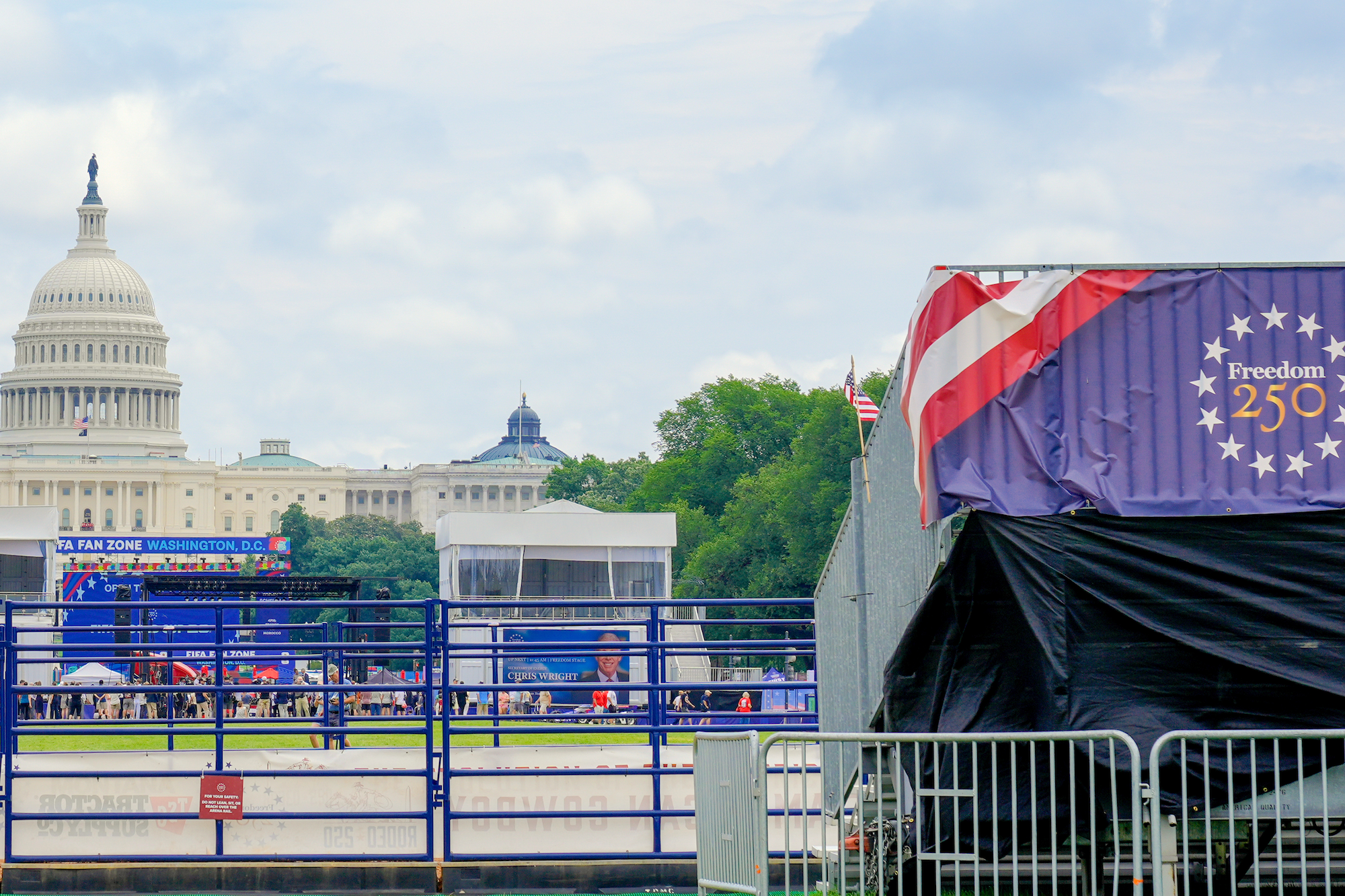
This week NOTUS is breaking more news with reporter Sam Fortier’s piece about a 15-year-old who excelled in a national civics contest celebrating America’s 250th birthday, only to suddenly lose under mysterious circumstances.
Aangad Singh, the son of Indian immigrants, fell out of the top three finalists, just missing a chance for a photo op with President Trump at the White House. But the judges marked some of his correct answers incorrect, leading Singh’s family — and other competitors — to wonder what happened:
Aangad and his father thought the judges must just be incompetent or mistaken. Aangad’s mother and uncle suspected a conspiracy: Someone had not wanted the brown kid in the turban to represent the youth of America in the Oval Office.
As it turned out, Fortier was already covering Singh’s story before the competition and controversy. “When I started at NOTUS in May, I was looking for ways to write about America’s 250th [birthday],” he told me. “I read through every event for Freedom 250, the Trump-backed party-planning committee, and I noticed a civics competition for high-school kids called the ‘Presidential 1776 Award.’ I’d never heard of it. But it felt like there were a lot of ingredients for a good story. I emailed a Dept. of Education spokesperson and told her that I wanted to write about one contestant’s experience. Incredibly, she recommended reaching out to Aangad and his dad.”
In the story, Fortier weaves in a simple observation about what Singh does when he gets nervous:
Aangad’s parents didn’t want to accuse anyone of fixing the competition. But they felt compelled to ask questions because their son never would. When his mother had dropped him off for his first day of kindergarten, he did not cry, even though she could tell he wanted to. For years the story served as a tidy summation of her son, a rule follower who hid his emotions, an intellectual who didn’t mind having more books than friends. But at some point she had figured out how to tell he was upset: He would take little sips of water over and over again.
And then later:
No one said anything for a long time.
Aangad took a small sip of water.
Fortier explains how it became a throughline in the piece. “His mom jumped in to tell the kindergarten story and then about how she figured out the little sips of water were a tell. It was like a little explosion in my brain: I had just watched him do that 10 minutes earlier.”
When I was [visiting the family in Toronto] I paid close attention to the water bottle, and it became clear that the little sips could be beats for the emotional arc. My editor, Kelley Benham French, is a genius, and she made sure we hit every note in rhythm. I’ve rarely had so much fun editing.
Your best newsletter advice, part one
I recently asked this community for advice on starting a newsletter, and received some valuable insights. Since 2018, Journalist Jack El-Hai has published his free monthly Damn History newsletter, covering “what’s new in the world of popular-history narrative writing.” El-Hai, who hosts his newsletter on beehiiv, offers this tip:
I’m able to assemble each issue of Damn History in a couple hours or less because I incorporate links and observations that I’ve already posted on social media. So it’s mainly a matter of rounding up all of that and adding a two- or three-paragraph opening essay.
And thanks to Cyndi Zaweski, author of the six-year-old StoryCraft newsletter, for this advice:
- Decide on a cadence and repeatable format. In the first email subscribers get, set an expectation about how often they’ll hear from you and what they’ll get when they do. Whether you adopt a popular structure (like a 3-2-1 format) or a custom layout, the value lies in having a distinct style and clarity on what you’ll write and when.
- Determine how the newsletter aligns with a larger purpose, like book sales. This is another element I like to include in a personal editorial philosophy because it helps me see my newsletter as a meaningful piece in a larger body of work, which keeps day-to-day marketing metrics in perspective.
Links of note
- Applications are now open for ProPublica’s Emerging Reporters Program, which provides stipends of $9,000, along with mentoring and a trip to a journalism conference, to five students each year who work or want to work at college journalism outlets (newspapers, websites, radio stations or TV stations). “ProPublica has a vested interest in developing more journalists from a wide range of backgrounds, particularly those who are economically disadvantaged. We consider it crucial to the future of our industry and to our own ability to fulfill our mission, which is to expose abuses of power and produce journalism that provokes change.” (Hat-tip: Ida B. Wells Society.)
- Taking advantage of “lower-stakes” writing: In her newsletter, Storyboard contributor Mallary Tenore Tarpley has an excellent bit of writing advice on using social media, email, and other short-form daily writing to practice our storytelling. For Tarpley, that means getting more creative on Instagram: “As part of my ongoing efforts to write succinctly, I’ve started creating carousels that combine images and text in ways that challenge me to distill long narratives into shorter ones.”
- If you’re looking for immersive storytelling practice in the great outdoors, Storyboard contributor Kim Cross is hosting a pair of writing retreats in Idaho in September — one in the Middle Fork of the Salmon River, with Esquire writer and Pulitzer winner Mark Warren, and another in the Sawtooth Mountains in Ketchum/Sun Valley, Idaho.
- Author Nicholas Carr, in the Depth Perception newsletter, on the one thing that still gives him hope for the future of journalism: “People. The good thing is that people are still curious if you give them an opportunity. I find it hard to imagine human curiosity going away. If we can sustain human curiosity, then there’s still hope.”
Keep staying curious, and keep sharing your stories,
Mark Armstrong
Editor
Nieman Storyboard
Follow the Nieman Storyboard Podcast
On Bluesky: @niemanstoryboard.org
Subscribe to Storyboard
Get insights into the craft of journalism and storytelling in your inbox, delivered on Fridays.
Follow the Nieman Storyboard Podcast
[ Follow us in Apple Podcasts, Spotify, or your favorite podcast app ]