Sign up for the Nieman Storyboard newsletter, delivered every Friday in your inbox.
***
Dear Storyboard community:
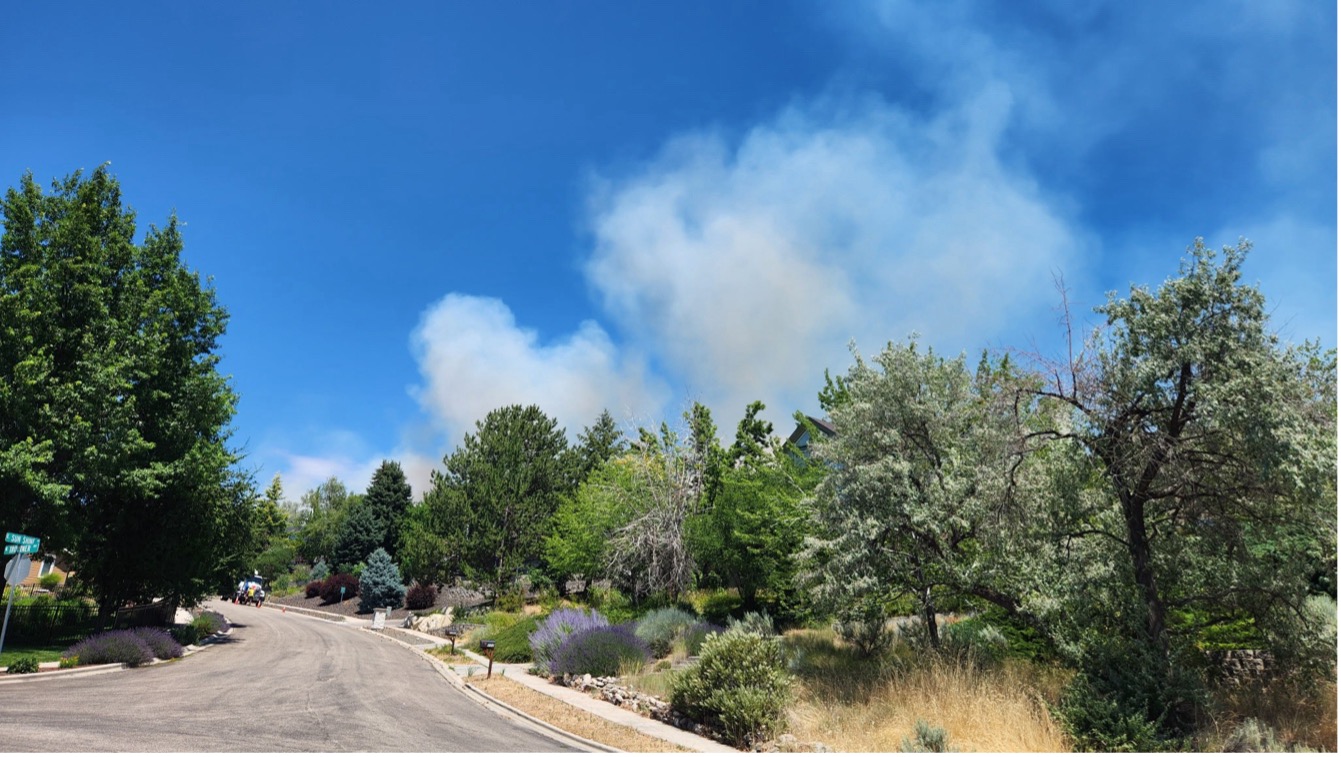
Storyboard contributor Kim Cross was filing her latest piece, about the 1949 Mann Gulch fire in Montana, when she and her family had to make evacuation plans for their house in Boise, as the human-caused Claremont fire, which began in early July, came closer. (Cross, who’s currently in Alaska, says their house is okay for now, but the nearby trails in the Boise foothills are burned.)
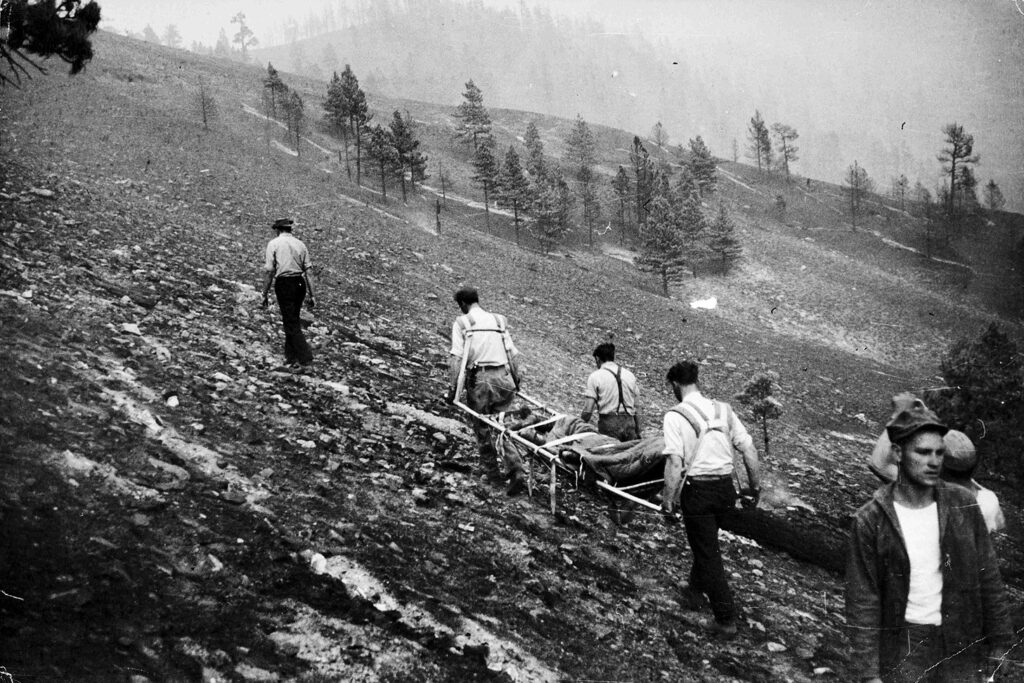
Cross’s latest story begins with an Aug. 5, 1949 wildfire that burned on a slope near Mann Gulch, a tributary of the Missouri River in western Montana. Fifteen smokejumpers parachuted in to fight the fire. Thirteen firefighters died.
The events of that day inspired singer-songwriter James Keelaghan to write “Cold Missouri Waters,” and this week Cross offers the song as a lesson on the art of storytelling through songwriting, with Keelaghan annotating the lyrics. As Cross writes, “The result is hauntingly, devastatingly good, a masterpiece of brevity.”
And for more on brevity in storytelling, read Cross’s annotation of her own 900-word New York Times feature, “Freedom, Wyoming,” from the Nieman Storyboard archives.
“You quickly discover which things are simplest to explain and which take longer. This is why I approach the ‘story songs’ by retelling the story to anyone in my life who will listen. That telling and retelling helps to condense the story and focuses on telling it with as little explanation as possible.” — James Keelaghan
[ Read the story ]
Your favorite stories in song
I asked you recently for your favorite storytelling in songs. Storyboard editor emerita Jacqui Banaszynski reminded us about the Gordon Lightfoot classic, “The Wreck of the Edmund Fitzgerald,” and Arlynda Boyer shares with us the following recommendations:
Revealing myself as the Appalachian gal that I am, I offer you Jean Ritchie’s “West Virginia Mine Disaster”, and the Lefty Frizzell classic “Long Black Veil.” Uncle Bonsai’s “Silent Night” just breaks me, because it eerily echoes how I lost my own father when I was nineteen.
And Lauren Jackman provided her own list of favorites:
- “Brandy (You’re a Fine Girl)” by Looking Glass
- “Same Old Lang Syne” by Dan Fogelberg
- “Somebody That I Used to Know” by Gotye
- “The River” by Bruce Springsteen
- “Night Moves” by Bob Seger
- “America” by Simon & Garfunkel
As for me, I’ll endorse anything by Jason Isbell, including “Super 8,” “Cumberland Gap,” and “24 Frames.” Keep sending me more of your favorites and I’ll feature them in a future roundup: editor@niemanstoryboard.org.
Links of note
- “Letters I Write to Metallica.” Journalist Leah Sottile captures the art of storytelling through letter-writing, in a pair of deeply moving letters she’s written to the metal band as she works through her grief. “The last time I wrote to you, I said life was too short to headbang so infrequently,“ she writes. “And yes, I still believe that’s true. But headbanging on the weekend isn’t enough. You have to keep fighting. You have to surround yourself with people who’ll pick you up. My friend Joslyn was someone who made me stand up straighter, made me think I could be the one pushing life around. I think she needed to be told that when life shoved her, she could shove it right back, and keep walking.”
- Alice Driver shares what it’s like to be a journalist interviewed for a documentary. As the author of “Life and Death of the American Worker: The Immigrants Taking on America’s Largest Meatpacking Company,” she was featured in “Big Chicken: A Fast Food Conspiracy,” now streaming on Netflix.
- “I still believe that lived experiences, when told by people using the craft of nonfiction, will forever hold an unparalleled kind of power.” With that quote by Erika Hayasaki in mind, go read the Storyboard contributor’s summer nonfiction reading list.
Keep telling true stories, including your own,
Mark Armstrong
Editor
Nieman Storyboard
Follow the Nieman Storyboard Podcast
On Bluesky: @niemanstoryboard.org
Subscribe to Storyboard
Get insights into the craft of journalism and storytelling in your inbox, delivered on Fridays.
Follow the Nieman Storyboard Podcast
[ Follow us in Apple Podcasts, Spotify, or your favorite podcast app ]