Sign up for the Nieman Storyboard newsletter, delivered every Friday in your inbox.
***
Dear Storyboard community:
This week we’re welcoming back a familiar byline to Storyboard readers: Roy Peter Clark, the legendary writing coach for the Poynter Institute and the author and editor of 21 books on journalism and writing. Clark’s name also graces one of Poynter's annual journalism prizes, The Roy Peter Clark Award for Excellence in Short Writing.
Clark’s latest book takes on storytelling and the college admissions essay, “Writing Tools for the College Admissions Essay: Write Your Way into the School of Your Dreams.” As he notes, for many people, “the college admissions essay may turn out to be the most high-stakes piece of writing they will ever have to create.”
And yet, even for professional journalists and writers, revisiting these essays can impart some important lessons about how to understand your audience and tell a compelling story within very tight constraints. (Many college applications limit students to 500 or 600 words for their essays.)
Clark also offers a moving example essay, about grief and a hike up the Cotopaxi volcano in Ecuador, written by Asher Montgomery, who is now a staff writer at the Harvard Crimson. Our deepest thanks to Asher for sharing this story with Storyboard.
For more invaluable storytelling advice, check out Clark’s work in the Nieman Storyboard archive.
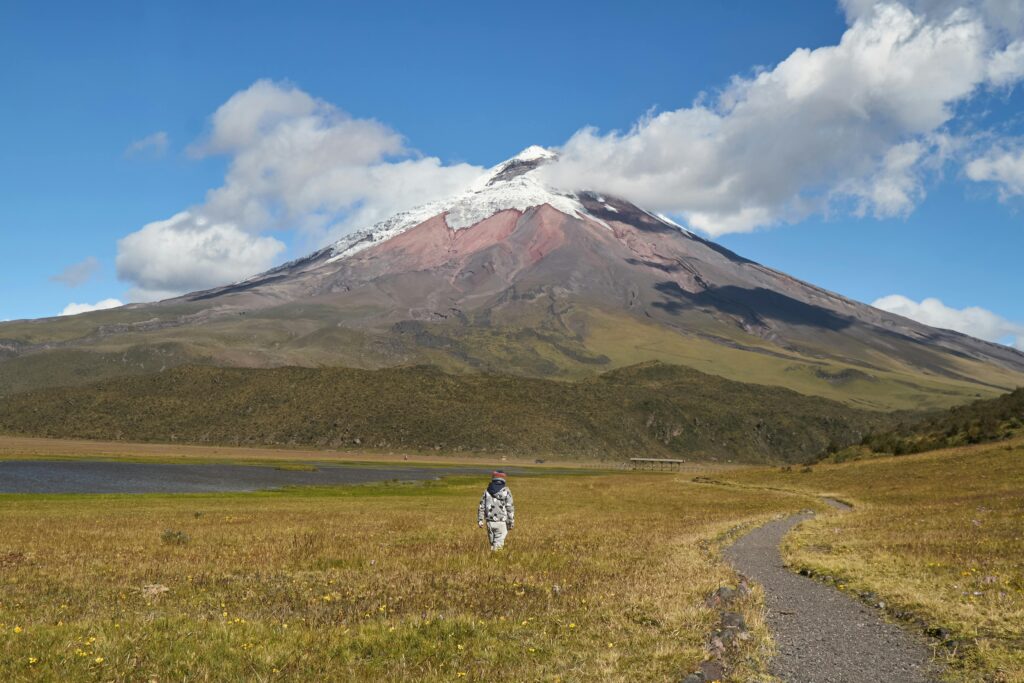
“Stories need characters, scenes, settings, and chronologies, and this one has all of those. It also is built around a symbol, of sorts, perhaps what we might call an archetype; she uses the act of climbing a mountain as a metaphor for overcoming obstacles and achieving knowledge.”
[ Read the story ]
Links of note
- The American Society of Magazine Editors (ASME) announced finalists for the 61st annual National Magazine Awards, to be handed out May 19 in New York City. More than 70 media organizations are on the list, including 19 publications receiving multiple nominations, led by New York magazine (with nine) and The New Yorker (with five).
- It’s submissions season: A reminder about the upcoming deadline for the Society for Features Journalism's 2026 Excellence-in-Features contest, which celebrates storytelling excellence in the categories of general assignment features, arts and entertainment coverage, food coverage, sports journalism, as well as podcasts, narrative videos, and social media portfolios. The early-bird submission deadline is March 2, and the contest closes on March 17.
- At Joe Pompeo's newsletter, A Little History, Pompeo speaks with writer and fellow Vanity Fair alum Julian Sancton about the archival journey he went on for his new book, “Neptune's Fortune: The Billion-Dollar Shipwreck and the Ghosts of the Spanish Empire.” To research the story of the galleon San José, which sank off the coast of what is now Colombia in 1708, Sancton relied on research from archives in Seville and London, as well as newspaper accounts from Lima, Peru. “A lot of the book has to do with the joys of archival research. It’s a bit of a challenge to try to make that exciting, but it really is so exciting for me to find treasure in those archives, and I tried to communicate that to the reader.”
- “Hungry for Affirmation, Vulnerable to Scams: As a Writer, I Know the Feeling.” A warning from Dan Barry that A.I. is powering sophisticated email scams targeting writers and journalists. “Many of these flimflammers specialize in the long game. The initial, A.I.-polished correspondence draws in the mark with gushing praise peppered with details culled from online blurbs and reviews, conjuring the illusion that the scammer has actually read the book at hand.”
- At Long Lead's Depth Perception newsletter, author Elizabeth Flock reflects on her latest feature in The New Yorker, and what drove her interest in her new book subject, Polish biologist Simona Kossak. “When people write books, they usually have some burning question they’re desperate to answer. With this book project, I was postpartum in a swallowing Chicago winter, freezing, alone, feeling very lonely and desolate about the world. I came across the story of Simona Kossak, a Polish biologist who raised, nurtured, and studied wild animals in the Białowieża Forest. There were all these photos of her taken by her lover, who was a photographer. Both the photos and the writing about her life immediately fascinated me. At that point, the burning question I had was: What is motherhood, and what is missing from that conversation?”
Keep seeking out your own burning questions, and keep sharing your stories,
Mark Armstrong
Editor
Nieman Storyboard
Follow the Nieman Storyboard Podcast
On Bluesky: @niemanstoryboard.org
Subscribe to Storyboard
Get insights into the craft of journalism and storytelling in your inbox, delivered on Fridays.
Follow the Nieman Storyboard Podcast
[ Follow us in Apple Podcasts, Spotify, or your favorite podcast app. ]