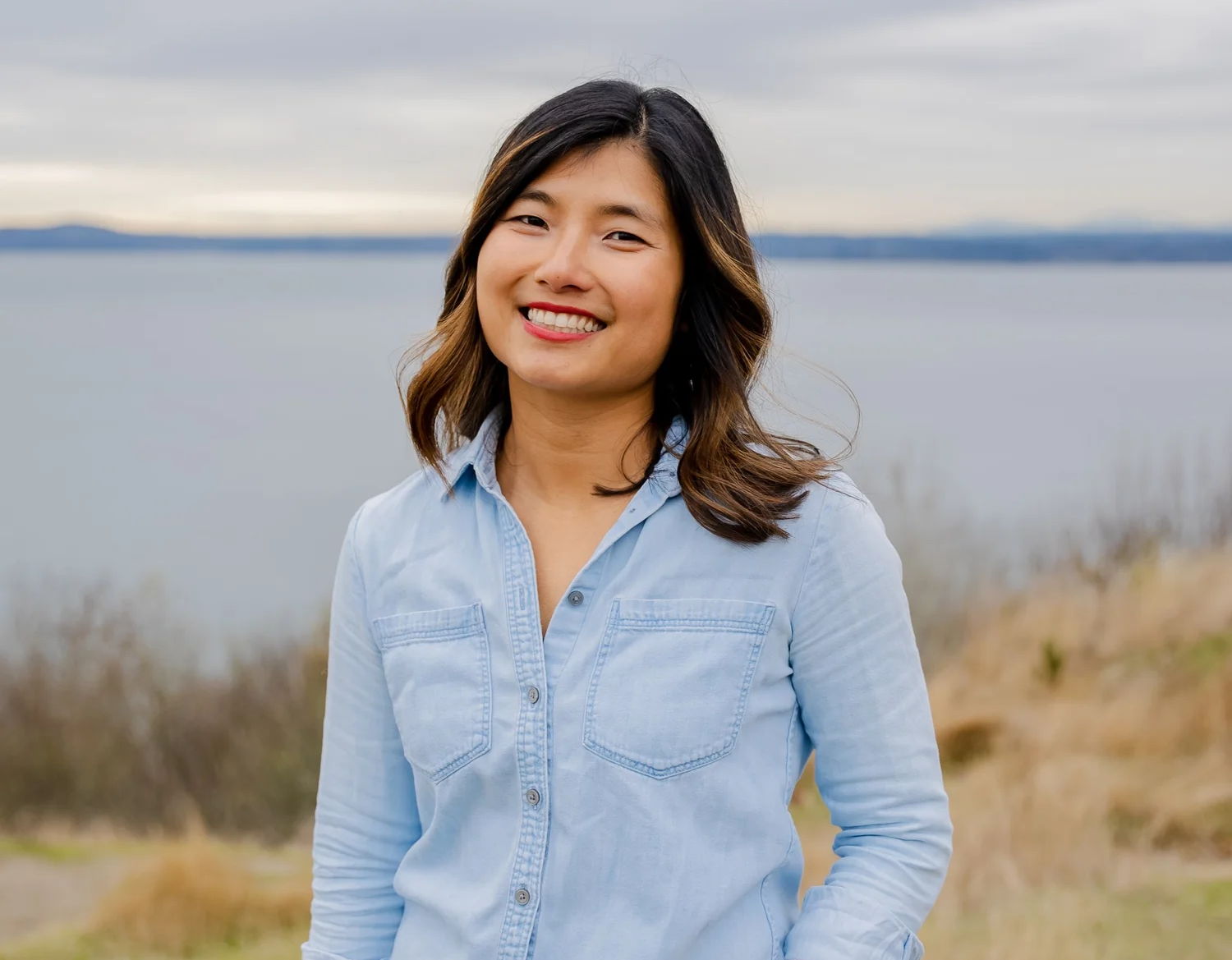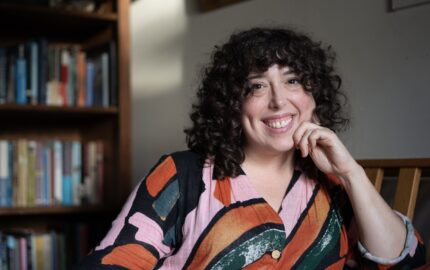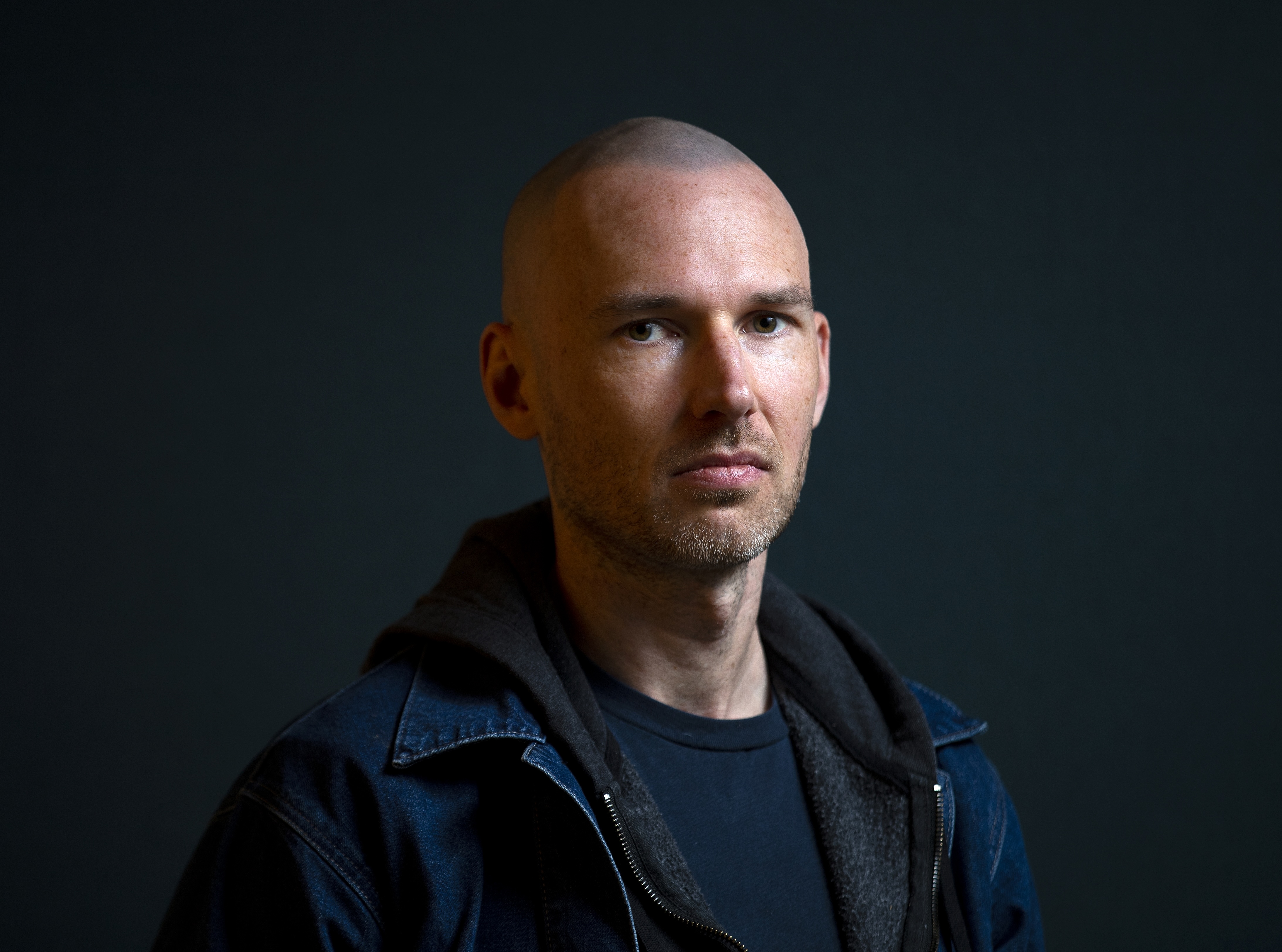
On the latest episode of the Nieman Storyboard podcast, Storyboard editor Mark Armstrong sits down with audio documentary producer Will James to discuss his work with Seattle’s KUOW and his latest investigative project, a collaboration with journalists from The Seattle Times, NPR’s “Embedded” and Omari Salisbury’s Converge Media.
“We Keep Us Safe,” an eight-episode narrative podcast, looks into the unsolved killing of 16-year old Antonio Mays Jr., who was shot in Seattle’s CHOP (Capitol Hill Occupied Protest) zone during the 2020 protests following George Floyd’s murder.
Alongside Seattle Times reporters Sydney Brownstone and David Gutman, the reporting team interviewed nearly 100 people to investigate the shooting of Mays Jr., which occurred after Seattle police had withdrawn from the protest zone. Mays Jr.'s family won a $30.5 million verdict against the city for negligence over its emergency response to the shooting.
[ Follow us in Apple Podcasts, Spotify, or your favorite podcast app. ]
James talks about how investigative teams collaborate across newsrooms, and how they began to investigate a killing that has remained unsolved for six years, using public records requests and talking with sources and witnesses who were previously reticent to speak about the shooting.
James’s work includes other KUOW series including “Adults in the Room,” and the Peabody-nominated series “Lost Patients,” as well as shows for KNKX Public Radio including “The Walk Home,” “Transmission,” and “Outsiders.”
“I think to sustain a big narrative story, there needs to be some kind of idea at the heart of it,” James says. “In audio journalism, sometimes we talk about the ladder of abstraction. There can’t just be these facts unfolding at the bottom level of this ladder of abstraction. You need some ideas popping. And time passing has a way of showing you which stories have staying power, which stories might have some universal ideas or insights embedded in them. My favorite place to look for stories is unresolved events in the past.”
The excerpts below are edited for length and clarity.
Doing preliminary reporting for ‘We Keep Us Safe’
We asked for all of the records on the missing persons case around Antonio’s disappearance from his home in California. What a lot of people didn’t realize about this case is that Antonio left home in Southern California without his dad’s permission to join this protest in Seattle, 1,000 miles away. To this day, the discourse online around Antonio’s death involves a lot of comments like, number one, “This dad let his son join a protest in another city? What’s wrong with this dad?” And also, “This kid was up to no good. He was at this protest to party and to cause trouble like all these other teenagers who flooded into the CHOP zone.” All of it is wrong. And that was one of the things that early on we realized there were narratives out there that protesters had put out into the world and reinforced, that their defenders had put out into the world and reinforced, that we could correct here. Antonio Mays Sr., the father, did not allow his son to go out and protest in the summer of 2020. His son was very passionate, like a lot of teenagers are, about his interests. He had gotten really into the Black Lives Matter movement and the movement around George Floyd. He took it upon himself to leave home. He left his dad a note saying he was leaving home to make his dad proud, to join a protest, to make a difference in the world, and that’s how he ended up in Seattle, and that’s what set off the rest of the story.
On building the structure of a narrative podcast
It is very hard to stop reporting. In every big narrative podcast project I’ve ever worked on, the reporting is happening simultaneously with the outlining of the story, the writing of the story, the narrating of the story. It is one of the more complex things to manage when you’re working on a project of this kind because everything is always in flux. You might outline a story, [and then] get a piece of information that changes the entire structure of it. Thankfully, somehow things always work themselves out. Doing it this way creates a lot of headaches along the way, a lot of sometimes panicked moments, a lot of really exhausting rewrites and readjustments. But at a certain point, the story kind of congeals around a shape and then you’re just filling in the blanks and working within that structure.
On approaching stories and sources with care
I was a homelessness reporter for a long time, and that’s how I ended up making my first podcast. I think what’s really important is walking in with a sense of your own intent. The way that these conversations go wrong, go south, is often the reporter going in either scared — too scared to ask uncomfortable, sensitive questions — or too hungry, too eager to get something, extract something from this source, and they end up doing real damage. So there’s a kind of internal exercise that happens where you go, “Okay, what is my intent from this interview?” I want to find out this, and I want to find it out for these reasons and from there, it’s a process of over-communication with the subject. It’s saying, “Here is who I am. Here is what I’m doing. Here is what I hope to talk to you about. Here is why I’m doing it. And here is how you might feel while this is happening. Here’s what you might expect.” And that process keeps going long after the interview. So after the interview ends, you go back and you go, “Hey, how are you doing after we talked?” And then as you write the series, as the series gets closer to coming out, some of these hard and fast journalism rules get a little blurry.
Like, it’s a really common rule in journalism, you do not share a story with a source before it publishes. Well, with a story about sexual abuse or the murder of a child, for certain sources, you might read back parts of an episode to them. You’re not giving them veto power over the episode. You’re asking their opinion, and you’re preparing them for what is to come. The worst thing you can do is surprise someone. And then what you’re doing is you’re navigating — over-communicating — and also not being overly present with someone. There is a point at which you kind of have to pull back. Like you’re just kind of being annoying at a certain point. It’s hard stuff, but I think most reporters can do it with just a basic amount of common sense and human understanding.
How trust in journalism moved from authority to authenticity
I heard a misinformation researcher, I think it was Kate Starbird at [University of Washington], who mentioned that there was a time when the marker of trust was authority. So it was the authoritative newscaster voice who spoke very carefully, that spoke in this measured tone. It carried this weight that people had edited these words, people had thought carefully about these words. People used to trust that sound. Something has flipped. Now that sounds inauthentic to people and a marker of trust is authenticity. It’s the guy who sounds like he’s speaking off the cuff, from his heart what he really believes, even if it’s unpolished. Even if the facts are sometimes wrong.
On considering whether to share traumatic audio or video footage
We had this explosive thing, and we made a decision: there’s just no value in putting this sound into the world. So we used very carefully selected bits of that video, sound from it, to tell the story. We were very intentional about which bits of sound we were using and why because there’s a point at which just because you have something doesn’t mean it is of value to put into the world. There’s part of me that wishes that we said more or shared more of that video because what it did for me is it made me realize that the language we use around gun violence is so sanitized and so impotent to actually capture what gun violence is. It is pieces of metal passing through a human body. And the language we use in journalism around gun violence does not actually capture that. It leaves people with this vague, sanitized impression of what this is. In the end, we made the right call. I’m glad we didn’t put that audio out there. But this is a story about a death and a violent death. And so we had a lot of long discussions about which documents we were going to actually share with listeners, what they needed to know in order to understand what we were telling.
On the evolution of narrative podcasting
There was a moment 10 years ago where it felt like the future was in narrative podcasts. Suddenly we were the ones telling the big, meaningful stories of the world, and the moment didn’t last. I think the hard part is that the audience has changed. I think people have become acclimated to these high-dopamine little bits of high-calorie, low-nutrient information.
I think it’s important to keep telling these stories anyway because it’s like raging against the darkness, right? It’s like, what is happening to audiences, what is happening to storytelling, what is happening to how we consume media is not good. It’s not right. It’s not good for the human mind. It’s not good for the human soul. It’s not good for society. And so we just have to keep raging against these trends.
James’s advice for emerging journalists
A lot of entrepreneurship, a lot of creativity, a lot of flexibility. I have readjusted my career multiple times over the course of 15 years, and I will continue to. You just constantly have to blow things up and reinvent yourself. I would say if you’re starting out, get whatever job you can in journalism at a place that is reputable. If it is a local newspaper in a small town, wonderful. As long as the editors are serious and they’re ethical, do it. You can build a career there. Once you’re there, no matter what your job is, try to specialize in something.
Start to look for stories in your local area that have a resonance, not just for your readers, but beyond. Look for the stories that you can tell from your home base that somebody on the other side of the country might be interested in. Just keep an eye out for those gems, and when you find them, latch onto them. Tell them.
Reading & Listening List: Authors, Stories, Podcasts, and Journalists Mentioned
- “We Keep Us Safe” (“Embedded,” NPR)
- Sydney Brownstone
- “Lost Patients” (KUOW, NPR)
- David Gutman
- Omari Salisbury / Converge Media
- The Seattle Times
- KUOW
- NPR
- “Fentanyl fuels a persistent ‘hot spot’ at Seattle’s 12th and Jackson. What will it take to fix it?” (Will James, KUOW, 2025)
- “Homelessness continues to get worse. Should Seattle, and the U.S., still embrace ’Housing First’?” (Will James, KUOW, 2025)
- “All Things Considered” (NPR)
- Isolde Raftery
- “Adults in the Room” (KUOW)
- Kate Starbird
- KNKX
Show credits
Hosted and produced by Mark Armstrong
Associate producer: Marina Leigh
Episode editor: Kelly Araja
Audience editor: Adriana Lacy
Promotional support: Ellen Tuttle
Operational support: Paul Plutnicki, Peter Canova
Nieman Foundation curator: Henry Chu
Music: “Golden Grass,” by Blue Dot Sessions (www.sessions.blue)
Cover design by Adriana Lacy
Nieman Storyboard is presented by the Nieman Foundation for Journalism at Harvard.
***
Subscribe to Storyboard
Get insights into the craft of journalism and storytelling in your inbox, delivered on Fridays.